
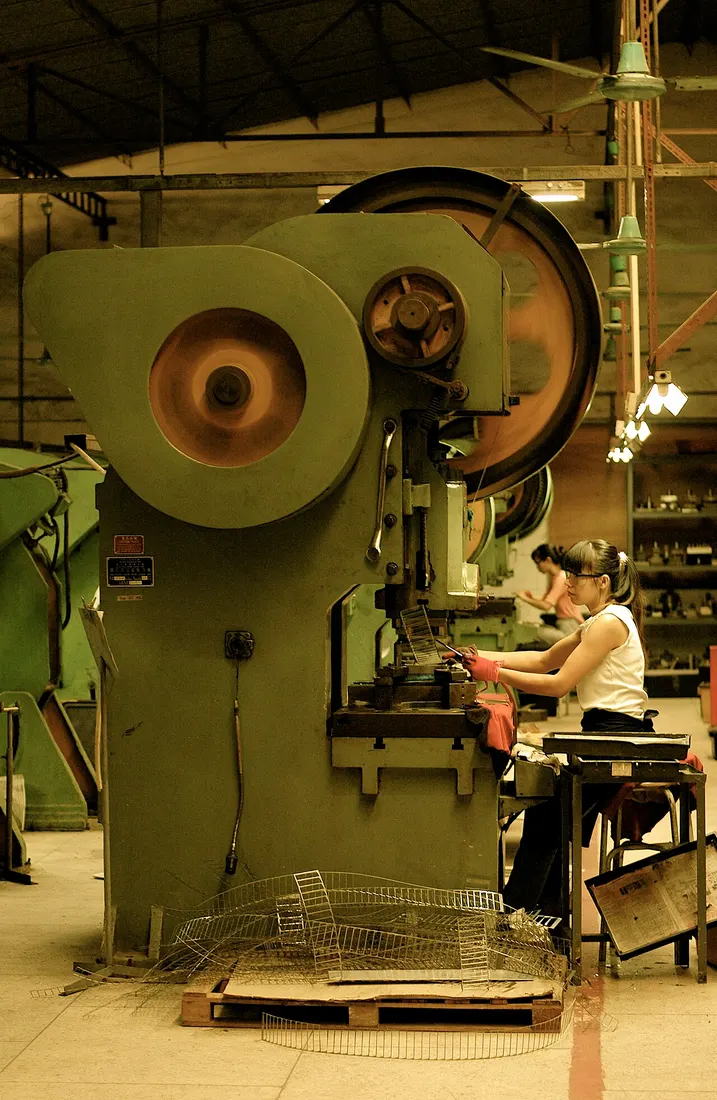

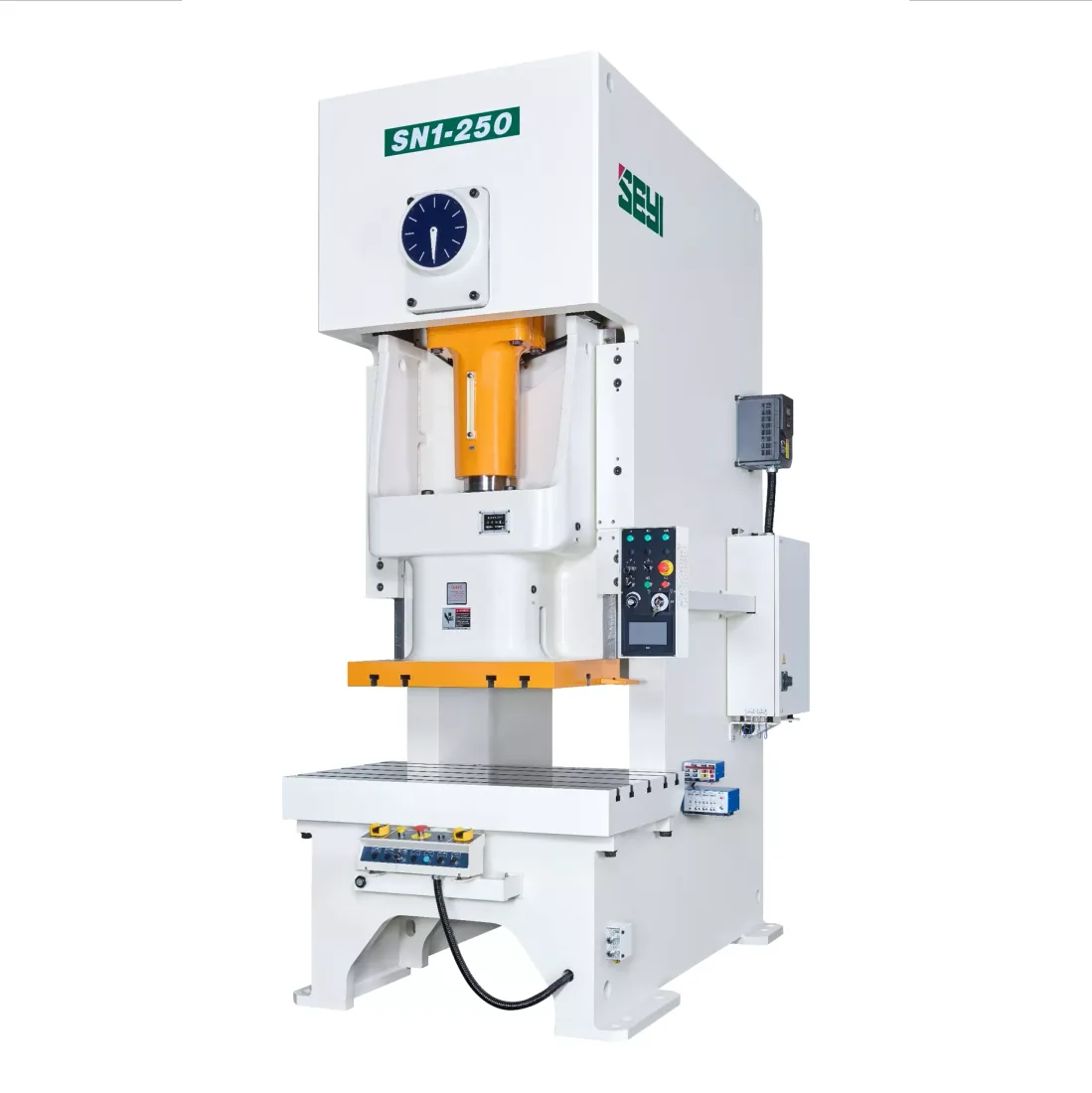
What it does
Carries upper and lower dies in an open-sided frame, giving access to the dies from several directions for blanking and forming.
How it works
The frame side forms a C-shaped opening, and the overhead drive moves the guided slide and upper die toward the lower die on the bolster. A typical mechanical type has a flywheel, clutch and brake and crank drive; angular deflection of the open frame and off-centre loads affect die alignment, so suitability cannot be judged by bolster size alone.
Process sequence
- Confirm die and feed position
- Establish press permission
- Lower the slide to do the work
- Return the slide
- Unload and feed
- Confirm the die area before the next cycle
Key inputs
- Die size and shut height
- Load and eccentricity
- Throat depth and loading
- Rated force position and drive energy
Common problems
- Off-centre loads or frame deflection changing die clearance
- Misfeeds damaging dies
- Slide guide wear
- Brake or lubrication faults
Limits of application
- C-frame describes the frame form; drives can differ
- This page uses a mechanical C-frame press as the example
- High off-centre loads and large multi-station dies call for straight-side frames and similar options
Functional modules
C-frame and bolster
Provide open die space
Drive, clutch and brake
Organize the press cycle
Slide and guides
Keep die motion aligned
Feed and sensing interface
Coordinate material and stroke
Manufacturer & technical sources
Continue with manufacturer product pages, operating principles and technical information for this equipment type.