
EQUIPMENT / PRINCIPLE / DESIGN

Offset printing press

Transfers images from the plate to a rubber blanket and then onto paper or other substrates, reproducing multicolour images.

Equipment principle & structureRequest design help ↗
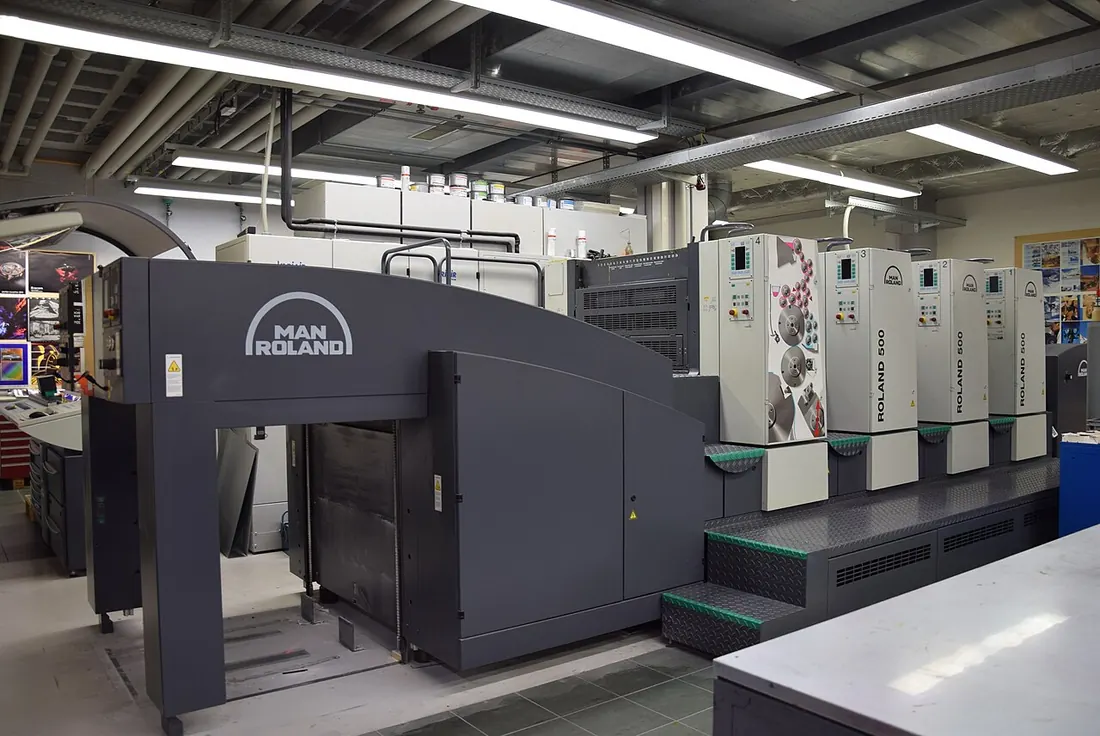
Offset printing press · Real machine photo
Offset printing press · Real machine photo · Source: Wikimedia Commons ↗ · by Romain Salomon · CC BY-SA 4.0 · Resized and converted to WebP
Offset printing press · original schematic, not to scale; shows the working principle and modules
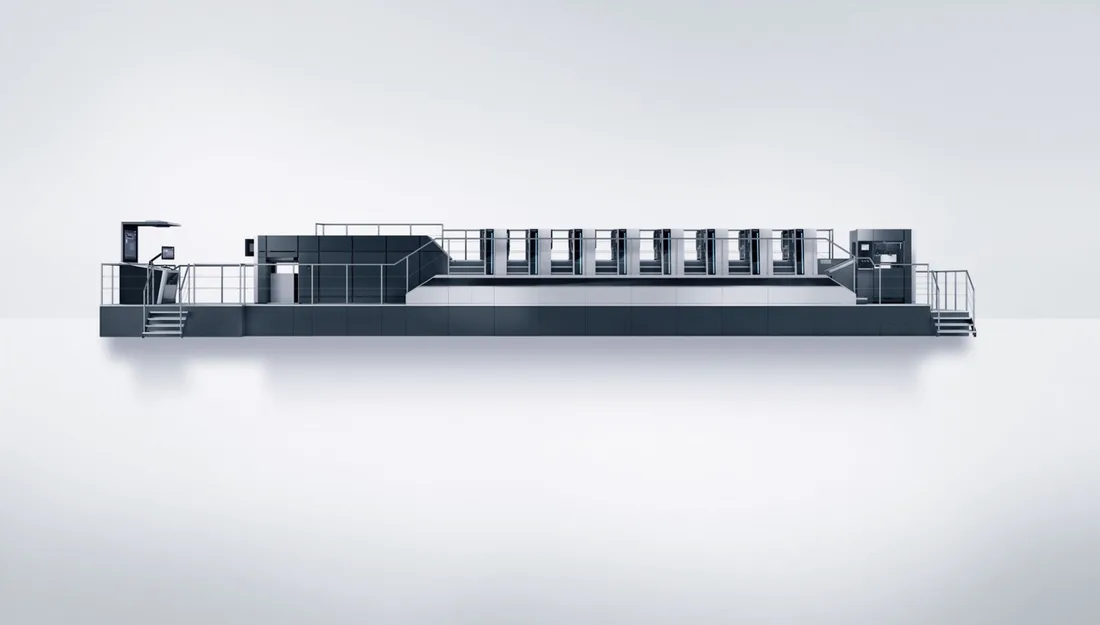
Full layout of a Heidelberg Speedmaster XL 106 offset press (rendering)
Full layout of a Heidelberg Speedmaster XL 106 offset press (rendering) · Source: Heidelberg website ↗ · © the manufacturer, quoted for reference · Resized proportionally and converted to WebP

What it does

Transfers images from the plate to a rubber blanket and then onto paper or other substrates, reproducing multicolour images.

How it works

Taking conventional lithographic offset with dampening as an example, image and non-image areas of the plate differ in affinity for ink and water. Dampening and inking rollers build the image ink film, the plate cylinder transfers ink to the blanket cylinder, which together with the impression cylinder prints onto the substrate, and each colour unit must register.

Process sequence

  1. Make and mount plates and prepare stock
  2. Establish inking and dampening
  3. Transfer ink from plate to blanket
  4. Transfer from blanket to substrate
  5. Print each colour in register
  6. Check colour and register and deliver

Key inputs

  1. Images, plates and substrate
  2. Ink, fountain solution and blanket
  3. Cylinder pressure, sheet feed and register datums

Common problems

  1. Ink-water imbalance causing scumming or emulsification
  2. Misregister and doubling
  3. Blanket damage, paper dusting and uneven transfer

Limits of application

  1. Sheet-fed and web-fed presses transport material differently
  2. Waterless offset uses different plates and no dampening path, so ink-water balance methods do not apply directly

Functional modules

Plate, inking and dampening

Build the image ink film

Blanket cylinder

Receives and transfers the image

Impression and sheet transport

Grip and pass the sheet

Registration and inspection

Adjust colour position and ink

Manufacturer & technical sources

Continue with manufacturer product pages, operating principles and technical information for this equipment type.

ONLY ON MECHWIKI / AGGREGATED

Aggregated references: models, makers, patents & videos

References scattered across model articles, vendor sites and patent databases, gathered under this machine. Checked items are listed; the rest are offered as ready-to-open searches.

Equipment and core-unit manufacturers1

Manufacturer references for whole machines, subsystems and related processes; each item states its scope.

  • HEIDELBERG

    Speedmaster XL 106 sheetfed offset press · Machine example

    The press shown is an example configuration. Some inspection, perfecting, drying, coating and plate-change functions are optional. The anilox roller belongs to the coating unit.

    Manufacturer reference

Patents: how others built it

Patents are useful for drawings and mechanism ideas. None has been vetted for this entry yet, so here are searches pre-filled with the machine name.

Videos: see it run

No licensed video is hosted for this machine yet; these searches are pre-filled with its name.

3D MODELS

3D models and download information

Explore structure and assembly with models. Download methods, file formats and terms are provided by the original article or mini program.

Find more in the model library →