
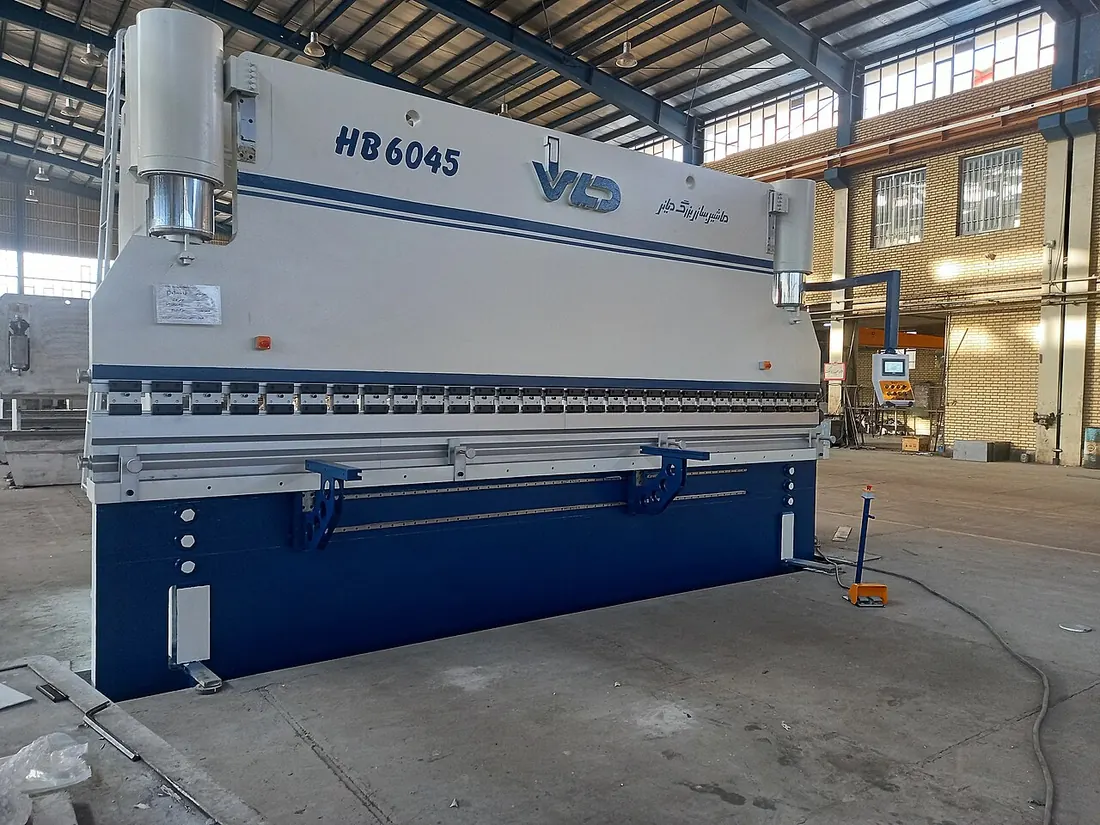

What it does
Pushes sheet into a lower die with a punch to make straight bends at specified positions.
How it works
In air bending the sheet is supported by the die shoulders and punch tip, and punch depth sets the bend angle; bottoming makes the sheet conform more closely to the tool shape. The CNC coordinates ram and backgauge, and the actual angle also depends on thickness, strength, tooling and springback.
Process sequence
- Confirm material, tooling and program
- Locate and support the sheet
- Lower the punch to bend
- Return under control
- Reposition for further bends
- Check angles and dimensions
Key inputs
- Material thickness and strength
- Bend length and angle
- Die opening and radius
- Load, sequence and springback compensation
Common problems
- Thickness or material variation changing angles
- Unstable gauging or sheet support
- Deflection under load on long bends
- Bend sequence causing collisions or trapped parts
Limits of application
- Air bending and bottoming need different stroke and load assessment
- Bending capacity is limited by both machine and tooling
- Whether every flange can be made cannot be judged from thickness alone
Functional modules
Upper beam and punch
Apply the bending action
Lower die and frame
Support the sheet and take reactions
Backgauge and support
Set the bend position
CNC drive and measurement
Organize stroke and angle control
Manufacturer & technical sources
Continue with manufacturer product pages, operating principles and technical information for this equipment type.