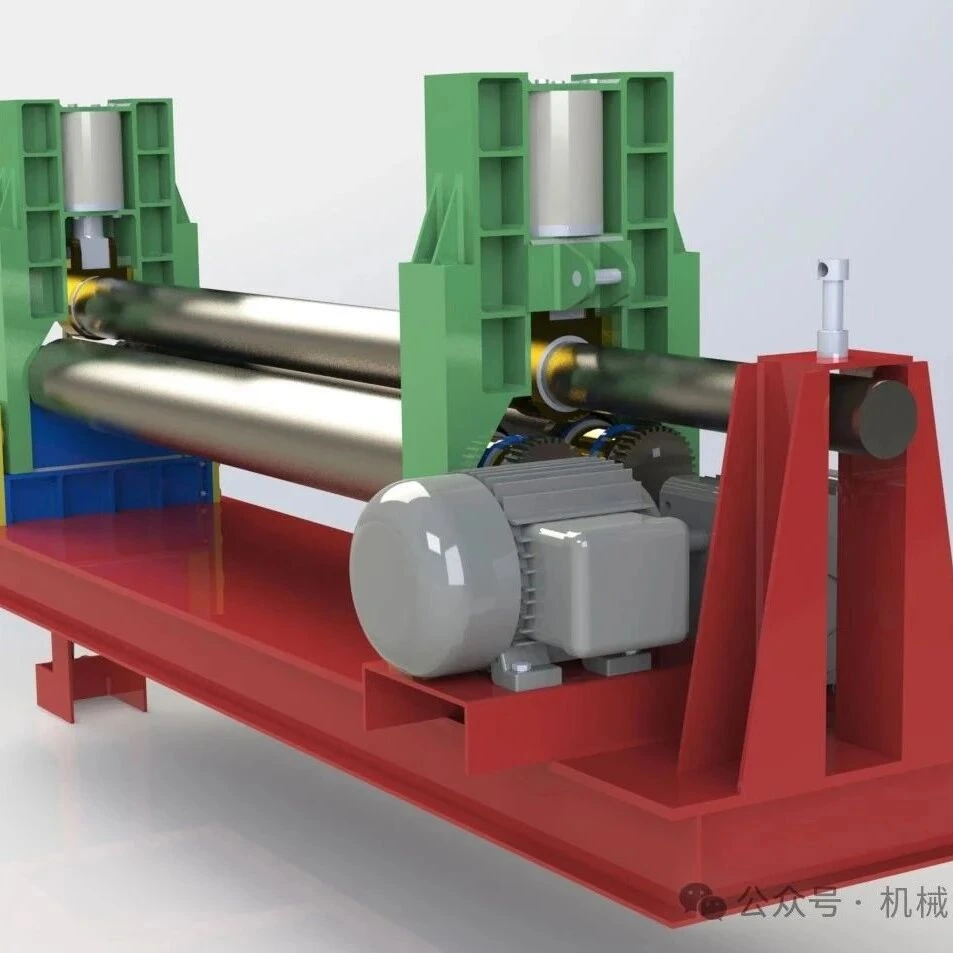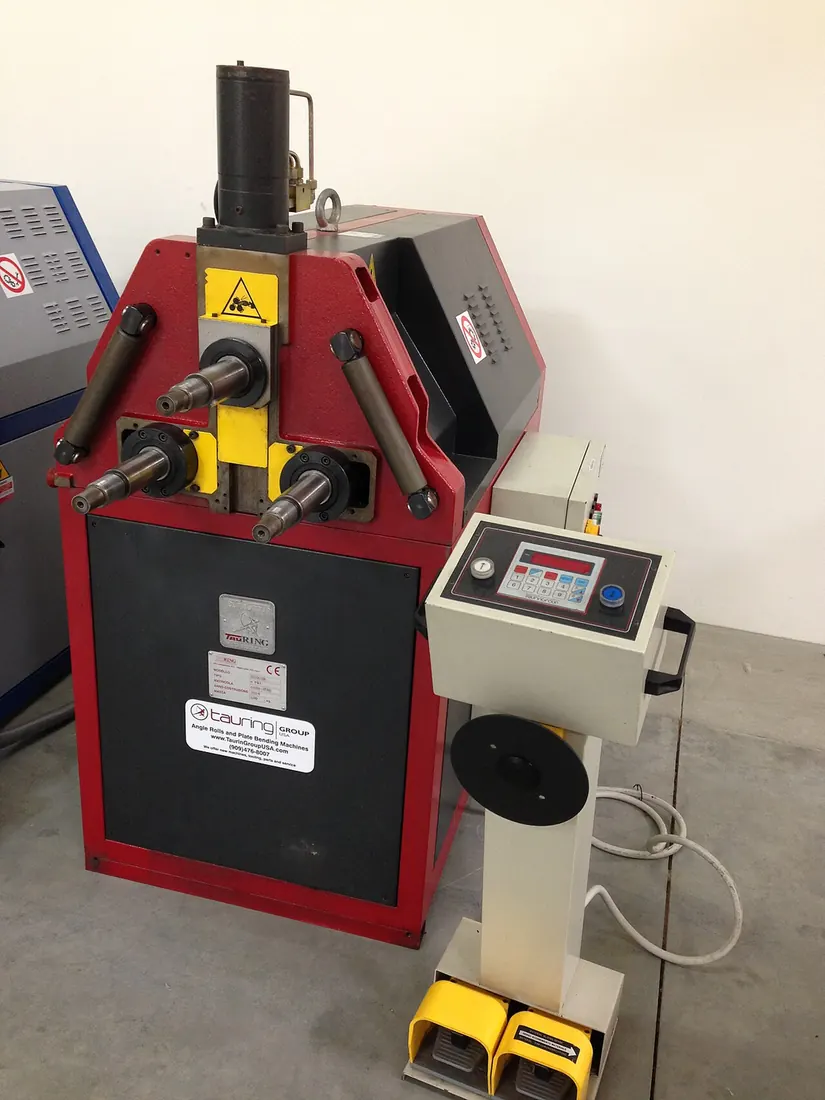

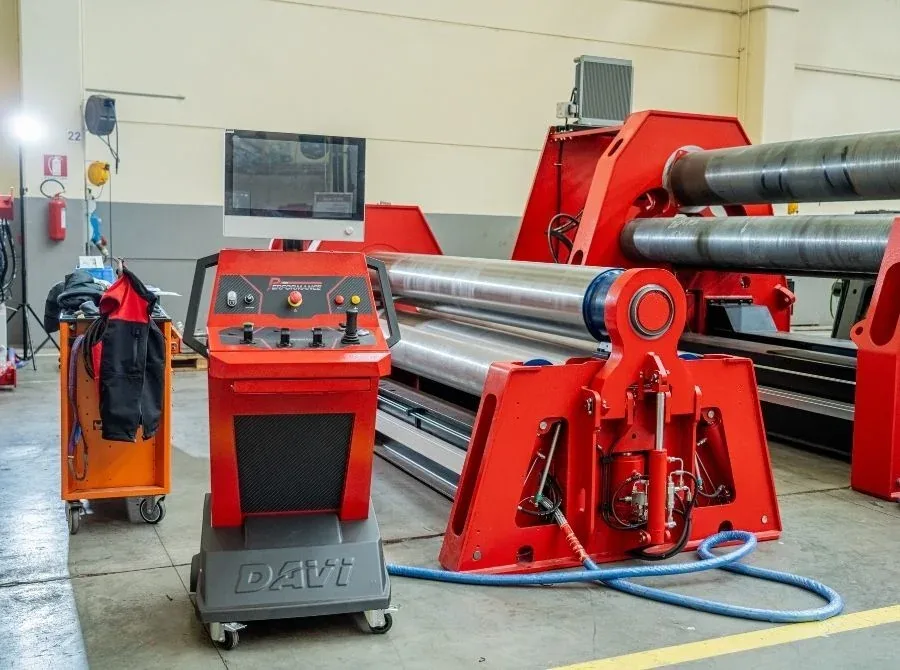
What it does
Grips and bends metal plate between rotating rolls, gradually rolling it into cylinders, cones or arc segments.
How it works
Plate bends as it passes between several rolls, and adjusting their relative positions controls curvature. In four-roll machines the top and bottom rolls pinch the plate while side rolls pre-bend and roll; three-roll machines can have different geometries, so one roll motion cannot be applied to all plate rolls.
Process sequence
- Align and pinch the plate
- Pre-bend the ends per the process
- Adjust rolls and roll
- Make extra passes to true as needed
- Support the work and unload
- Check curvature and ends
Key inputs
- Plate width, thickness and strength
- Shell diameter, taper and straight ends
- Roll set and pre-bending capability
- Support and unloading space
Common problems
- Missing pre-bend leaving flat ends
- Springback and roll deflection affecting curvature
- Pinch slip
- Large thin plates distorting under their own weight
Limits of application
- Rated plate thickness must be read with material, plate width and target diameter
- Cone rolling needs suitable roll positions and attachments
- Plate rolling and section bending use different roll tooling
Functional modules
Working rolls and drive
Pinch and feed the plate
Roll position adjustment
Sets curvature and pre-bend
Frame and supports
Take bending loads and support the work
Unloading and control
Remove parts and manage geometry
Manufacturer & technical sources
Continue with manufacturer product pages, operating principles and technical information for this equipment type.