


What it does
Cuts plasticized material into pellets for storage, transport and further processing.
How it works
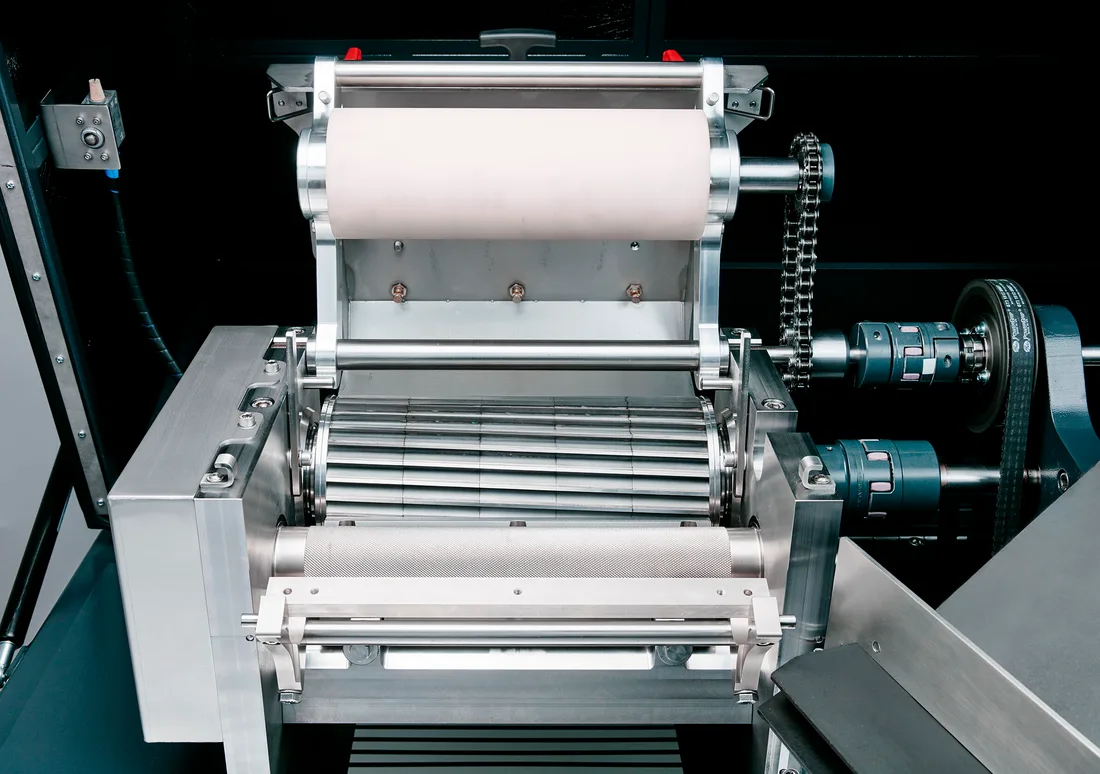
Taking strand pelletizing as an example, melt is extruded through strand holes, cooled and dewatered, and feed rolls draw the strands between a fixed bed knife and a rotating cutter that cuts them continuously into pellets. The pelletizing process should be chosen by the material's sensitivity to water and temperature; quality cannot be judged by pellet appearance alone.
Process sequence
- Plasticize and extrude strands
- Cool
- Dewater and lead strands in
- Draw in and cut under control
- Screen
- Collect and inspect
Key inputs
- Material and formulation
- Melt supply and strand stability
- Cooling and residual water
- Feed speed, cutter and pellet requirements
Common problems
- Strand breaks upsetting feeding
- Unsuitable cooling causing sticking or brittle breaks
- Cutter gap wear affecting pellet shape
- Residual water or contamination affecting later processing
Limits of application
- This page covers melt pelletizing, not shredders that grind scrap into flakes
- Underwater and die-face hot cutting use other cutters and cooling
Functional modules
Extrusion feed
Supplies uniform melt strands
Cooling and dewatering
Make strands fit for cutting
Feed rolls and cutter
Draw in and cut into pellets
Screening and conveying
Separate off-spec pellets and transfer
Manufacturer & technical sources
Continue with manufacturer product pages, operating principles and technical information for this equipment type.