

What it does
Acts on material surfaces with plasma to remove suitable thin contamination or improve the surface for later bonding and coating.
How it works
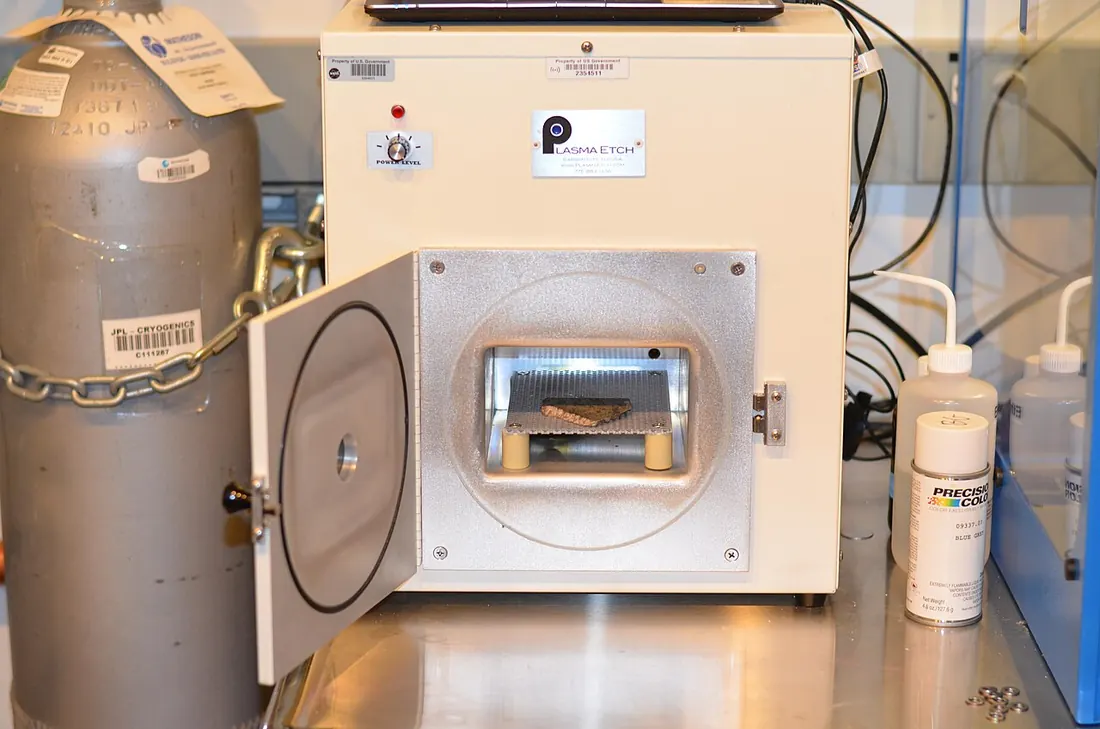
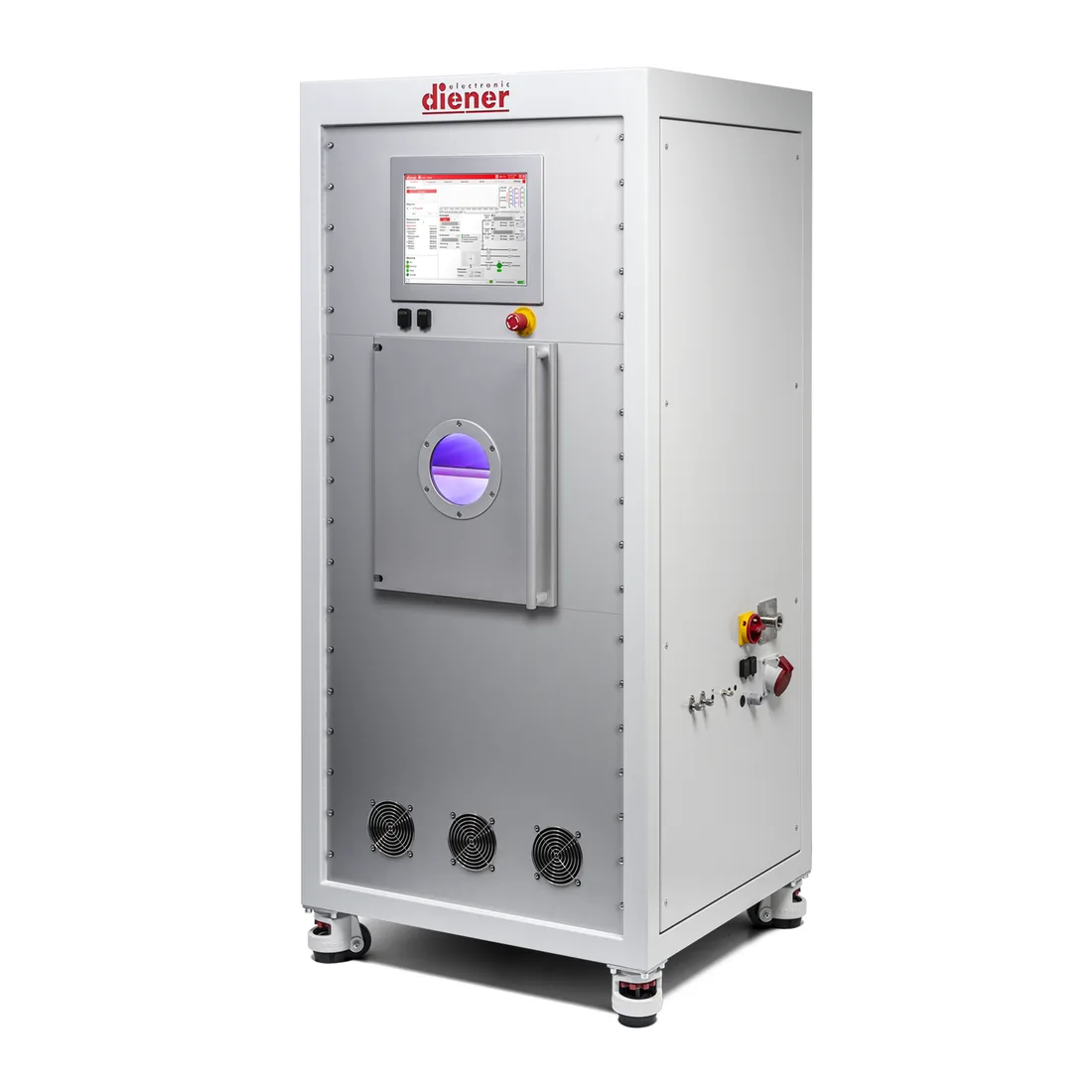
Taking low-pressure cleaning as an example, the chamber is evacuated, a suitable process gas is let in, and the generator supplies energy to turn it into plasma. Active species in oxygen plasma can convert hydrocarbon contamination into volatile products that the pumps remove; other gases and excitation methods act differently.
Process sequence
- Load parts and close the chamber
- Pump down to process conditions
- Admit gas and ignite plasma
- Treat per the process and remove products
- Vent and unload
- Prevent recontamination
Key inputs
- Substrate, contamination type and thickness
- Gas, power, pressure and time
- Part arrangement, exhaust and time until bonding
Common problems
- Contamination not matching the gas mechanism
- Shadowing causing uneven treatment
- Overtreatment, recontamination or decay of activation
Limits of application
- Cleaning thin organic layers does not replace removing large particles
- Low-pressure chambers and atmospheric jet systems differ in construction and cycle
Functional modules
Vacuum chamber and pump
Create and keep the treatment environment
Gas supply control
Adjusts gas composition and flow
Generator and electrodes
Couple energy into the gas
Part carriers
Expose surfaces to be treated
Manufacturer & technical sources
Continue with manufacturer product pages, operating principles and technical information for this equipment type.