
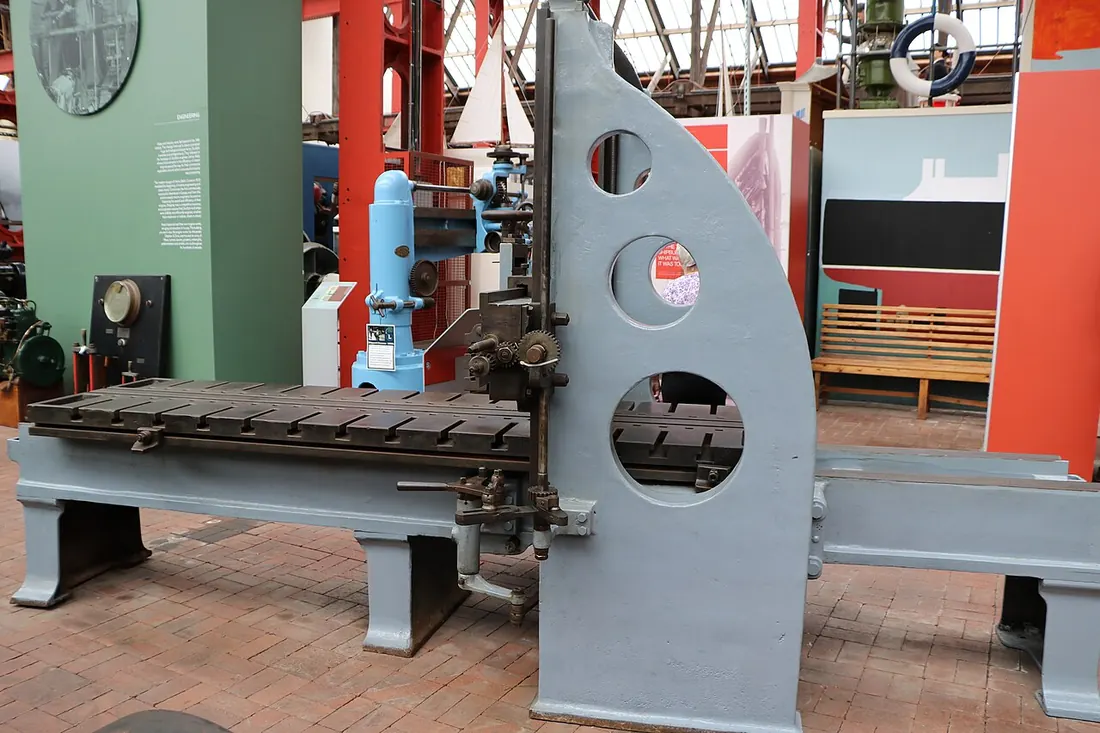

What it does
Machines flat and straight surfaces with a reciprocating work table and intermittent tool feed.
How it works
The work is fixed to the reciprocating table, which moves in the main cutting direction, and the single-point tool feeds sideways or vertically between strokes. It divides the main motion differently from a shaper, whose tool reciprocates on the ram.
Process sequence
- Choose the reference face
- Clamp and check the stroke envelope
- Set tool position
- Cut by reciprocation with intermittent feed
- Check flatness
- Stop fully and unload
Key inputs
- Part size and mass
- Stroke and overrun space
- Tool and clamping rigidity
- Flatness and straightness requirements
Common problems
- Part support or clamping distortion
- Tool wear changing the surface
- Guideway condition and thermal change affecting long flat surfaces
Limits of application
- This page covers metal planers
- A gantry mill looks similar but cuts with a rotating cutter
- Woodworking thicknesser principles do not apply
Functional modules
Reciprocating table
Carries the work in the main motion
Tool head and feed
Change the position of adjacent cuts
Bed and guideways
Keep motion straight
Workholding
Relates machined faces to the table datum
Manufacturer & technical sources
Continue with manufacturer product pages, operating principles and technical information for this equipment type.