
EQUIPMENT / PRINCIPLE / DESIGN

Test-pen PCB assembler

Locates and assembles the finished circuit board, display and plastic housing of a test pen, forming a subassembly for later electrical checks.

Equipment principle & structureRequest design help ↗
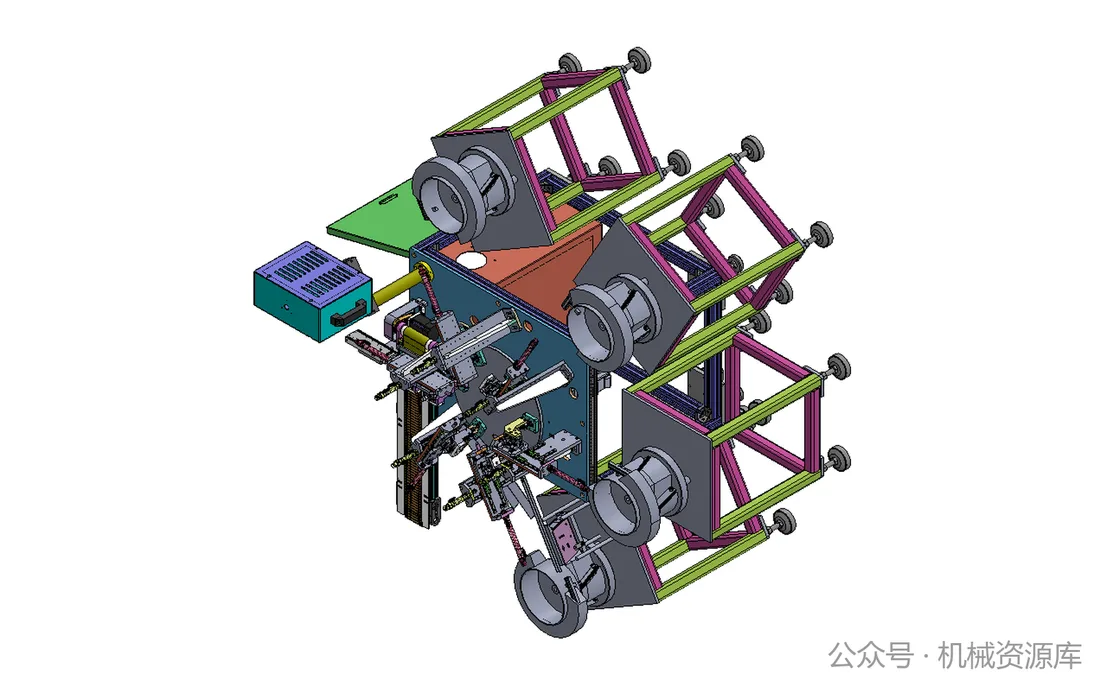
Test-pen PCB assembler, 3D model: several feeders arranged around the assembly unit
Test-pen PCB assembler, 3D model: several feeders arranged around the assembly unit · Xiaobai Design Library · MechWiki model library screenshot · Resized proportionally and converted to WebP
Test-pen PCB assembler · original schematic, not to scale; shows the working principle and modules
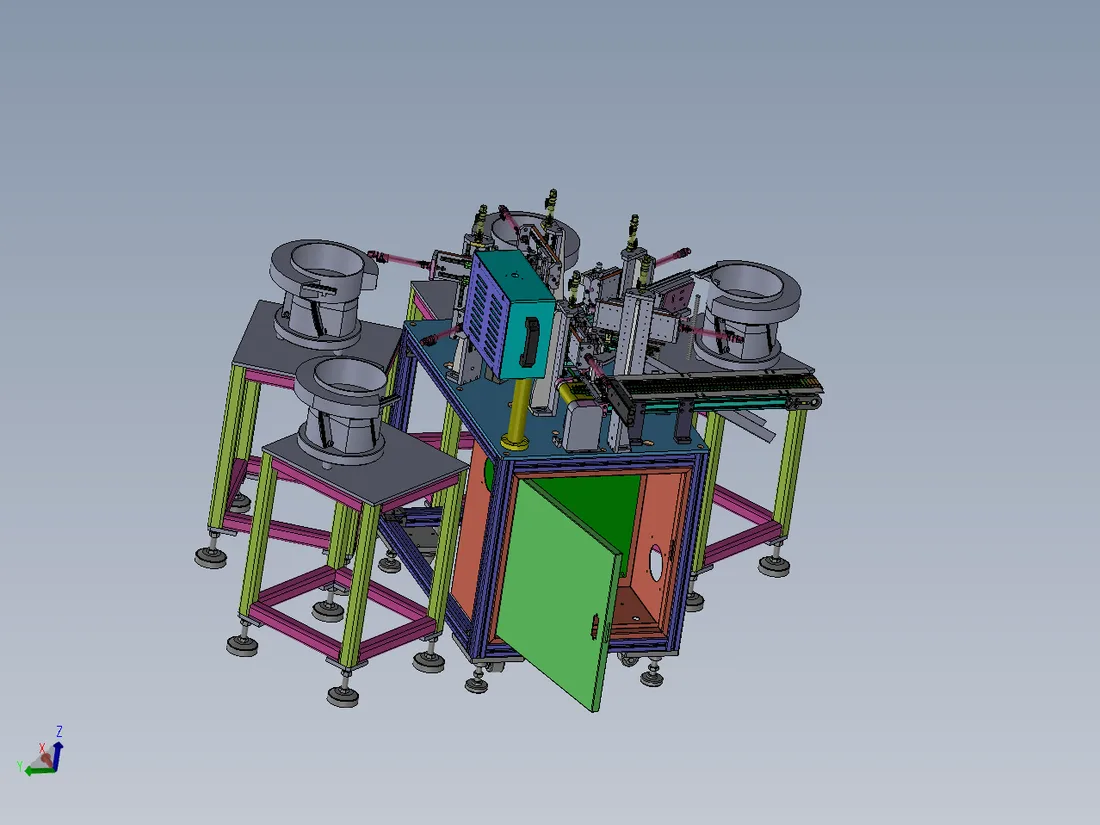
Test-pen PCB assembler, 3D model: bowl feeders, belt line, press station and touch screen
Test-pen PCB assembler, 3D model: bowl feeders, belt line, press station and touch screen · Hongtu 3D model · Public model library reference image · Resized proportionally and converted to WebP
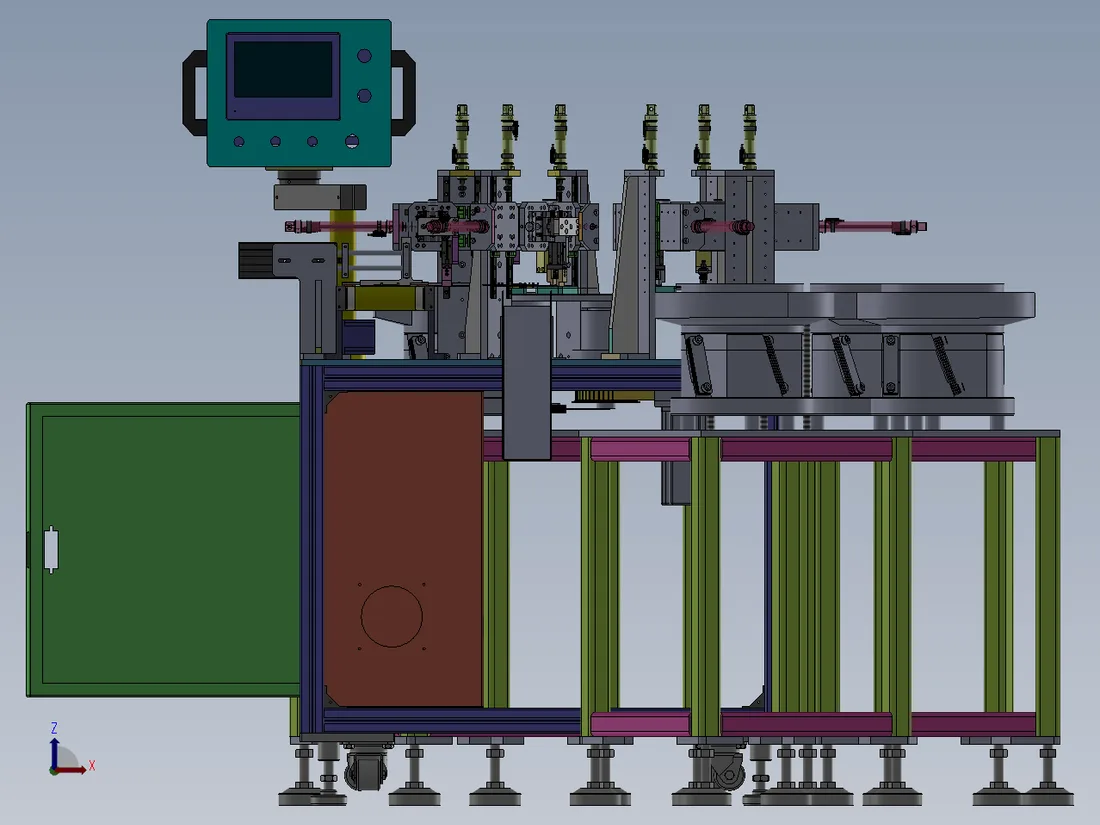
Same model: two press heads with cylinders, bowl feeders on the right
Same model: two press heads with cylinders, bowl feeders on the right · Hongtu 3D model · Public model library reference image · Resized proportionally and converted to WebP
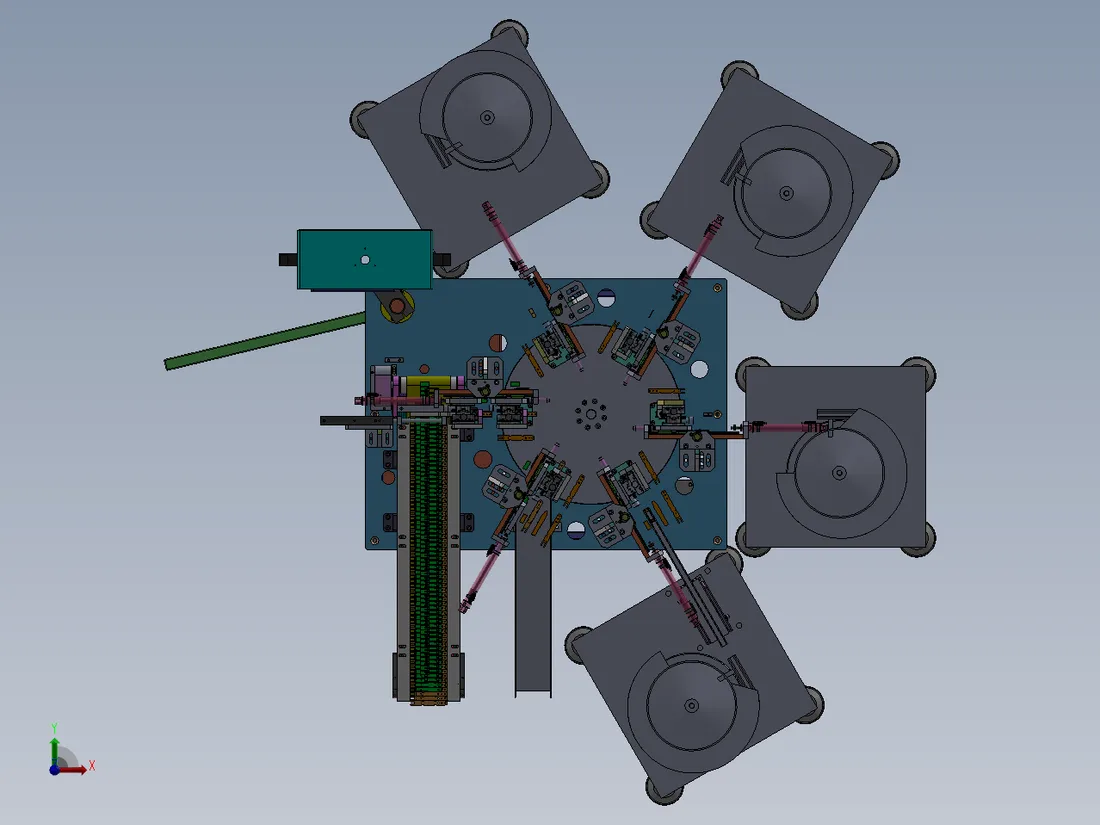
Same model: eight-station index dial with four bowl feeders around it
Same model: eight-station index dial with four bowl feeders around it · Hongtu 3D model · Public model library reference image · Resized proportionally and converted to WebP

What it does

Locates and assembles the finished circuit board, display and plastic housing of a test pen, forming a subassembly for later electrical checks.

How it works

A fixture holds the housing assembly datum; the finished PCB is guided in and pressed into position, and the display is fitted to match the window and contact positions. A turntable carries the subassembly between work positions, small parts are fed, gripped or picked separately, and press heads should land on board support areas, avoiding components and the display face. Station order is set by the actual insertion directions of housing and board.

Process sequence

  1. Locate the housing
  2. Feed PCB and small display parts along the assembly path
  3. Guide, place and press
  4. Check presence and appearance
  5. Transfer and unload

Key inputs

  1. PCB outline, no-press component zones and housing support points
  2. Display window, contact positions and small-part orientation
  3. Press stroke, allowable load and ESD requirements

Common problems

  1. Board lifting or components loaded
  2. LCD misplaced or cracked
  3. Missing parts, double feeds, curled pads and housing scratches

Limits of application

  1. This is mechanical assembly of finished boards and housings, not PCB placement or soldering
  2. Station combinations for display, buttons or pads change with the design
  3. Acceptable appearance does not replace electrical function and insulation safety verification of the pen

Functional modules

Housing locating

Holds the base datum and leaves an insertion path

PCB pick, place and press

Guides the board in and controls press position

Display and small-part supply

Grips or picks each part and aligns it

Indexing and unloading

Moves subassemblies and checks for missing parts

Manufacturer & technical sources

Continue with manufacturer product pages, operating principles and technical information for this equipment type.

ONLY ON MECHWIKI / AGGREGATED

Aggregated references: models, makers, patents & videos

References scattered across model articles, vendor sites and patent databases, gathered under this machine. Checked items are listed; the rest are offered as ready-to-open searches.

Equipment and core-unit manufacturers1

Manufacturer references for whole machines, subsystems and related processes; each item states its scope.

  • SCHMIDT Technology

    ServoPress 605 press-fit module for electronic components · Related process

    This reference covers press fitting of boards and connectors. Verify the complete test-pen assembly line, its use of Compliant Pin connections and its station sequence separately.

    Manufacturer reference

Patents: how others built it

Patents are useful for drawings and mechanism ideas. None has been vetted for this entry yet, so here are searches pre-filled with the machine name.

Videos: see it run

No licensed video is hosted for this machine yet; these searches are pre-filled with its name.

3D MODELS

3D models and download information

Explore structure and assembly with models. Download methods, file formats and terms are provided by the original article or mini program.

Find more in the model library →