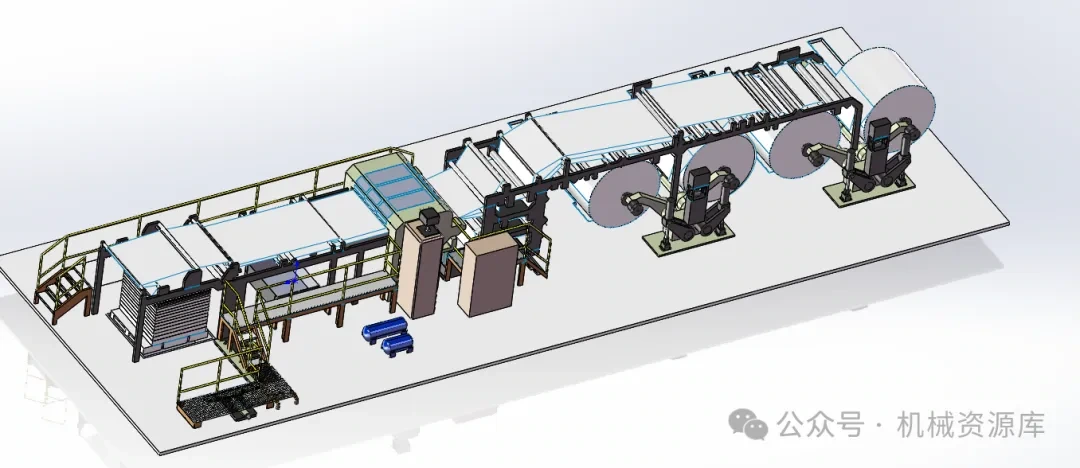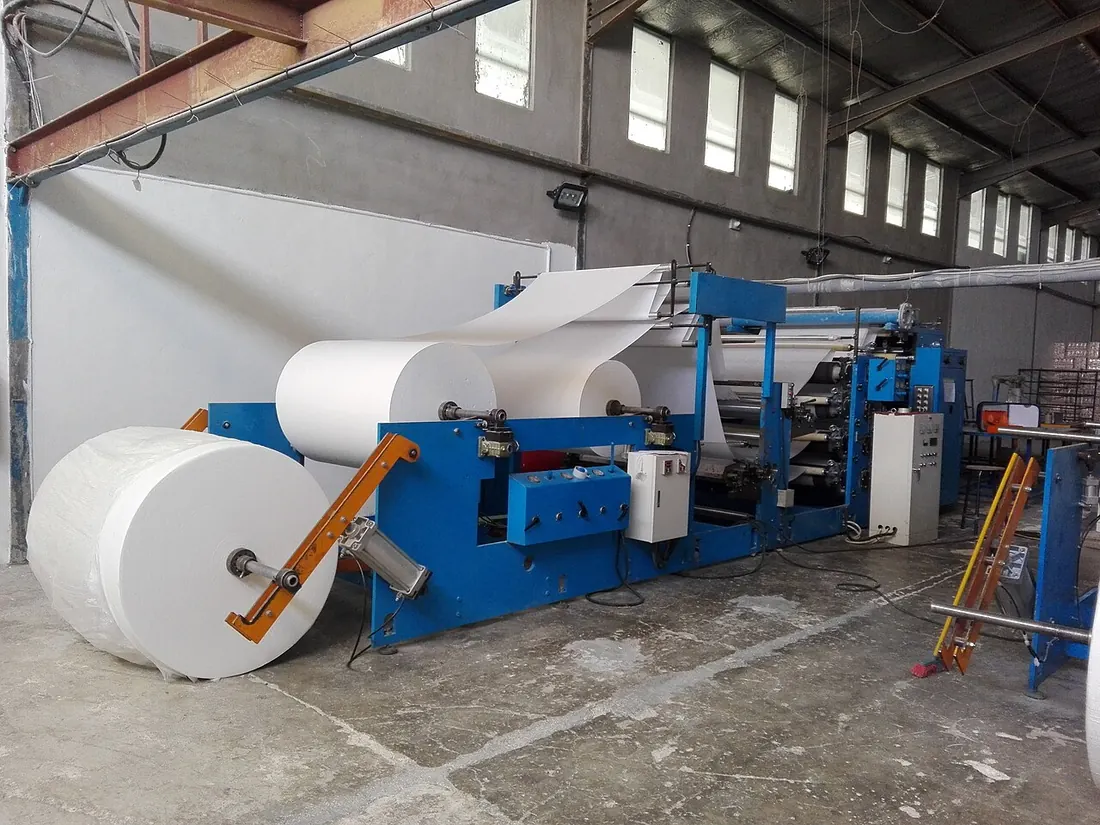

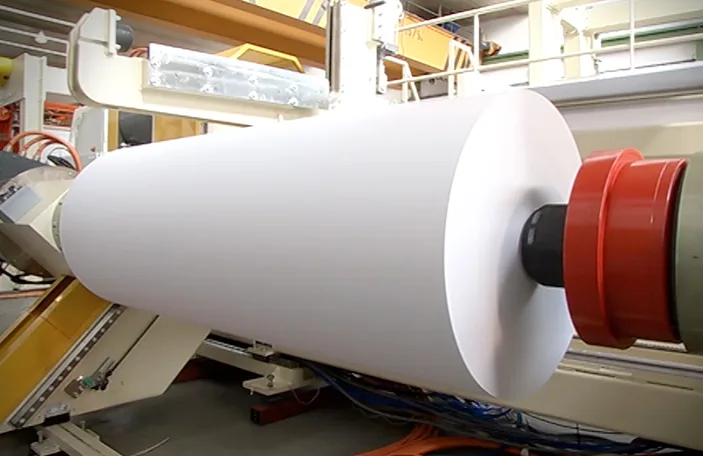
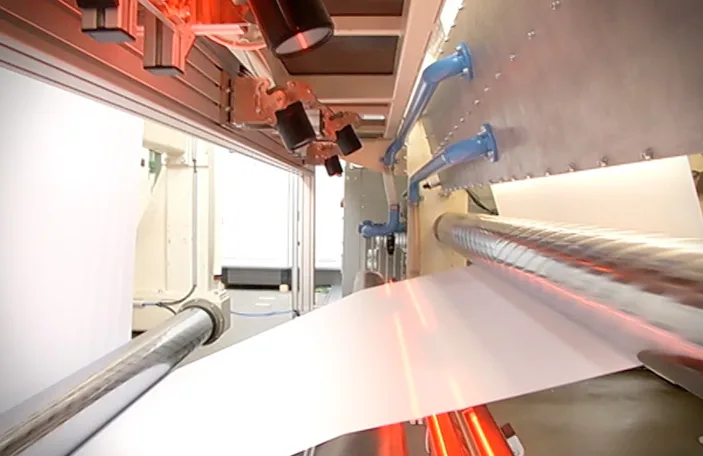
What it does
Converts parent paper reels into reels sized for later use, covering slitting, rewinding and reel finishing in paper converting.
How it works
Paper unwinds from the parent reel, passes guide rolls and the slitting section to be split to target widths, and is rewound on cores. Reel structure depends on tension and also on nip load and drive torque distribution; different grades suit different support and winding methods.
Process sequence
- Load the parent reel and thread
- Position knives and cores to specification
- Slit under tension control
- Coordinate support and drive with reel diameter
- Change reels at set length
- Check width and hardness
Key inputs
- Paper grade, basis weight and moisture
- Target width, reel diameter and core
- Slit quality, tension, nip and torque
Common problems
- Telescoping ends or loose cores
- Over-tight winding causing wrinkles, bursts or loss of bulk
- Poor slitting causing ragged edges and dust
Limits of application
- This entry focuses on slitting and rewinding paper reels
- Pulping and papermaking, embossing and folding and bag making are other steps; paper and film cannot share the same tension and nip settings
Functional modules
Parent reel unwind
Supplies the web steadily
Slitting and web guiding
Splits the web to order widths
Winding support
Builds reels on cores, drums or belt beds
Unloading and inspection
Remove finished reels and check reel shape
Manufacturer & technical sources
Continue with manufacturer product pages, operating principles and technical information for this equipment type.