
EQUIPMENT / PRINCIPLE / DESIGN

Panel saw

Saws full or stacked panels into strips and rectangular parts according to the cutting plan.

Equipment principle & structureRequest design help ↗
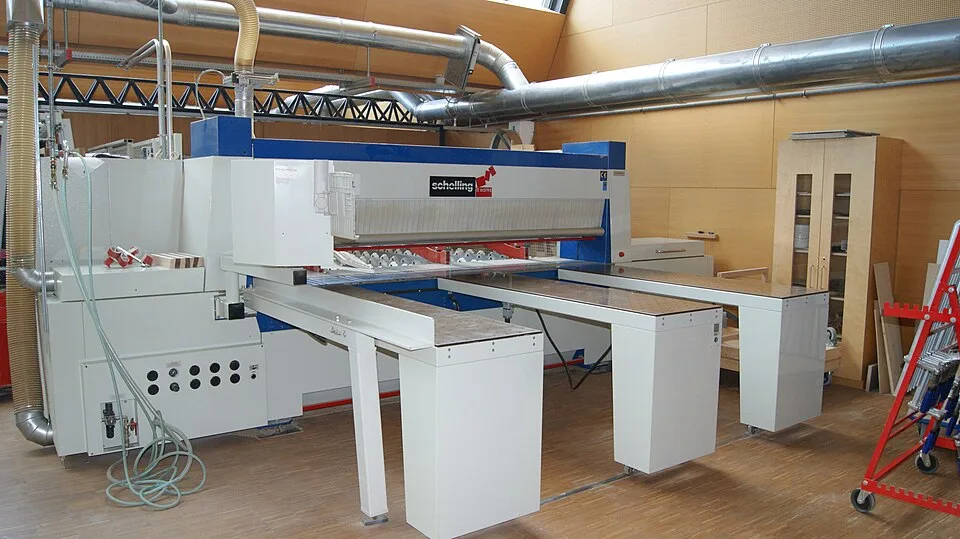
Schelling FM-H 330/310 horizontal panel saw in a workshop
Schelling FM-H 330/310 horizontal panel saw in a workshop · Source: Wikimedia Commons ↗ · by Asurnipal · CC BY-SA 4.0 · Resized and converted to WebP
Panel saw · original schematic, not to scale; shows the working principle and modules
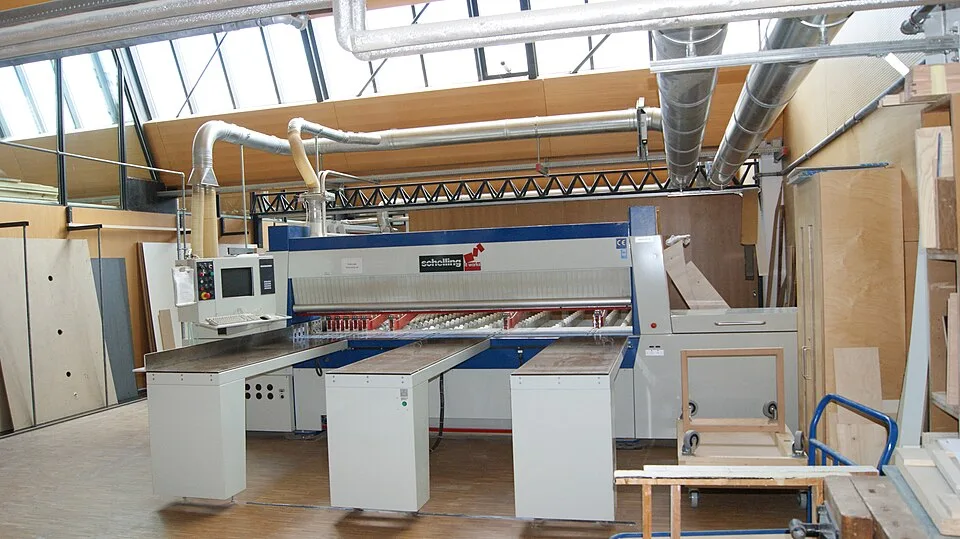
Schelling FM-H 330/310 horizontal panel saw and its infeed/outfeed tables
Schelling FM-H 330/310 horizontal panel saw and its infeed/outfeed tables · Source: Wikimedia Commons ↗ · by Asurnipal · CC BY-SA 4.0 · Resized and converted to WebP
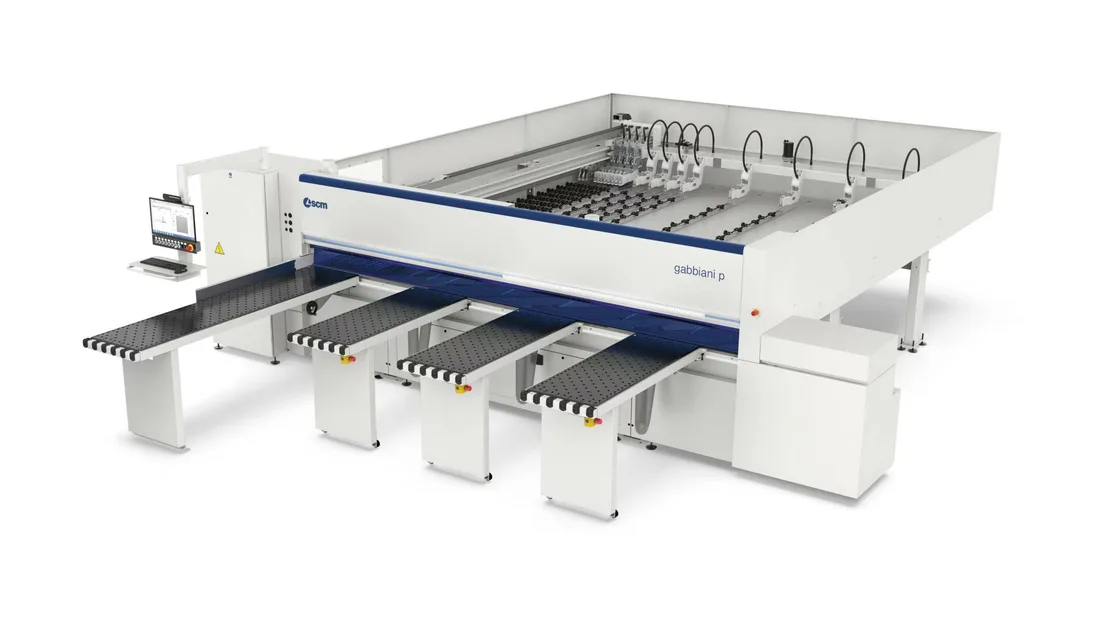
SCM gabbiani p horizontal beam saw with front tables and rear feeding area
SCM gabbiani p horizontal beam saw with front tables and rear feeding area · Source: SCM website ↗ · © the manufacturer, quoted for reference · Resized proportionally and converted to WebP

More real-machine photos on Wikimedia Commons: Horizontal panel saws ↗

What it does

Saws full or stacked panels into strips and rectangular parts according to the cutting plan.

How it works

Taking a horizontal beam saw as an example, clamps and the programme fence push the panel to the cut position, the pressure beam clamps it, and the saw carriage with main saw and any scoring saw passes along the cut line. The side aligner keeps it square, and after cutting parts are rotated or cut to size per the plan.

Process sequence

  1. Load panels and check the cutting plan
  2. Align sideways and clamp
  3. Push to length
  4. Clamp with the pressure beam
  5. Cut with the carriage and return
  6. Separate or rotate and cut again

Key inputs

  1. Panel size, stack height and internal stress
  2. Target sizes, kerf and cutting plan
  3. Blade condition, scoring alignment, clamps and extraction

Common problems

  1. Squareness and length errors
  2. Face chipping or distortion from stress release
  3. Stack shifting, blade wander and dust build-up

Limits of application

  1. Beam saws mainly make straight cuts
  2. Shaped outlines need CNC routers or similar, and stack height cannot be judged from blade diameter alone

Functional modules

CNC pusher

Positions panels to cut size

Pressure beam and side aligner

Clamp and square the panel

Main saw and carriage

Cut the panel in straight lines

Scoring and extraction

Protect faces and remove dust as configured

Manufacturer & technical sources

Continue with manufacturer product pages, operating principles and technical information for this equipment type.

ONLY ON MECHWIKI / AGGREGATED

Aggregated references: models, makers, patents & videos

References scattered across model articles, vendor sites and patent databases, gathered under this machine. Checked items are listed; the rest are offered as ready-to-open searches.

Patents: how others built it

Patents are useful for drawings and mechanism ideas. None has been vetted for this entry yet, so here are searches pre-filled with the machine name.

Videos: see it run

No licensed video is hosted for this machine yet; these searches are pre-filled with its name.

3D MODELS

3D models and download information

Explore structure and assembly with models. Download methods, file formats and terms are provided by the original article or mini program.

Find more in the model library →