
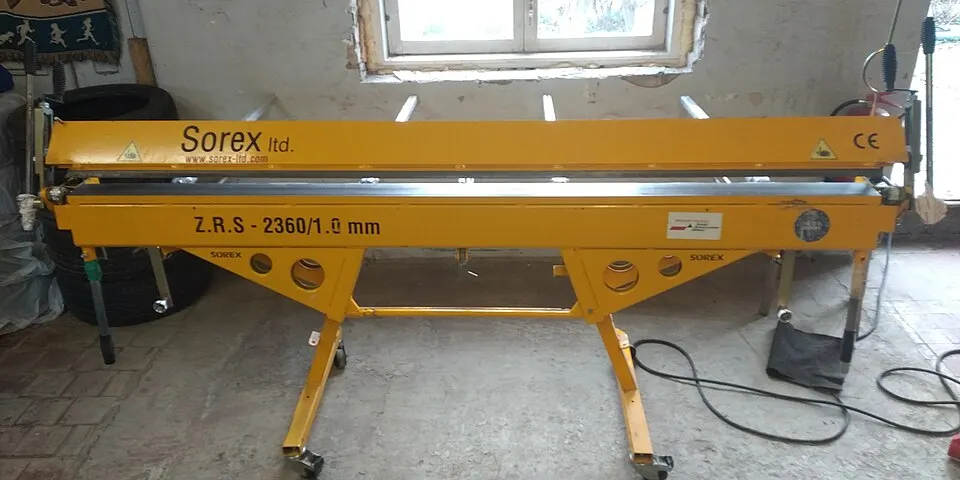

What it does
Clamps sheet and moves upper and lower bending blades around the edge to make positive and negative bends in sequence.
How it works
The blankholder and counterblade hold the sheet while controlled combined motion of upper and lower blades forms the bend. Automatic models move and rotate the sheet with a manipulator to work each edge, and tool length and stroke must suit the part; clamping and reach limits differ from press brakes that press a full-length punch into a V die.
Process sequence
- Load and centre the sheet
- Clamp the current edge
- Form with upper and lower blades per program
- Release and move or rotate
- Complete bends on each edge
- Unload and check appearance and size
Key inputs
- Sheet and flat pattern
- Flange height and return flanges
- Blankholder range
- Springback, rotation envelope and automation configuration
Common problems
- Insufficient clamping range or tool clearance
- Sheet positioning error
- Springback and material variation
- Bend order causing formed features to interfere
Limits of application
- This page uses a panel bender with automatic manipulator as the example
- Universal tooling still has material and geometry limits
- Not every blankholder and loading arrangement is automatic
Functional modules
Blankholder and counterblade
Hold sheet position
Upper and lower blades
Make positive and negative bends
Positioning and manipulator
Move and rotate the part
Motion control
Coordinates tools and part sequence
Manufacturer & technical sources
Continue with manufacturer product pages, operating principles and technical information for this equipment type.