
EQUIPMENT / PRINCIPLE / DESIGN

O-ring assembly station

Separates elastic O-rings from bulk and fits them smoothly into the specified seal groove on a shaft, piston or housing.

Equipment principle & structureRequest design help ↗
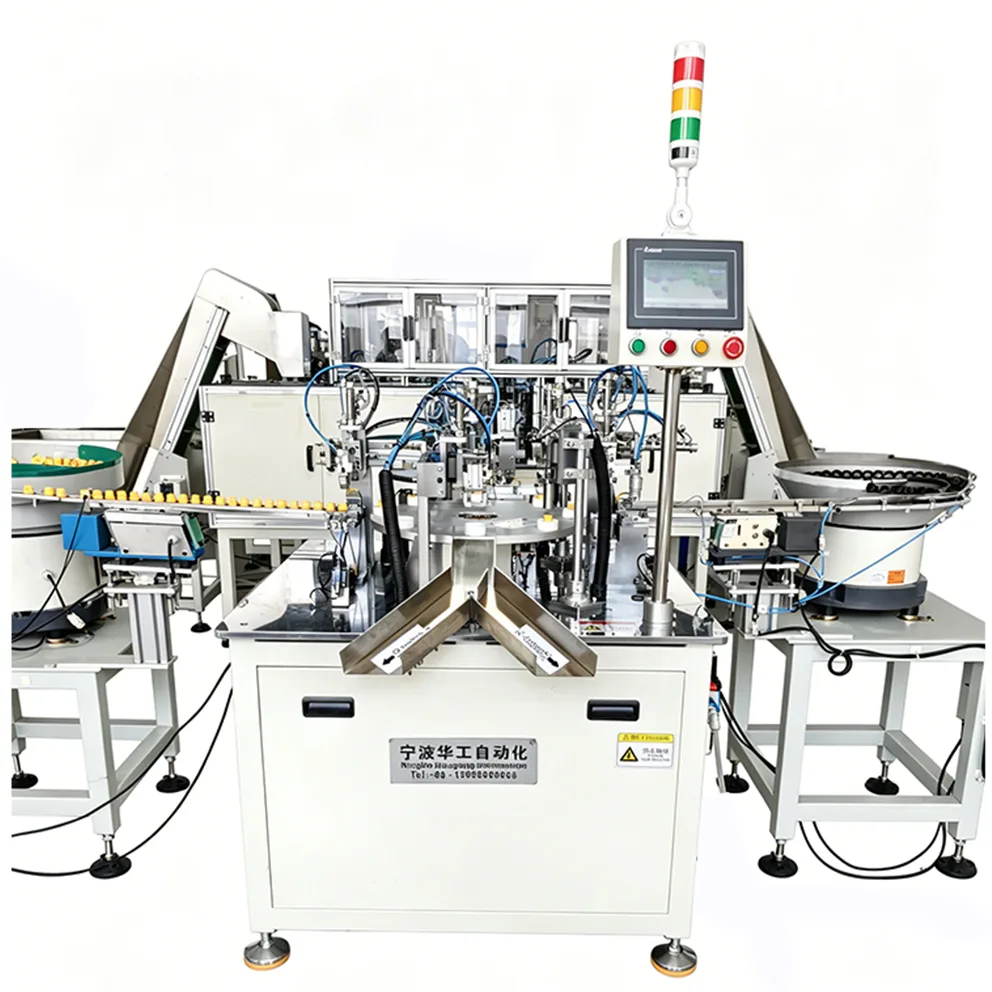
Rotary O-ring assembly machine: stations around the dial, fed by vibratory bowls
Rotary O-ring assembly machine: stations around the dial, fed by vibratory bowls · Source: Ningbo Huagong website ↗ · © the manufacturer, quoted for reference · Resized proportionally and converted to WebP
O-ring assembly station · original schematic, not to scale; shows the working principle and modules
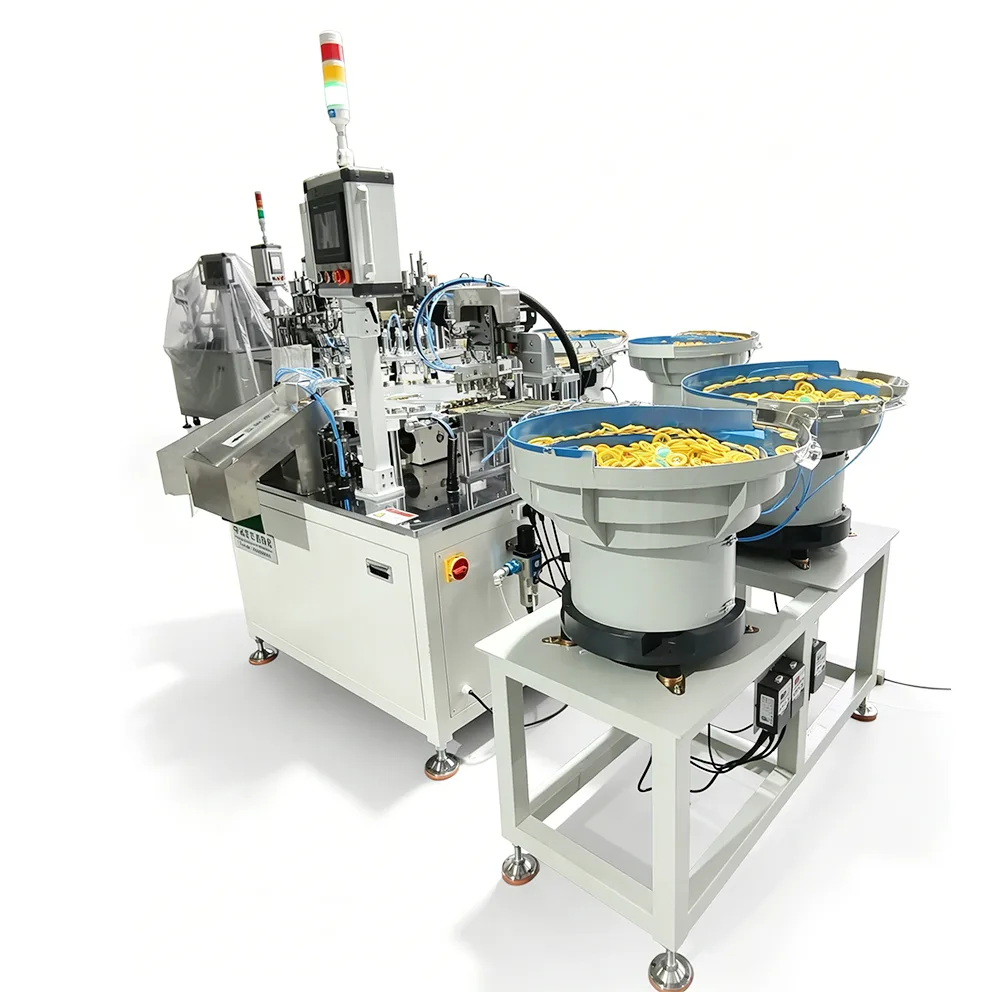
The same machine from behind: two bowl feeders supply O-rings and small parts
The same machine from behind: two bowl feeders supply O-rings and small parts · Source: Ningbo Huagong website ↗ · © the manufacturer, quoted for reference · Resized proportionally and converted to WebP
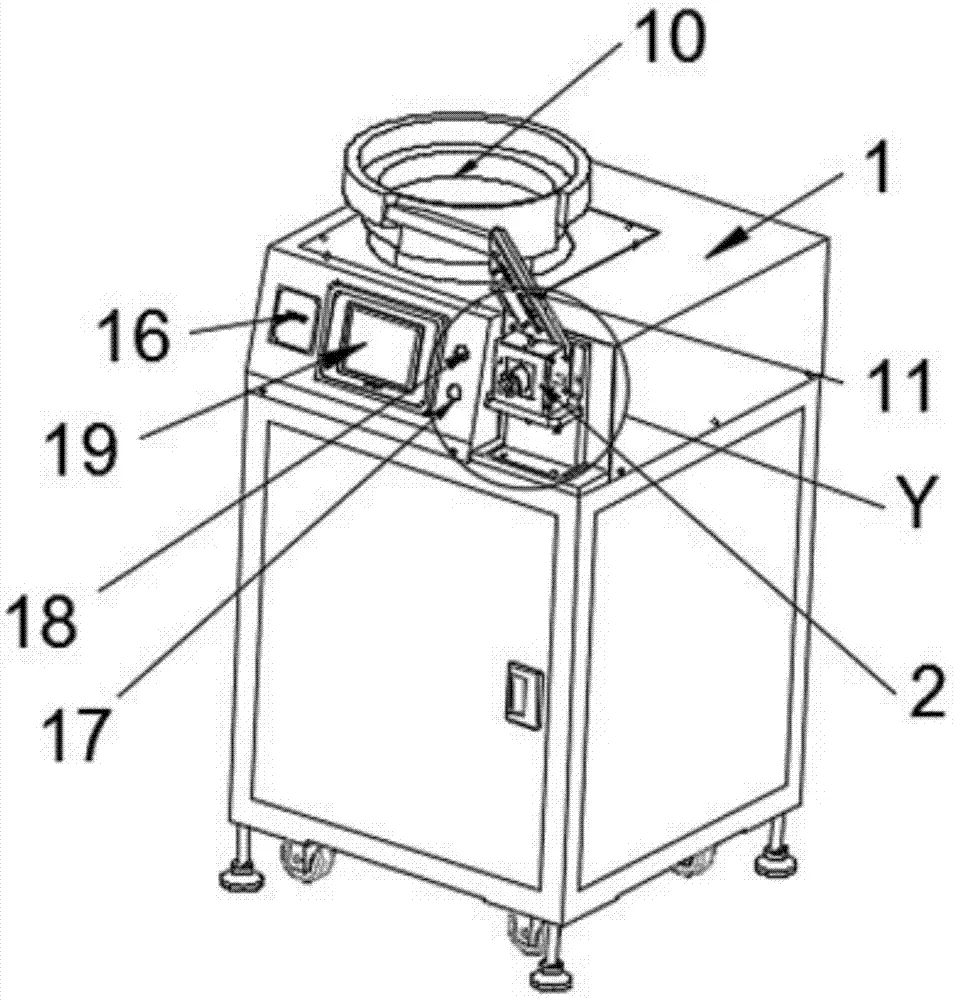
Semi-automatic O-ring assembler (patent): machine outline and feeder above
Semi-automatic O-ring assembler (patent): machine outline and feeder above · Original patent drawing · Resized proportionally with the original mark retained

What it does

Separates elastic O-rings from bulk and fits them smoothly into the specified seal groove on a shaft, piston or housing.

How it works

An assembly head or guide sleeve controls ring deformation so it passes the entry, drops into the groove and recovers. External grooves usually need controlled expansion, while bore grooves may use folded insertion; tooling must cover threads and sharp edges to avoid twisting, nicking or permanent overstretch.

Process sequence

  1. Identify part and ring type
  2. Pick a single ring
  3. Lead in within allowable deformation
  4. Push into the groove
  5. Release and let it recover
  6. Check seated attitude

Key inputs

  1. Ring size, material and allowable deformation
  2. Groove entry chamfer, surface and sharp edges
  3. Lubricant compatibility, picking method and in-place criteria

Common problems

  1. Ring twisted or rolled
  2. Cut passing sharp thread edges
  3. Double rings, missing rings or ring outside the groove

Limits of application

  1. External groove expanding tools differ from bore assembly heads
  2. Allowable installation stretch must be confirmed for each compound and size; one expansion value does not fit all O-rings

Functional modules

Escaping and picking

Ensures one clean ring each time

Guided assembly head

Controls expansion or folding deformation

Part locating

Aligns the seal groove with the assembly path

In-place check

Detects missing, double and twisted rings

Manufacturer & technical sources

Continue with manufacturer product pages, operating principles and technical information for this equipment type.

ONLY ON MECHWIKI / AGGREGATED

Aggregated references: models, makers, patents & videos

References scattered across model articles, vendor sites and patent databases, gathered under this machine. Checked items are listed; the rest are offered as ready-to-open searches.

Patents: how others built it

Patents are useful for drawings and mechanism ideas. None has been vetted for this entry yet, so here are searches pre-filled with the machine name.

Videos: see it run

No licensed video is hosted for this machine yet; these searches are pre-filled with its name.

3D MODELS

3D models and download information

Explore structure and assembly with models. Download methods, file formats and terms are provided by the original article or mini program.

Find more in the model library →