
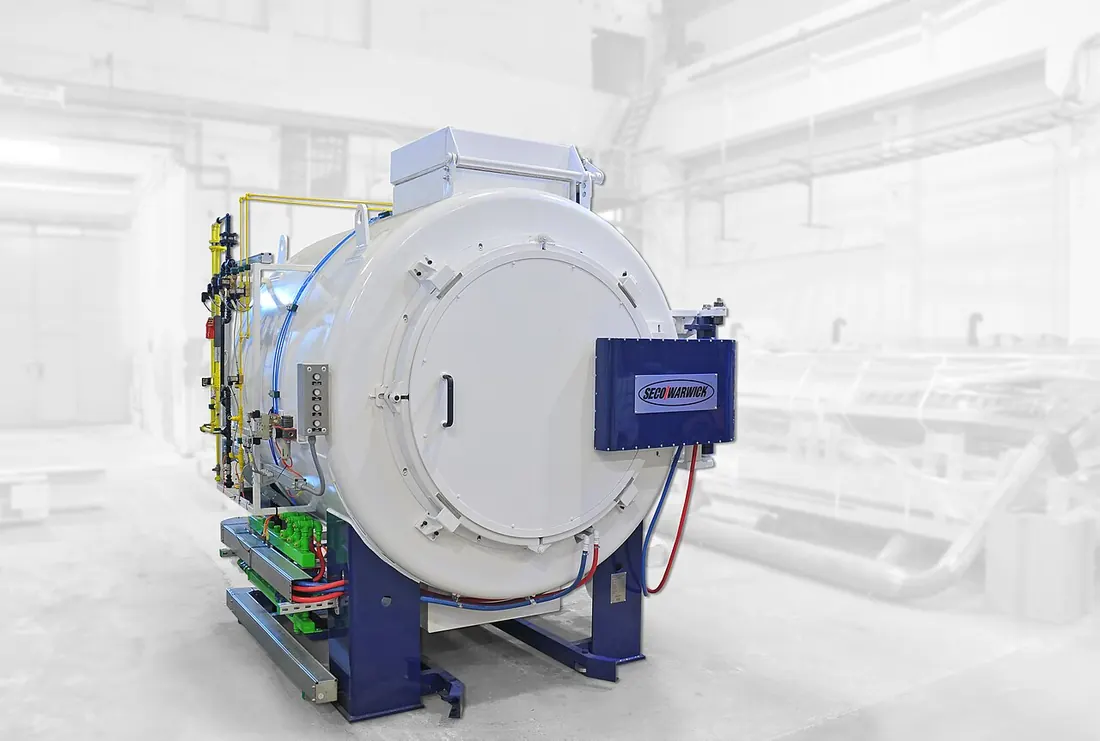

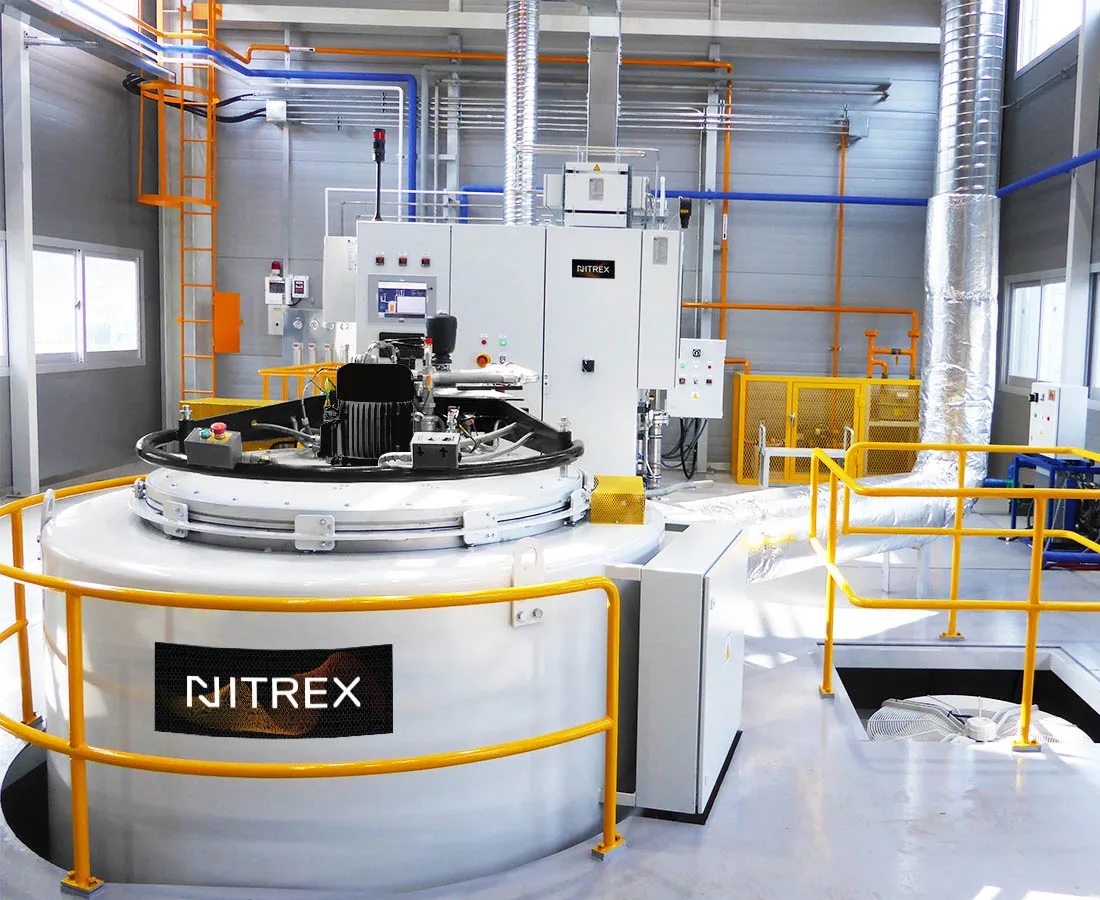
What it does
Supplies nitrogen to metal surfaces and controls its diffusion to form the required surface layer.
How it works
Gas nitriding usually supplies active nitrogen to the surface under controlled atmosphere and temperature, and nitrogen enters and diffuses inward. Furnace temperature, nitriding potential and time together shape the surface layer, and controlled ammonia supply with atmosphere measurement sustains the process rather than simply adding gas continuously.
Process sequence
- Confirm material and layer requirements
- Clean, load and seal
- Establish atmosphere and temperature
- Control nitrogen supply and diffusion
- Cool per process
- Test the layer and dimensions
Key inputs
- Alloy and prior heat treatment
- Target compound and diffusion layers
- Loading and surface access
- Temperature, nitriding potential and time
Common problems
- Surface contamination blocking treatment
- Uneven load or atmosphere causing differences
- Wrong nitriding potential changing layer composition
- Surface colour alone not proving quality
Limits of application
- This page uses gas nitriding as the example
- Plasma nitriding has different power supply and internal construction
- Nitriding and nitrocarburizing should be distinguished
Functional modules
Sealed retort and heating
Keep the treatment environment
Gas supply and circulation
Supply and distribute atmosphere
Atmosphere measurement
Reports nitriding potential and other states
Control and exhaust treatment
Run the process and handle exhaust gas
Manufacturer & technical sources
Continue with manufacturer product pages, operating principles and technical information for this equipment type.