
What changed
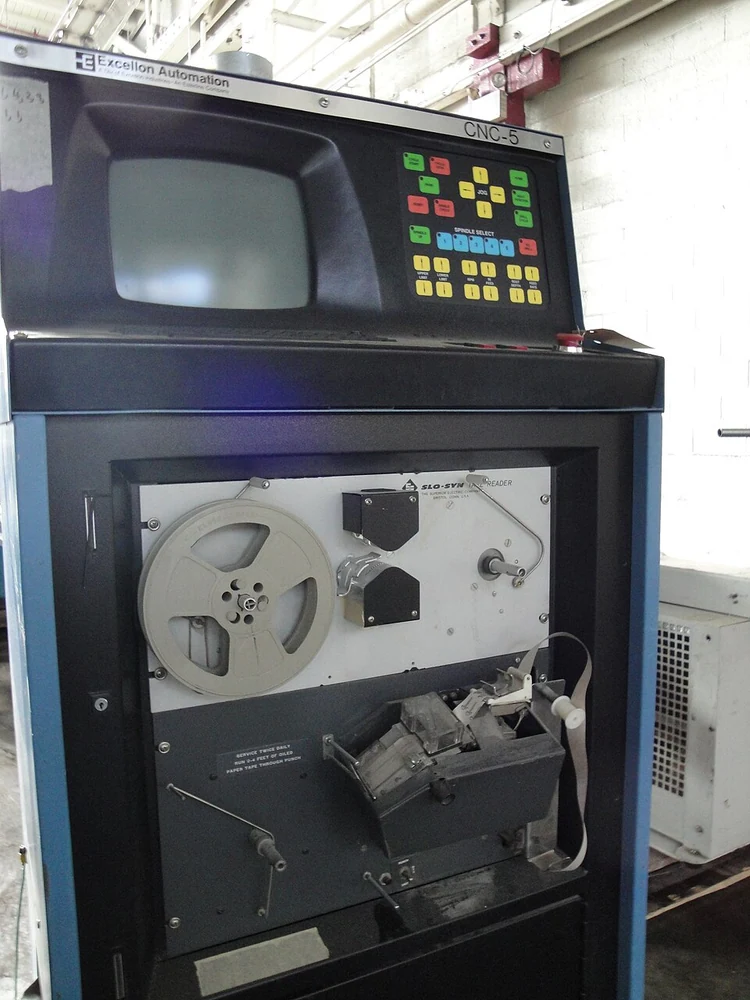
A punched tape reader converts hole codes on paper tape into program information a controller can interpret.
Core mechanism
The reader moves the tape past the sensing position in order; holes and blanks form coded characters that the electronic control interprets as machine instructions. Reading tape does not project a drawn outline from the paper onto the machine.
What to look for
- Recognize hole codes rather than images
- Trace the three steps of reading, decoding and executing motion
- Compare paper tape with later electronic storage
Legacy
Replaceable program media allowed motion instructions to be fed in repeatedly, and program preparation gradually separated from machine operation
Reading limits
- The tape reader is only the program input of an NC system
- Tape standards, decoding and control equipment must match
Key elements
Tape and transport
Store codes and feed them in order
Hole reading
Detects hole or no hole at each position
Decoding and control interface
Pass codes to the control unit
Museum & technical references
Explore this technology through museum and technical references.