
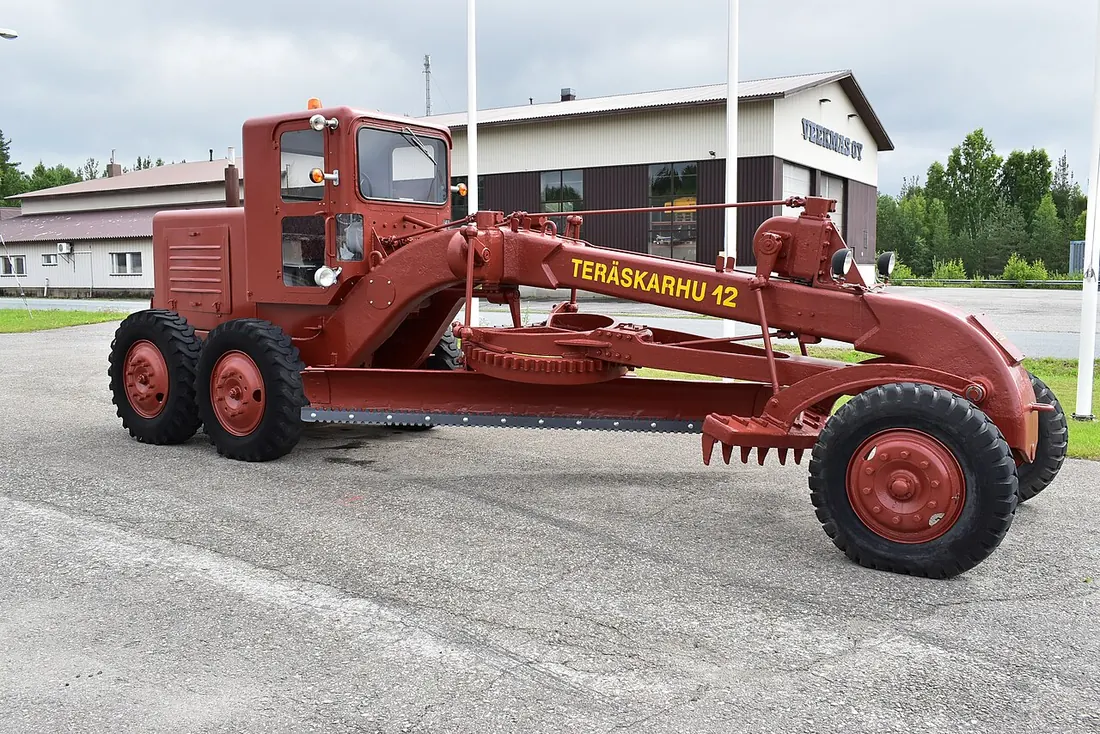

What it does
Cuts, rolls and moves material sideways with a long blade, forming road grades and cross slopes or other finished surfaces.
How it works
The blade is mounted between front and rear wheels through the drawbar and circle, and lift, rotation, side shift and pitch decide cutting depth, cross slope and discharge direction. Travel keeps material moving across the blade, while front wheel lean and frame articulation help resist side thrust.
Process sequence
- Set the target surface
- Set blade position and travel line
- Cut in so material rolls along the blade
- Trim continuously
- Check elevation and cross slope
- Adjust and continue
Key inputs
- Material condition, cut amount and target slope
- Blade angle, side shift and tyre traction
- Survey reference, travel speed and side load
Common problems
- Wrong blade angle pushing material instead of rolling it
- Side slip throwing the line off
- Blade wear or circle play affecting finish
Limits of application
- Fine grading with a mid-mounted long blade differs from pushing with a front blade
- Automatic elevation or slope control depends on configuration and still needs a correct reference
Functional modules
Drawbar and circle
Carry the blade and set its direction
Blade lift and attitude
Set elevation and cross slope
Wheels and articulation
Control travel line and lateral stability
Power and hydraulics
Execute blade and travel adjustments
Manufacturer & technical sources
Continue with manufacturer product pages, operating principles and technical information for this equipment type.