

What it does
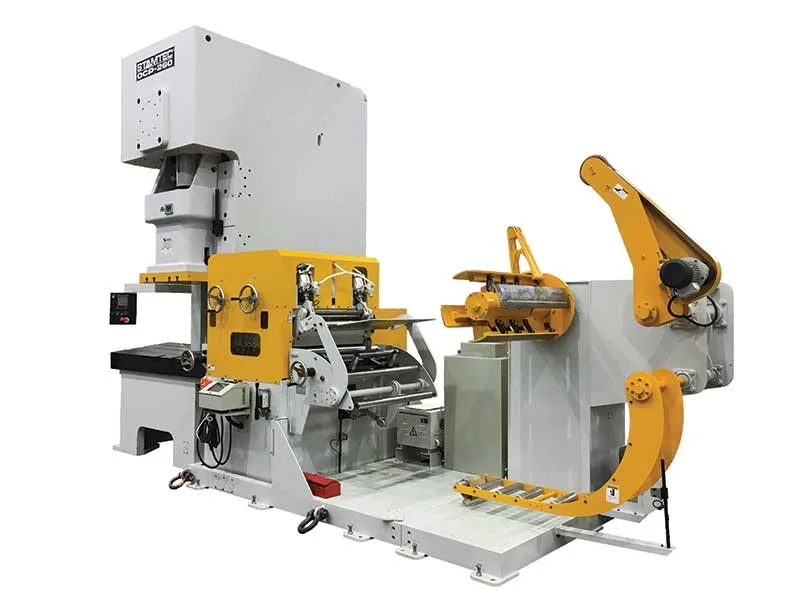
Reciprocates the slide through a mechanical drive, moving dies to blank or form material.
How it works
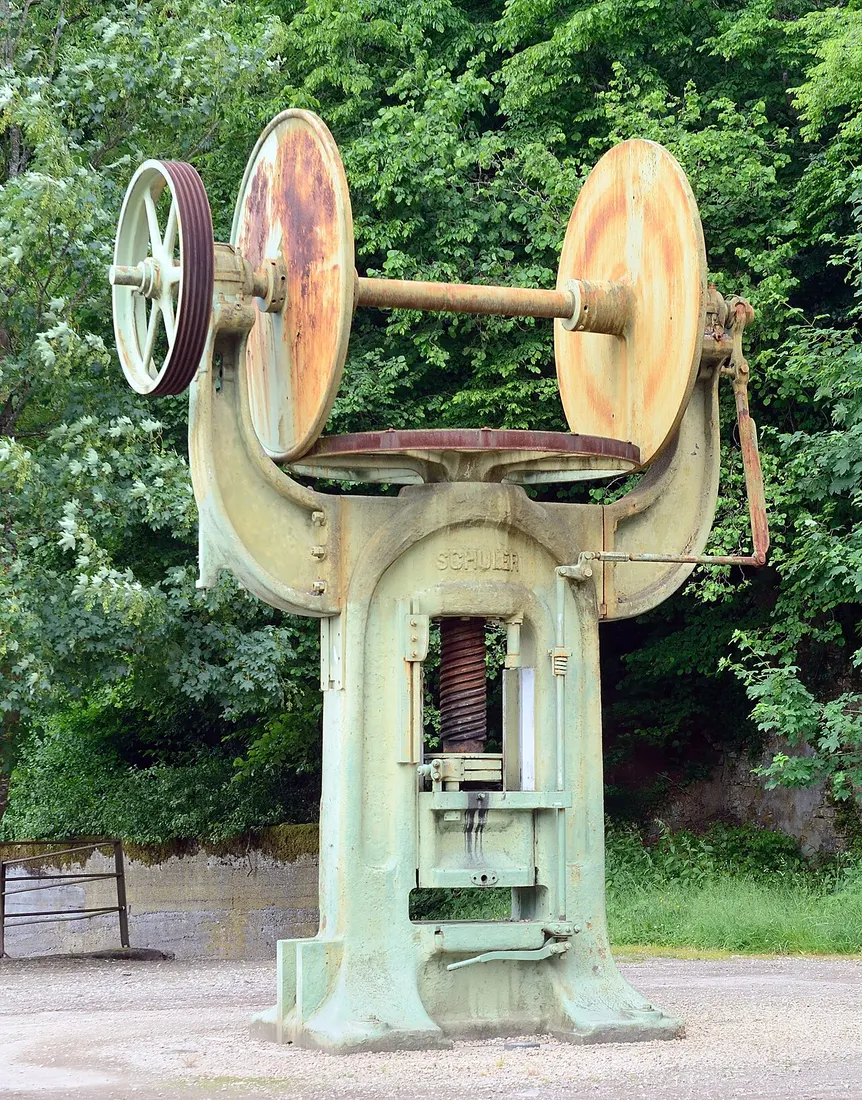
Taking a conventional crank press as an example, the motor drives the flywheel, the clutch and brake control torque transfer, and crank and connecting rod convert rotation into slide reciprocation. Available load depends on crank position, structural strength and drive energy; rated tonnage is not a constant capacity at any point in the stroke.
Process sequence
- Confirm dies, feed and guarding
- Drive enters the set cycle
- Slide descends to contact material
- Blank or form
- Return and unload
- Confirm the next feed
Key inputs
- Process load and energy
- Rated force position and stroke
- Die shut height
- Feed, off-centre load and cycle rate
Common problems
- Insufficient energy causing stalls
- Off-centre loads stressing guides and dies unevenly
- Wrong shut height setting
- Clutch, brake or lubrication faults
Limits of application
- This page mainly covers crank mechanical presses
- Toggle and link drives have different speed and force curves
- Servo mechanical presses differ in drive and motion programming
Functional modules
Motor and flywheel
Provide and store drive energy
Clutch, brake and transmission
Control and transmit motion
Slide, guides and frame
Keep die alignment
Bolster, dies and protection
Do the work and manage overload
Manufacturer & technical sources
Continue with manufacturer product pages, operating principles and technical information for this equipment type.