
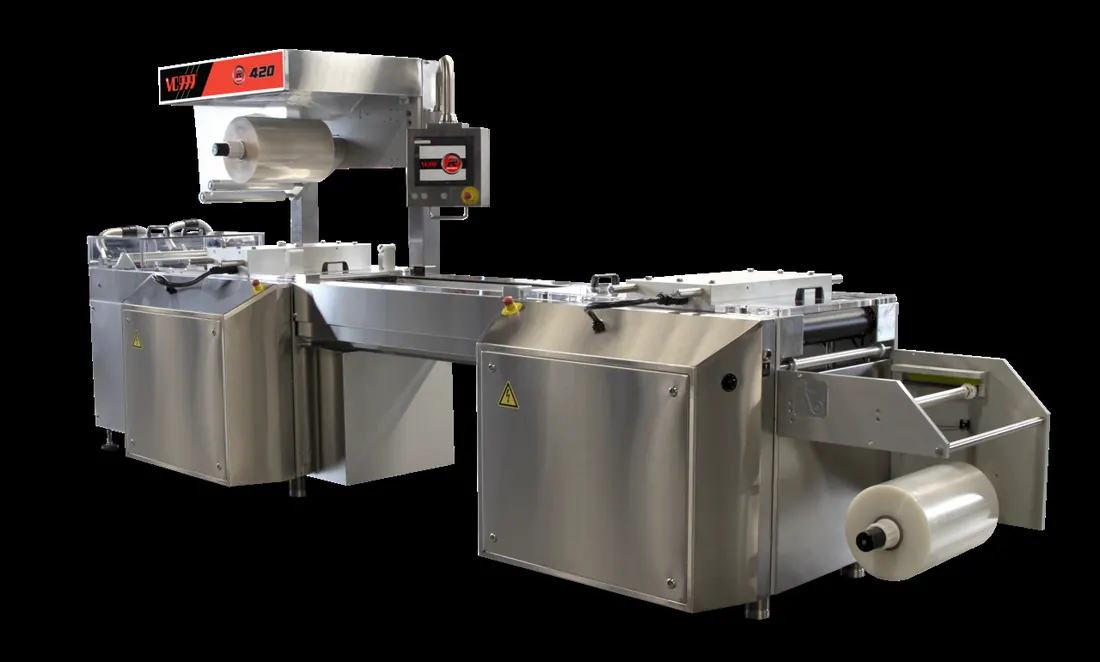

What it does
Replaces the air in a package with gas suited to the product, then seals it to keep the target package atmosphere.
How it works
Taking a chamber machine with gas flush as an example, air is drawn from bag and chamber, the selected protective gas is injected before sealing, and the chamber is vented after sealing. Gas mix, residual atmosphere, barrier properties and seal integrity together decide the result; gas flushing should not be treated as sterilization.
Process sequence
- Check product and gas plan
- Load bags or containers
- Evacuate or flush air per the machine
- Inject the target gas
- Seal the package
- Recheck atmosphere, seal and storage conditions
Key inputs
- Product sensitivity to oxygen and pressure
- Gas composition and equipment compatibility
- Packaging barrier properties
- Residual atmosphere and seal requirements
Common problems
- Wrong gas ratio or supply faults
- Seal leaks changing the atmosphere
- Film barrier unsuited to the product
- Insufficient flushing or venting causing deformation
Limits of application
- This page uses the evacuate-then-flush chamber process as the example
- Continuous gas flushing and tray sealers follow different paths
- MAP does not replace hygiene and temperature control
- Oxygen-containing gases require matching equipment
Functional modules
Evacuation or flushing unit
Lowers the proportion of original air
Gas supply metering and valves
Inject the target gas
Sealing and packaging material
Keep the package atmosphere
Process verification
Checks seal and atmosphere conditions
Manufacturer & technical sources
Continue with manufacturer product pages, operating principles and technical information for this equipment type.