


What it does
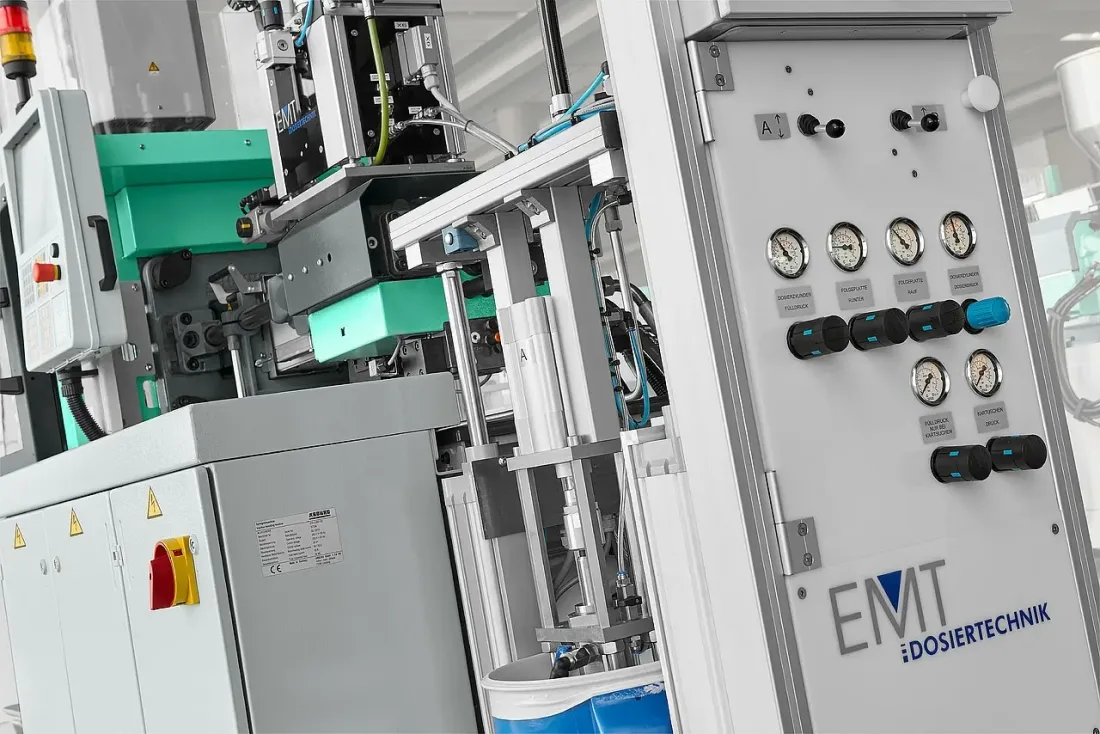
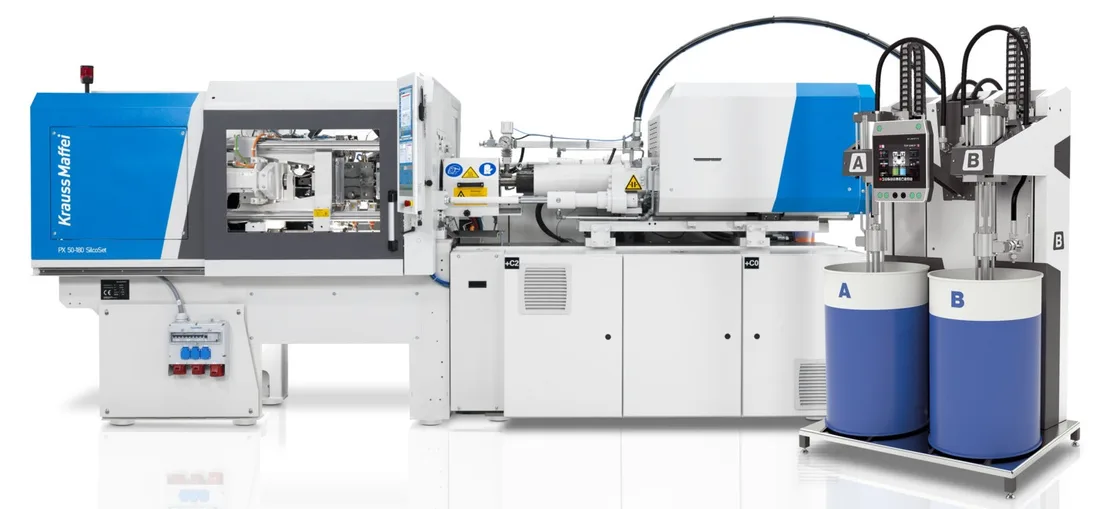
Meters and mixes two-part liquid silicone rubber and injects it into a hot mould where it crosslinks into shape.
How it works
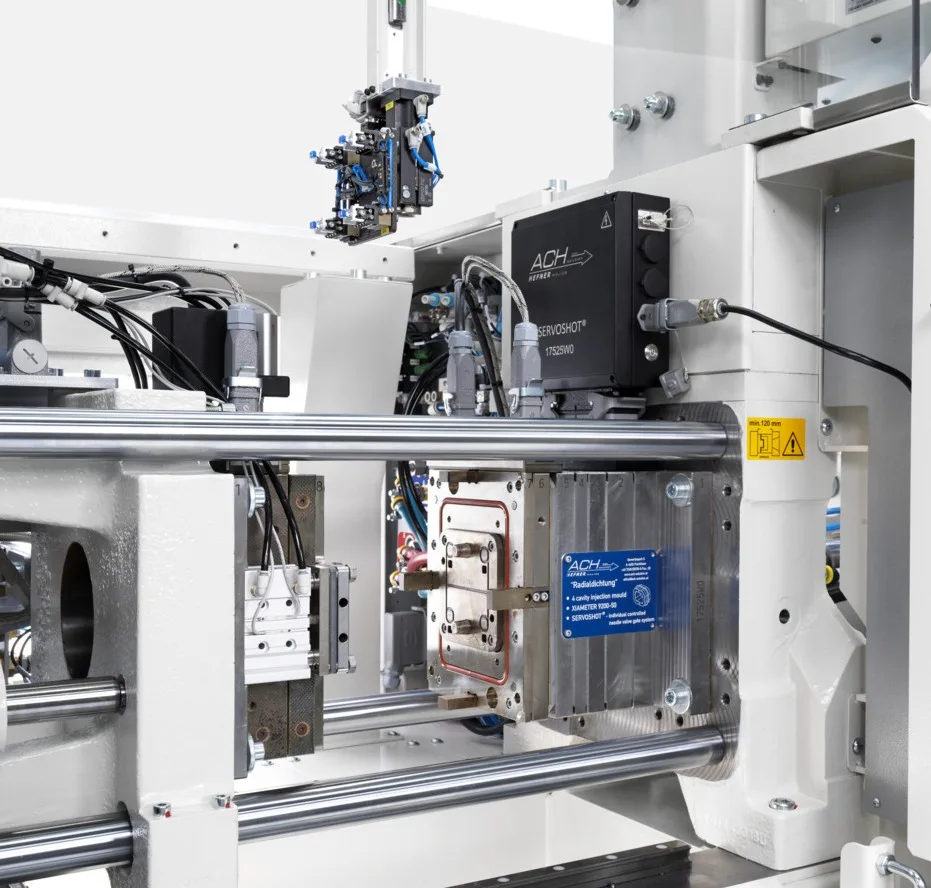
The two components are metered and pass through a static mixer into a dedicated injection unit whose barrel and nozzle are temperature-controlled to prevent early cure, then injected into a heated mould to crosslink. A cold feed end works with a hot curing end, the reverse of thermoplastic melt entering a cooled mould.
Process sequence
- Confirm material supply and temperature control
- Meter and mix the two parts
- Deliver set amounts at the cold end
- Inject into the hot mould
- Crosslink and cure
- Open, remove and inspect
Key inputs
- LSR grade and ratio
- Supply and mixing method
- Cold end and mould temperatures
- Venting, demoulding and part accuracy
Common problems
- Mixing or metering errors affecting cure
- Heat reaching the cold end causing early cure
- Insufficient venting and sealing
- Stretching on demoulding or flash affecting parts
Limits of application
- This page covers liquid silicone rubber (LSR) only
- Solid silicone feeding is different
- Vacuum and cold runners are application options, and ordinary thermoplastic injection settings cannot be applied directly
Functional modules
Two-part supply and metering
Keep formula ratio and supply
Mixing and cooled injection
Mix evenly and avoid early cure
Hot mould and clamping
Form and cure the part
Take-out and optional vacuum
Organize demoulding and venting
Manufacturer & technical sources
Continue with manufacturer product pages, operating principles and technical information for this equipment type.