

What it does
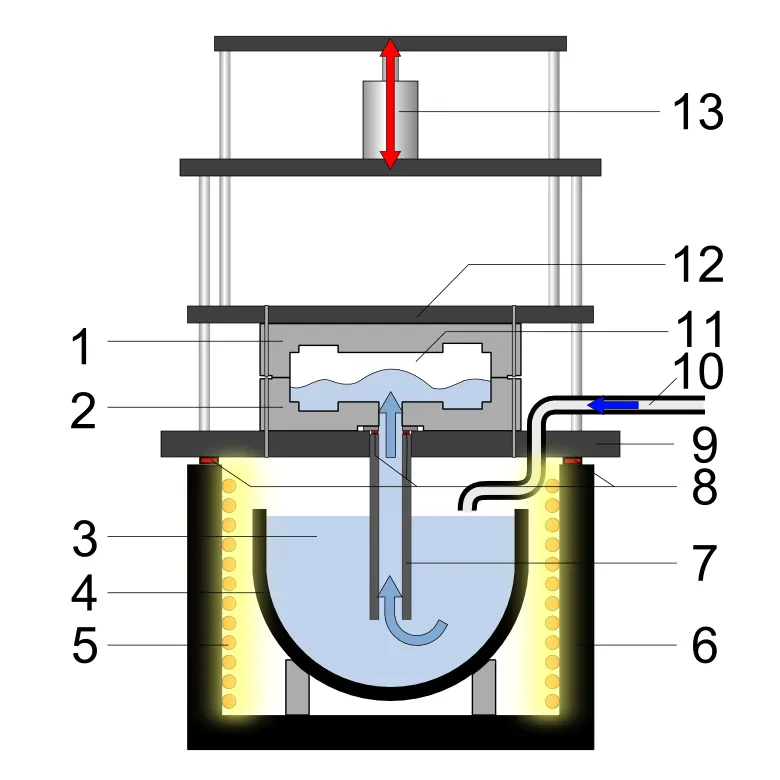
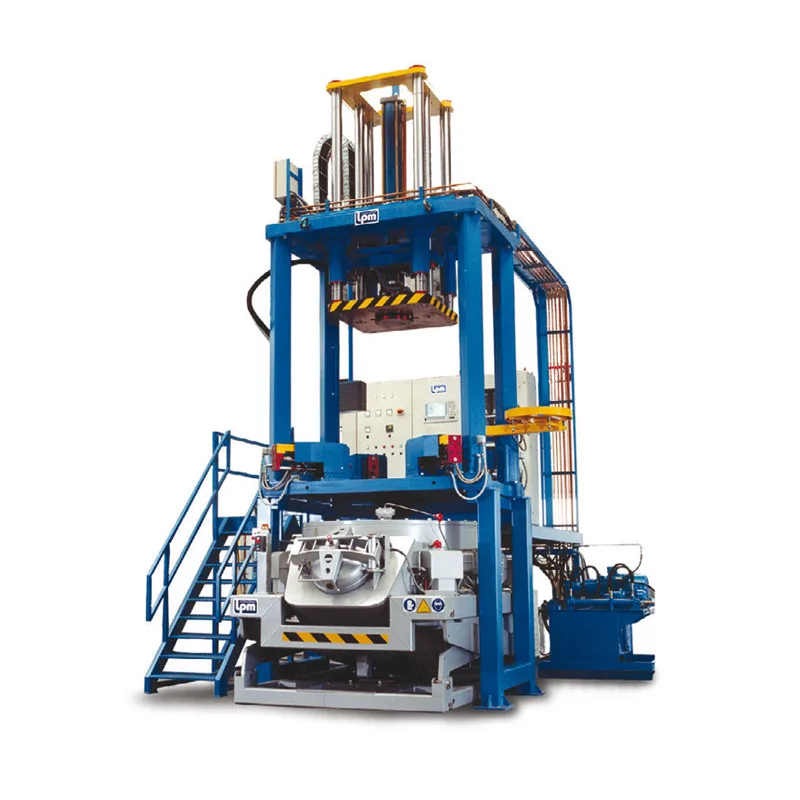
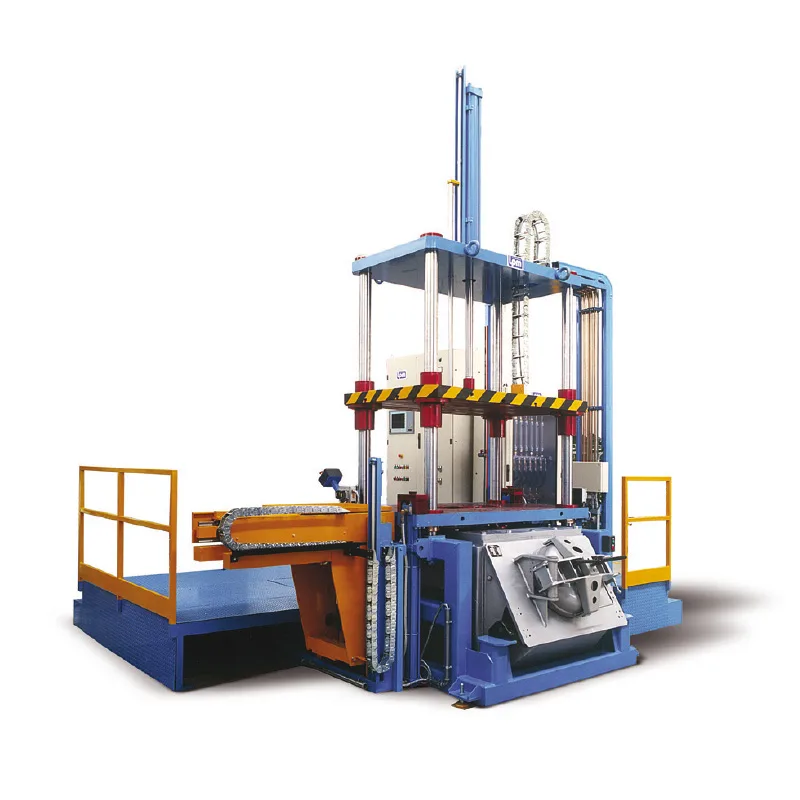
Uses controlled gas pressure in the furnace to push molten metal up a riser tube into the mould above.
How it works
The mould connects to the sealed holding furnace through the riser tube, and gas pressure on the bath surface pushes metal upward to fill. Feeding pressure is then held per the process; once the gate and other specified areas solidify, pressure is released, metal in the tube can drain back, and the mould opens.
Process sequence
- Prepare mould and bath level
- Seal and pressurize to raise metal
- Fill the cavity
- Hold pressure while solidifying per process
- Release pressure so metal drains back
- Open, remove and inspect
Key inputs
- Alloy and bath level
- Riser tube and sealing
- Pressure curve and venting
- Mould temperature control and solidification sequence
Common problems
- Seal or riser tube faults affecting filling
- Fast pressure changes disturbing the metal
- Early release affecting feeding
- Uneven mould temperature causing defects
Limits of application
- Gas pressure raising metal differs from a high-pressure shot piston
- Metal and sand moulds organize cooling differently
- Holding time must be set by actual solidification
Functional modules
Sealed holding furnace
Holds metal and builds pressure
Riser tube
Connects the bath to the mould
Pressure control
Organizes rise, filling and holding
Mould cooling and opening
Control solidification and release
Manufacturer & technical sources
Continue with manufacturer product pages, operating principles and technical information for this equipment type.