
EQUIPMENT / PRINCIPLE / DESIGN

Lost-foam casting line

Forms moulds from coated foam patterns and compacted dry sand, letting metal replace the foam as it is poured.

Equipment principle & structureRequest design help ↗
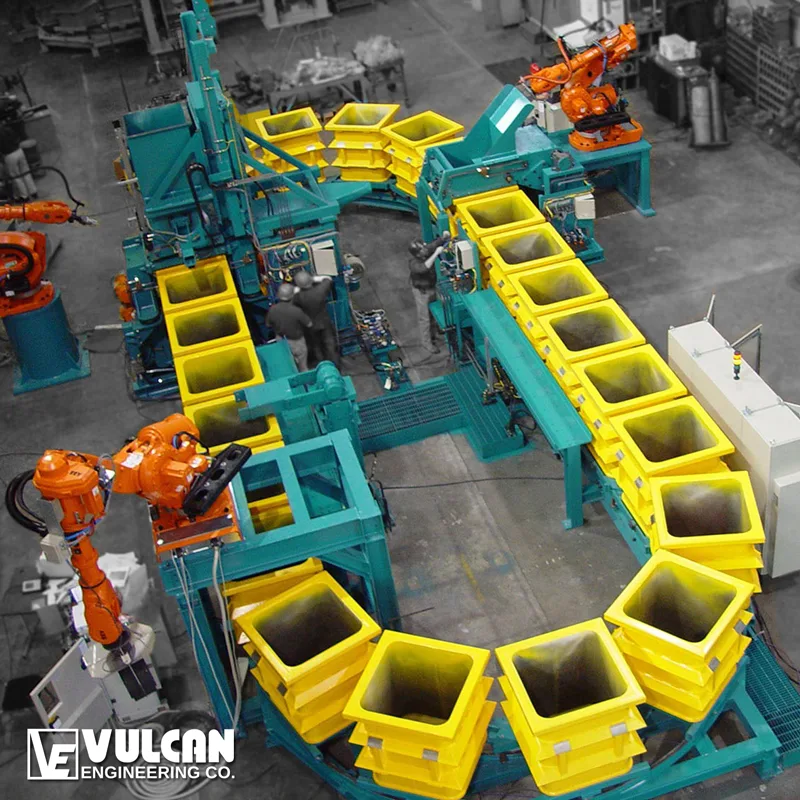
Lost foam line from above: dry-sand flasks on a loop conveyor, with robots
Lost foam line from above: dry-sand flasks on a loop conveyor, with robots · Source: Vulcan website ↗ · © the manufacturer, quoted for reference · Resized proportionally and converted to WebP
Lost-foam casting line · original schematic, not to scale; shows the working principle and modules
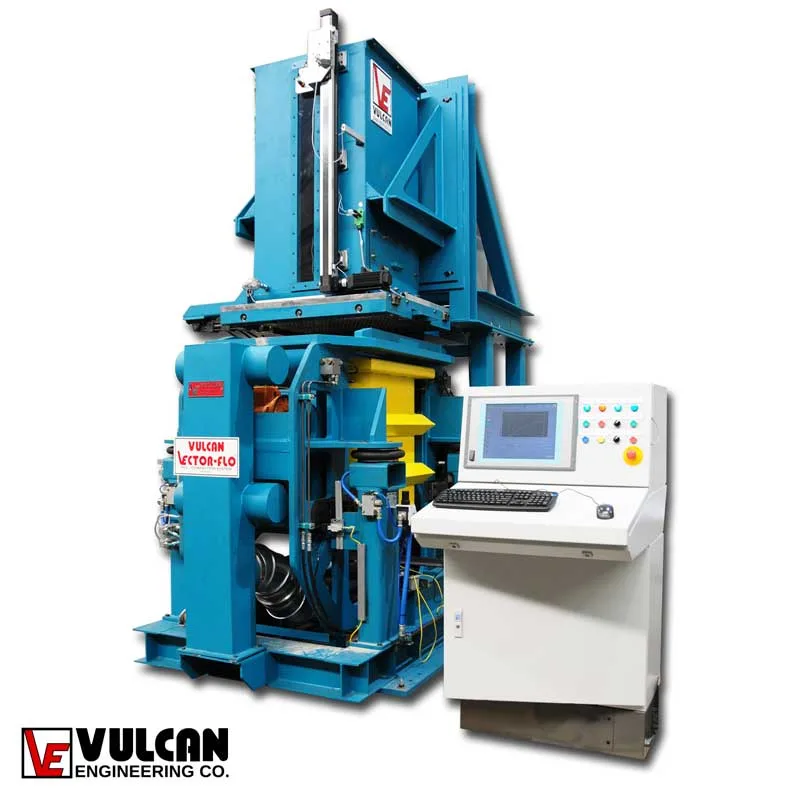
VECTOR-FLO vibratory sand compaction unit for lost foam casting
VECTOR-FLO vibratory sand compaction unit for lost foam casting · Source: Vulcan website ↗ · © the manufacturer, quoted for reference · Resized proportionally and converted to WebP
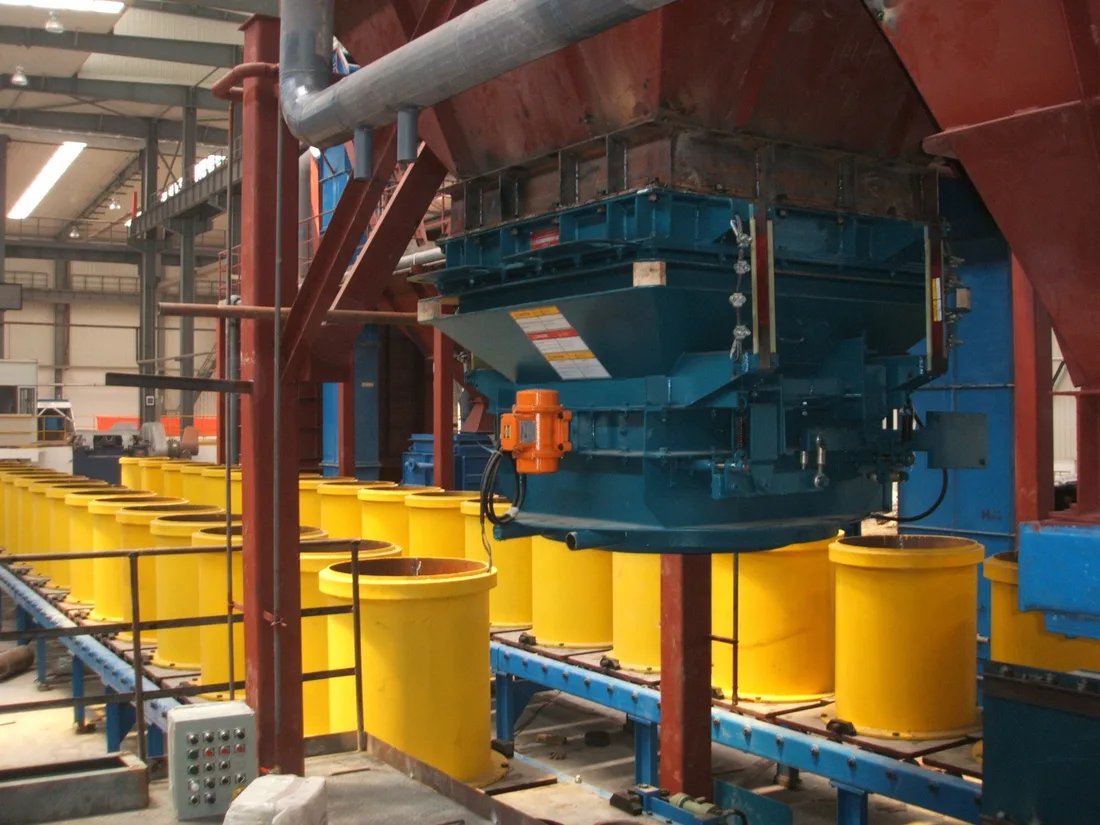
Sand flasks under the filling station of a General Kinematics lost-foam casting line
Sand flasks under the filling station of a General Kinematics lost-foam casting line · Source: General Kinematics website ↗ · © the manufacturer, quoted for reference · Resized proportionally and converted to WebP

What it does

Forms moulds from coated foam patterns and compacted dry sand, letting metal replace the foam as it is poured.

How it works

Foam patterns are coated with refractory, dried and placed in a flask, and unbonded dry sand is added around them and compacted by vibration; during pouring the foam decomposes and metal gradually takes its place, then after solidification the sand is removed and coating cleaned off. Sand filling and vibration must balance compaction with protecting the fragile pattern.

Process sequence

  1. Prepare the foam pattern cluster
  2. Coat with refractory and dry
  3. Place in flask, fill and compact sand
  4. Pour to replace the foam
  5. Cool and shake out
  6. Clean castings and reuse sand

Key inputs

  1. Foam stability and cluster assembly
  2. Coating permeability and drying
  3. Sand flow and cavity filling
  4. Pouring path and escape of decomposition products

Common problems

  1. Sand filling and vibration distorting patterns
  2. Sand not reaching hidden areas
  3. Unsuitable coating or escape conditions
  4. Metal front not matching foam decomposition, causing defects

Limits of application

  1. This is the lost foam route with unbonded sand support
  2. It cannot be treated like pouring an empty shell after dewaxing
  3. Whether vacuum assist is used depends on the process

Functional modules

Foam patterns and coating

Define casting shape and interface

Sand handling and filling

Provide flowable sand

Vibrated flask

Makes sand support the pattern

Pouring and shakeout

Complete replacement, solidification and release

Manufacturer & technical sources

Continue with manufacturer product pages, operating principles and technical information for this equipment type.

ONLY ON MECHWIKI / AGGREGATED

Aggregated references: models, makers, patents & videos

References scattered across model articles, vendor sites and patent databases, gathered under this machine. Checked items are listed; the rest are offered as ready-to-open searches.

Patents: how others built it

Patents are useful for drawings and mechanism ideas. None has been vetted for this entry yet, so here are searches pre-filled with the machine name.

Videos: see it run

No licensed video is hosted for this machine yet; these searches are pre-filled with its name.

3D MODELS

3D models and download information

Explore structure and assembly with models. Download methods, file formats and terms are provided by the original article or mini program.

Find more in the model library →