
What changed
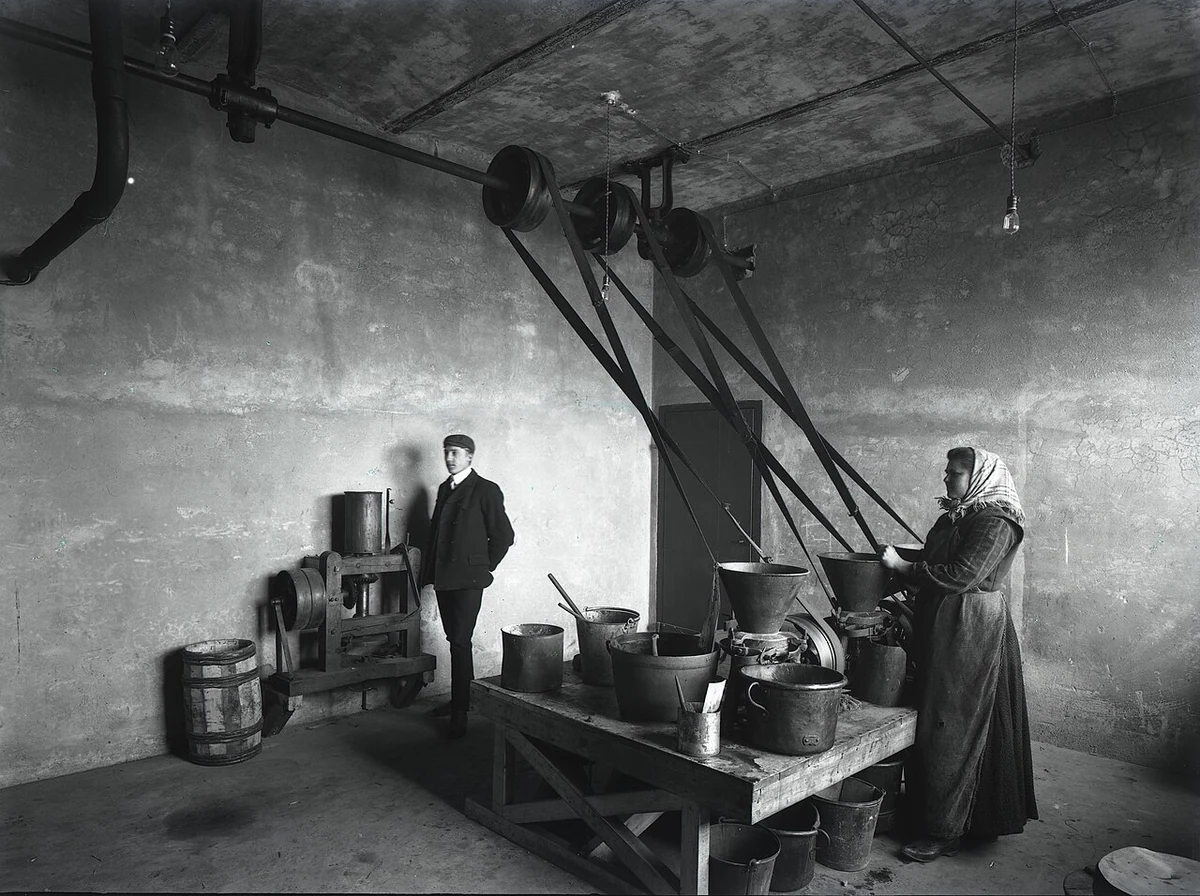
Line shaft belt systems distributed central power to many machines in a shop through overhead shafts and belts.
Core mechanism
Central power turns the line shaft, and pulleys on it drive each machine through belts. Machine layout and shaft position constrain each other, and power transmission, starting and maintenance form a shop-level system.
What to look for
- Trace from the prime mover to the line shaft
- Find where each machine takes its power
- See how layout is constrained by belt direction
Legacy
Once individual motors spread, machine power no longer had to hang off one shaft, making power layout and machine control easier to separate
Reading limits
- A line shaft system is a shop drive arrangement, not a single machine
- Exposed historical belts must not be used as a reference for modern guarding
Key elements
Central prime mover
Supplies power to the shop
Line shaft and hangers
Distribute rotary power along the shop
Pulleys and belts
Pass power to each machine
Museum & technical references
Explore this technology through museum and technical references.