
What changed
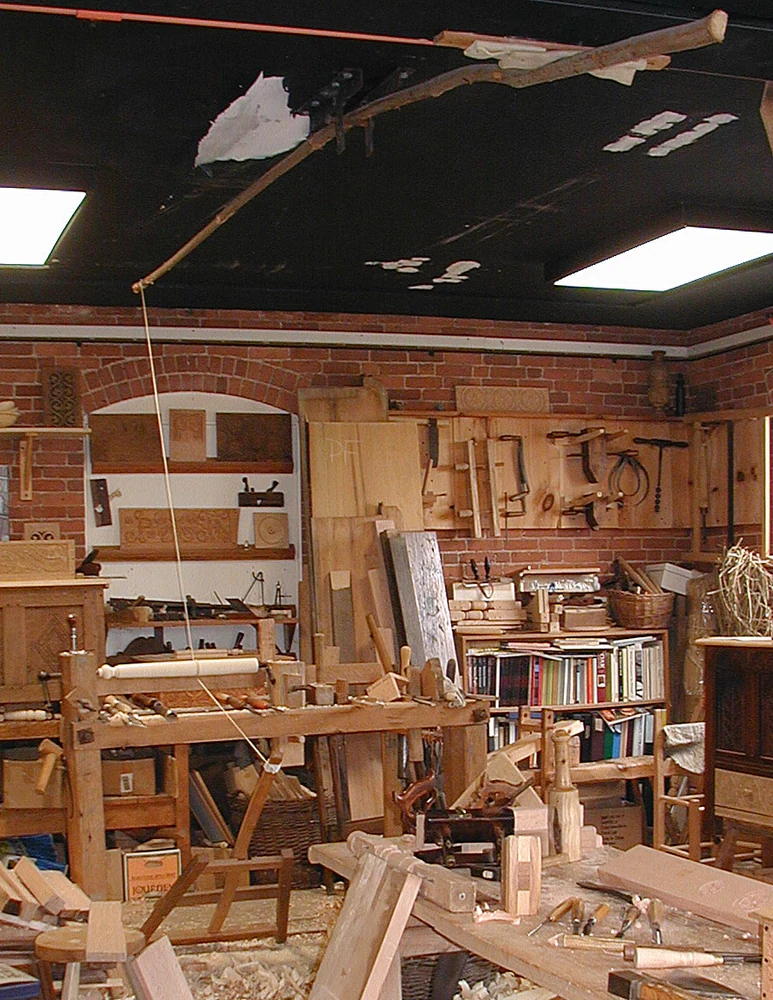
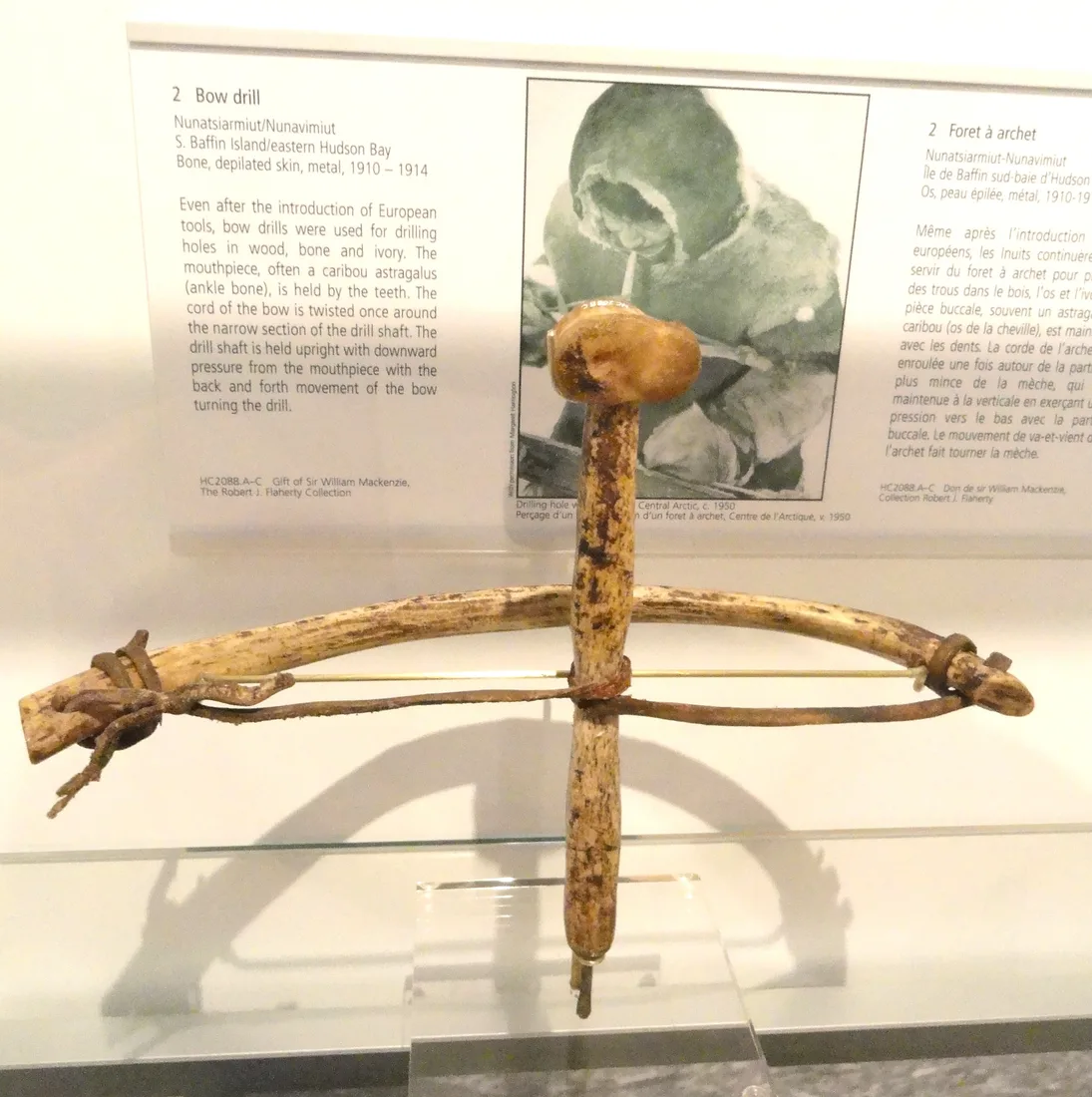
The bow drill turns the drill bit, the lathe turns the workpiece, and the treadle supplies another human power input; together they show the different roles in early rotary machining.
Core mechanism
The bow of a bow drill spins a metal bit in wood; on a bow-string lathe the string is wrapped around the work so it turns back and forth while it is cut, supported by centres and the tool rest. A treadle lathe is powered by the foot on a pedal, and not every treadle design works like the reciprocating bow.
What to look for
- Compare the turning drill bit of the bow drill with the turning work of the lathe.
- Identify bow and treadle as two human power inputs; do not assume the same drive from the name.
- Look at the positions of support, tool and material.
Legacy
Early rotary cutting did not depend on electric motors; clamping, support and tool access remain the basics of turning
Reading limits
- Collection examples differ in material and drive; a wooden bed does not mean every human-powered lathe was all wood.
- Reciprocating bow-string and treadle lathes are different drives and are not the same as a modern motor spindle.
Key elements
Bow and string
Transfer motion between the hand's back-and-forth stroke and the rotating spindle.
Drill bit or workpiece
The bow drill turns the tool and the lathe turns the work; their cutting motions differ.
Centres and tool rest
Support the work and give the cutting tool a fulcrum on the lathe.
Treadle input
Feeds foot motion into the lathe drive on the treadle lathe.
Museum & technical references
Explore this technology through museum and technical references.