
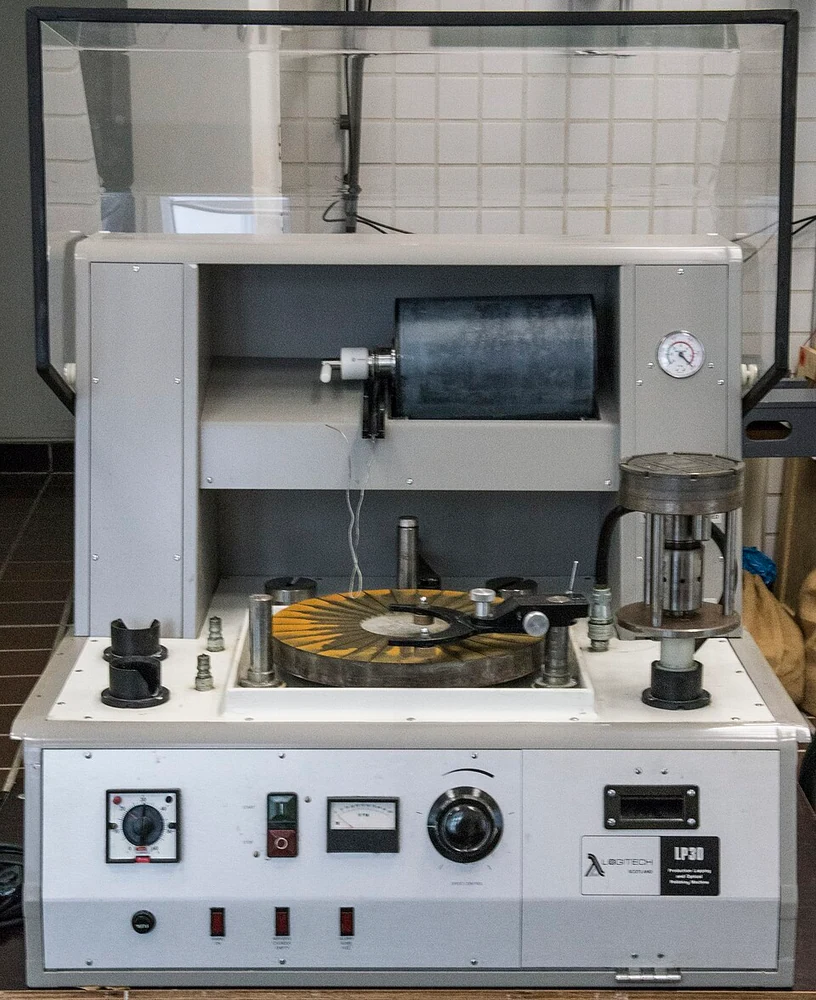

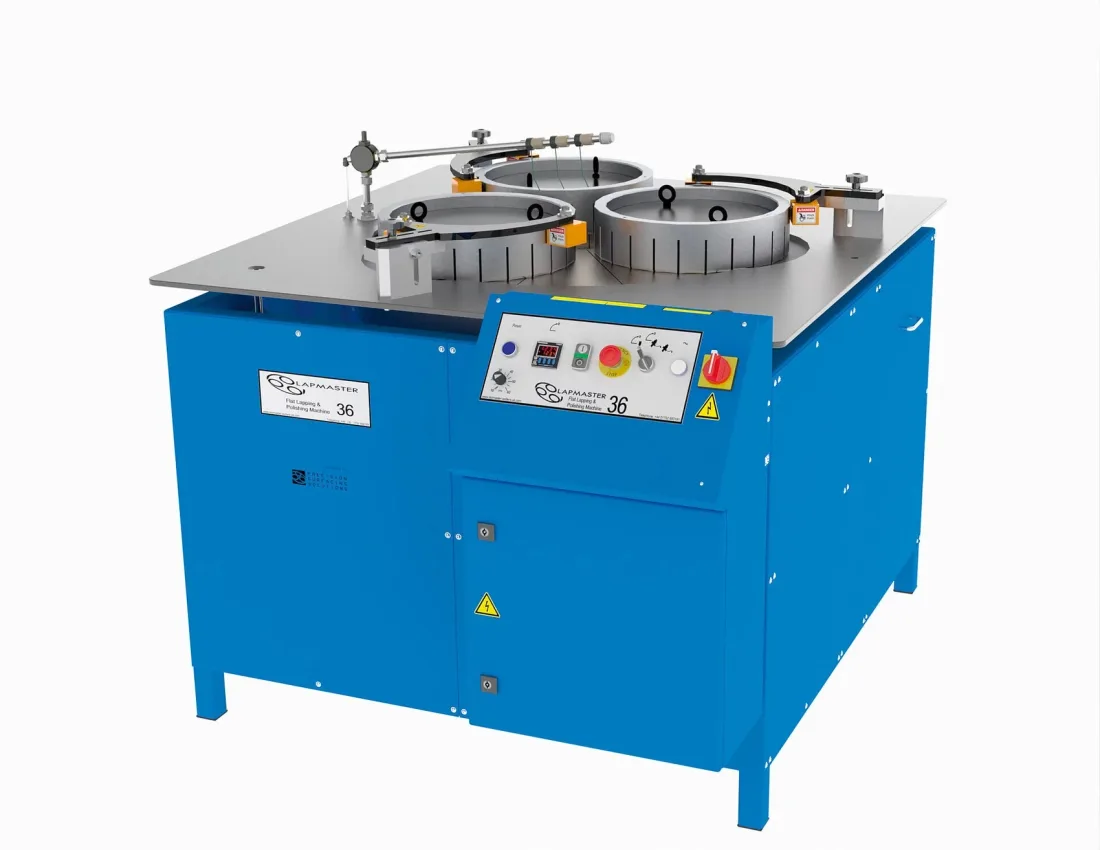
What it does
Improves flatness and surface finish through relative motion of lapping plate, abrasive and work.
How it works
Conventional loose abrasive lapping mixes abrasive into a liquid slurry supplied between the rotating plate and the work, where grains roll and slide to remove small amounts of material. Conditioning rings and carriers constrain work motion, and later polishing may use different plates and abrasives.
Process sequence
- Confirm material and allowance
- Prepare plate and abrasive
- Load and supply slurry
- Lap or move on to polishing as required
- Measure flatness and surface
- Wash and unload
Key inputs
- Material and part stiffness
- Flatness, parallelism and surface targets
- Abrasive size and carrier
- Load pressure and plate condition
Common problems
- Large particle contamination causing deep scratches
- Plate shape changes affecting part flatness
- Excess load or uneven support affecting thin parts
Limits of application
- A lapped surface is not necessarily a mirror finish
- Lapping, fixed-abrasive fine grinding and polishing cannot be lumped together by machine appearance
Functional modules
Lapping plate and drive
Provide the reference surface and motion
Slurry supply
Delivers abrasive and carrier fluid
Conditioning rings and carriers
Organize work paths and separation
Plate dressing and measurement
Control plate flatness and results
Manufacturer & technical sources
Continue with manufacturer product pages, operating principles and technical information for this equipment type.