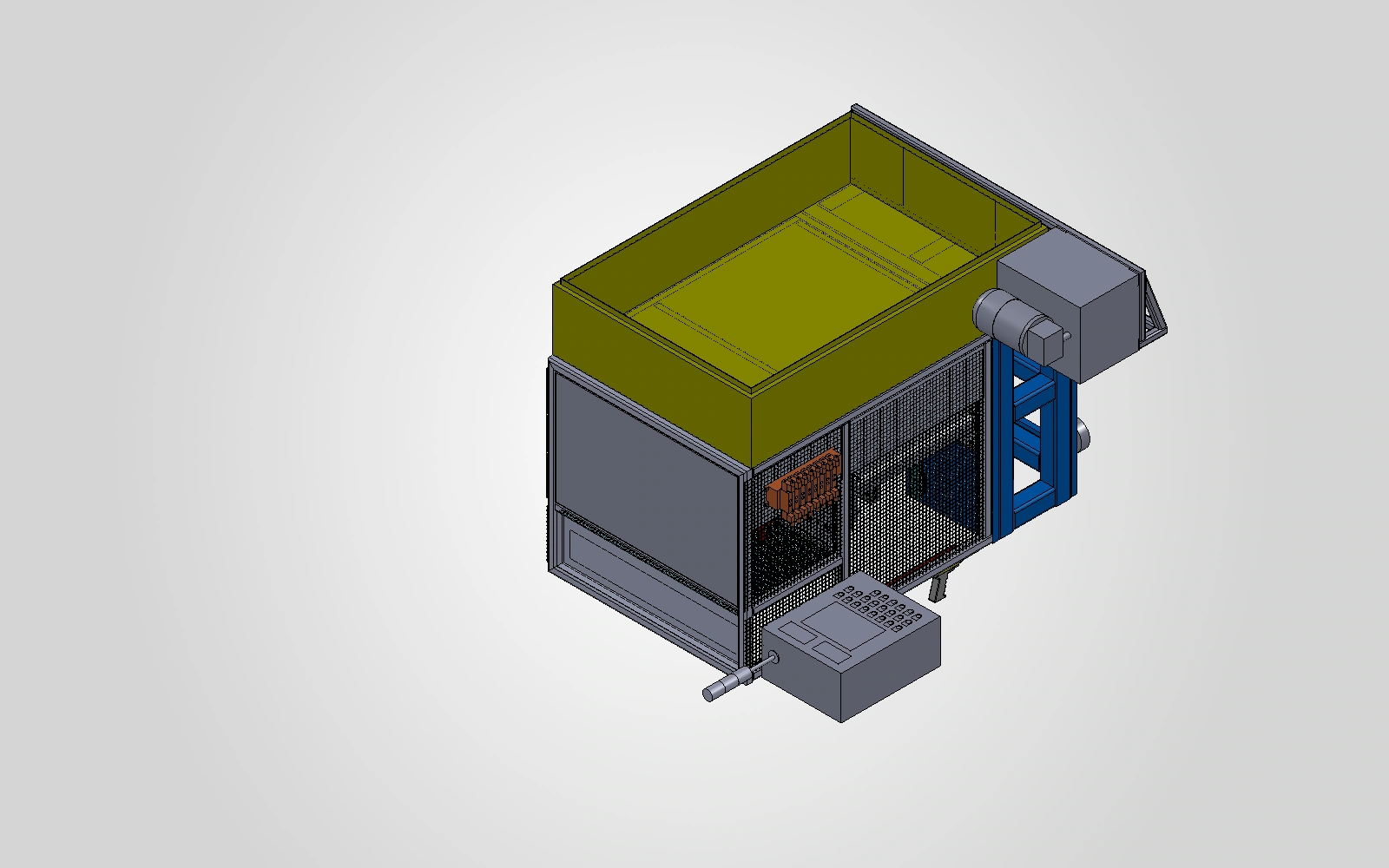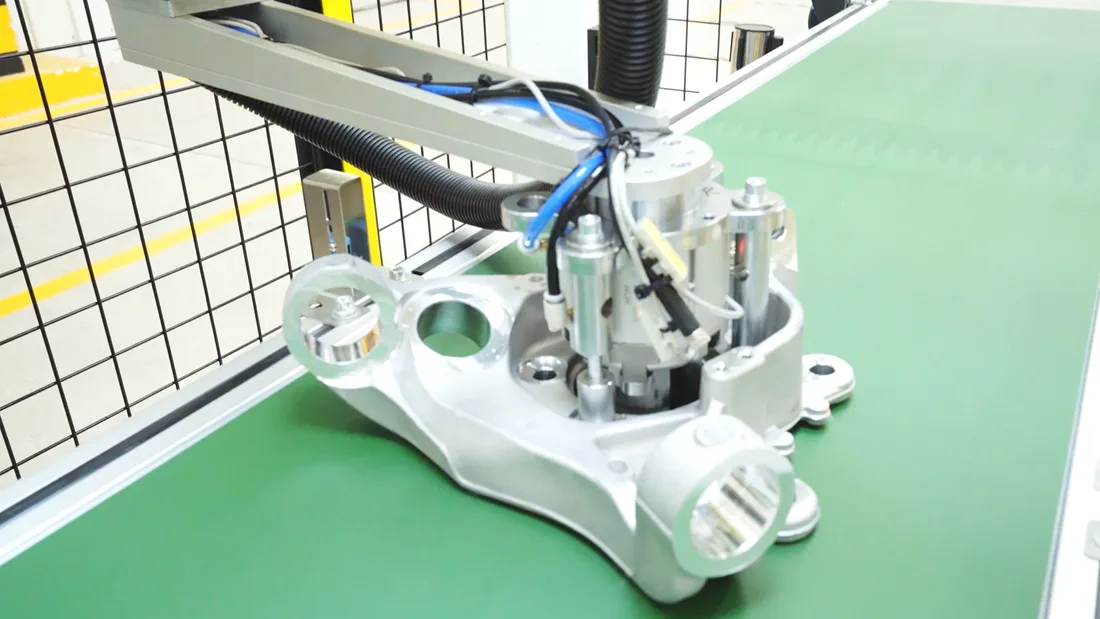

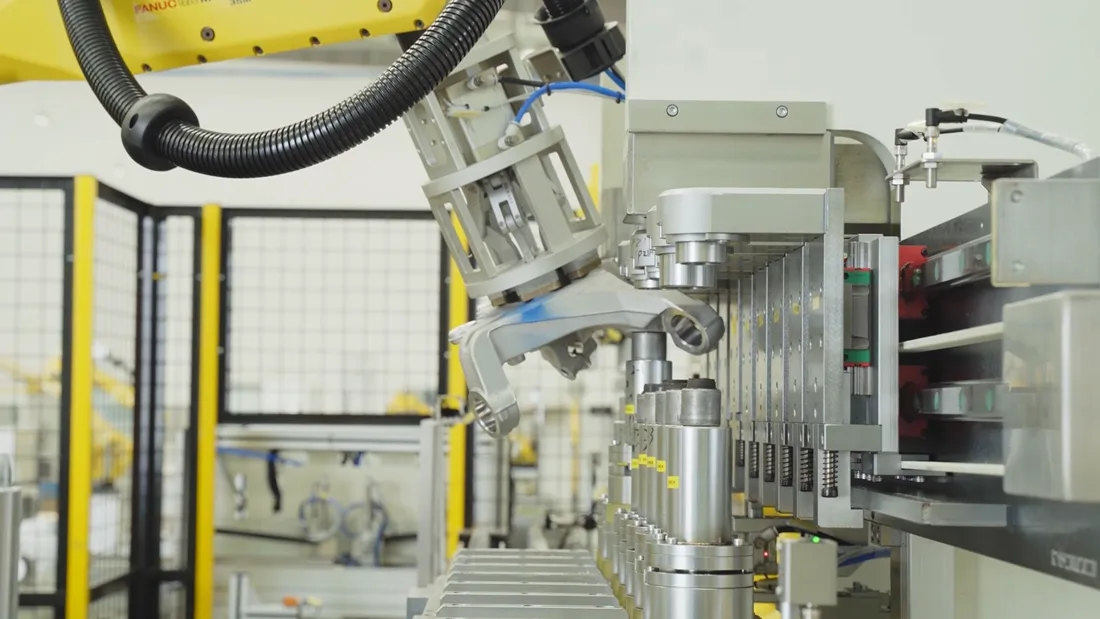
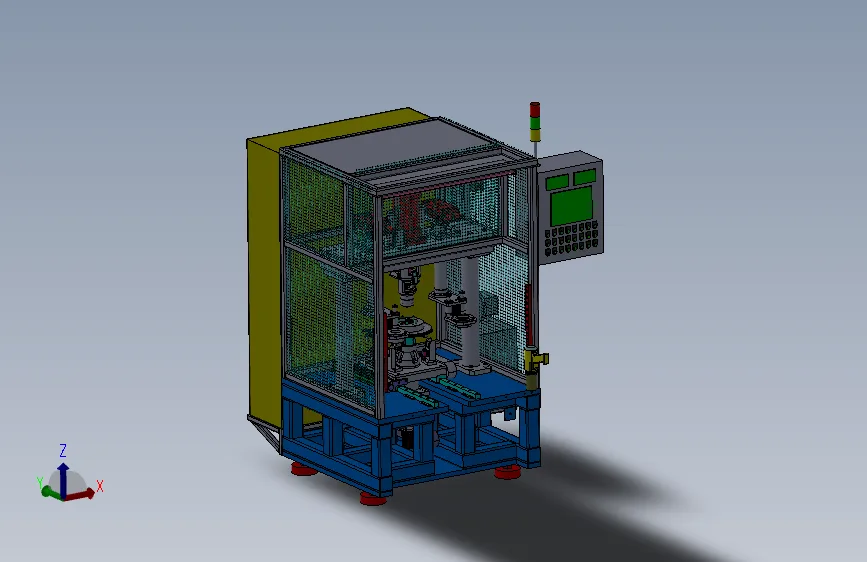
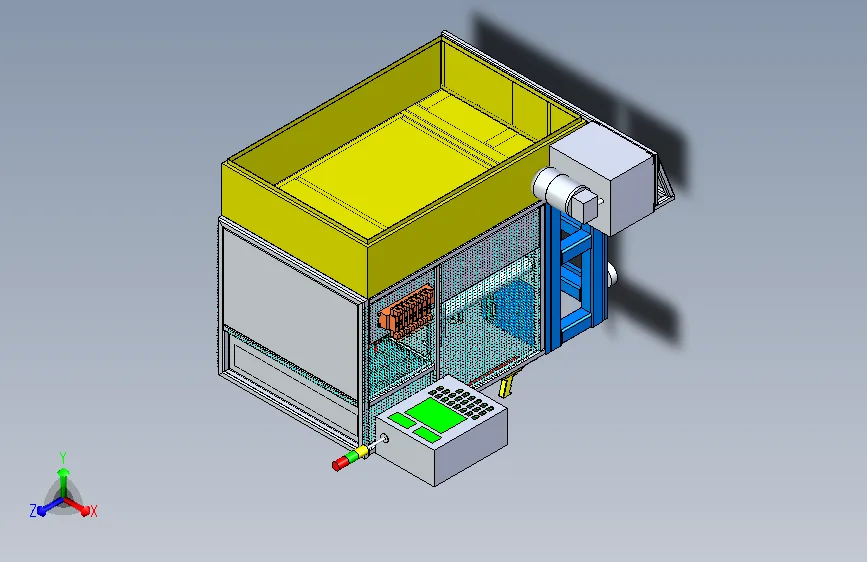
What it does
Organizes loading, pre-fitting, pressing and assembly checks of bearings and other parts around the datums and bores of a steering knuckle.
How it works
Taking a knuckle and hub bearing assembly unit as an example, the knuckle is fixed first, the bearing is set at the bore entry in the right orientation, coated per the process, and pressed in along the bore axis by the press head. Press reaction should close through support near the bore rather than through cantilevered thin walls or rolling elements.
Process sequence
- Identify and locate the knuckle
- Supply the bearing
- Coat mating faces as required
- Pre-fit and centre
- Press in and evaluate
- Inspect and transfer
Key inputs
- Knuckle and bearing models
- Bore tolerance, bearing orientation and sensor ring
- Support positions, press depth and later retaining parts
Common problems
- Knuckle placed wrongly
- Bearing tilted or sensor ring damaged
- Insufficient support causing deformation and misjudged curves
Limits of application
- Knuckles for different suspensions may use different bearing designs
- Hub pressing, retaining rings and bolting are split per the assembly drawing; completed pressing alone does not prove assembly performance
Functional modules
Knuckle carrier
Sets bore axis and support datums
Bearing supply
Recognizes orientation and pre-fits
Coating and pressing
Applies oil to specified surfaces and presses in
Process check
Evaluates seating and joint state
Manufacturer & technical sources
Continue with manufacturer product pages, operating principles and technical information for this equipment type.