
EQUIPMENT / PRINCIPLE / DESIGN

Knitting machine

Forms loops with needles and interloops them; flat and circular machines use different needle bed layouts to make panels or tubular fabric.

Equipment principle & structureRequest design help ↗
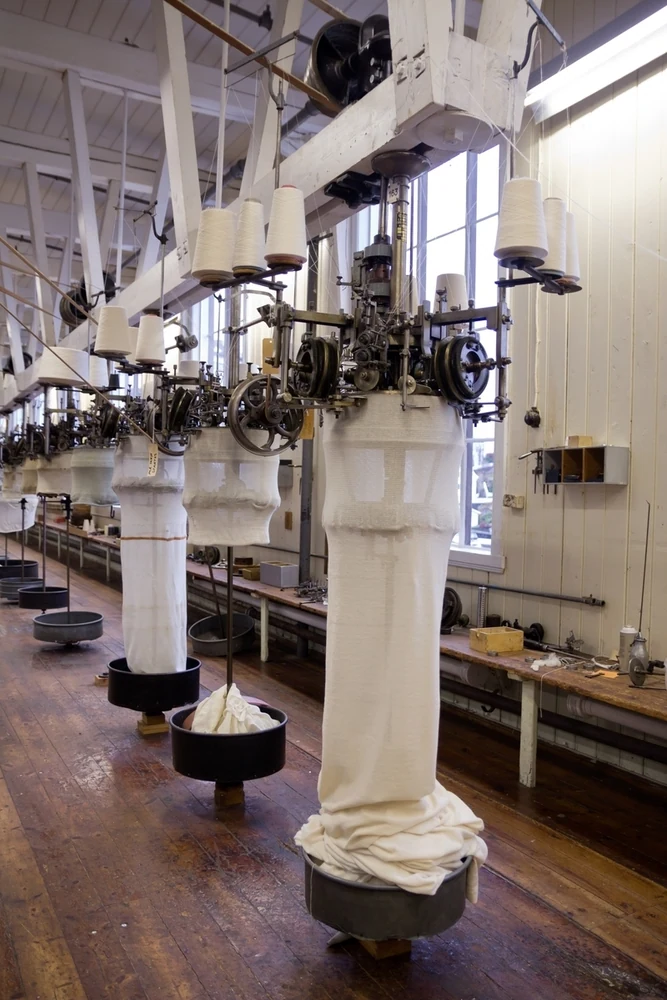
Circular knitting machines at the Salhus Textile Museum; the machine in front dates from 1963
Circular knitting machines at the Salhus Textile Museum; the machine in front dates from 1963 · Source: Wikimedia Commons ↗ · by Hanne Dale / Tekstilindustrimuseet · CC BY-SA 4.0 · Scaled down and WebP-encoded; not cropped, original marks kept
Knitting machine · original schematic, not to scale; shows the working principle and modules
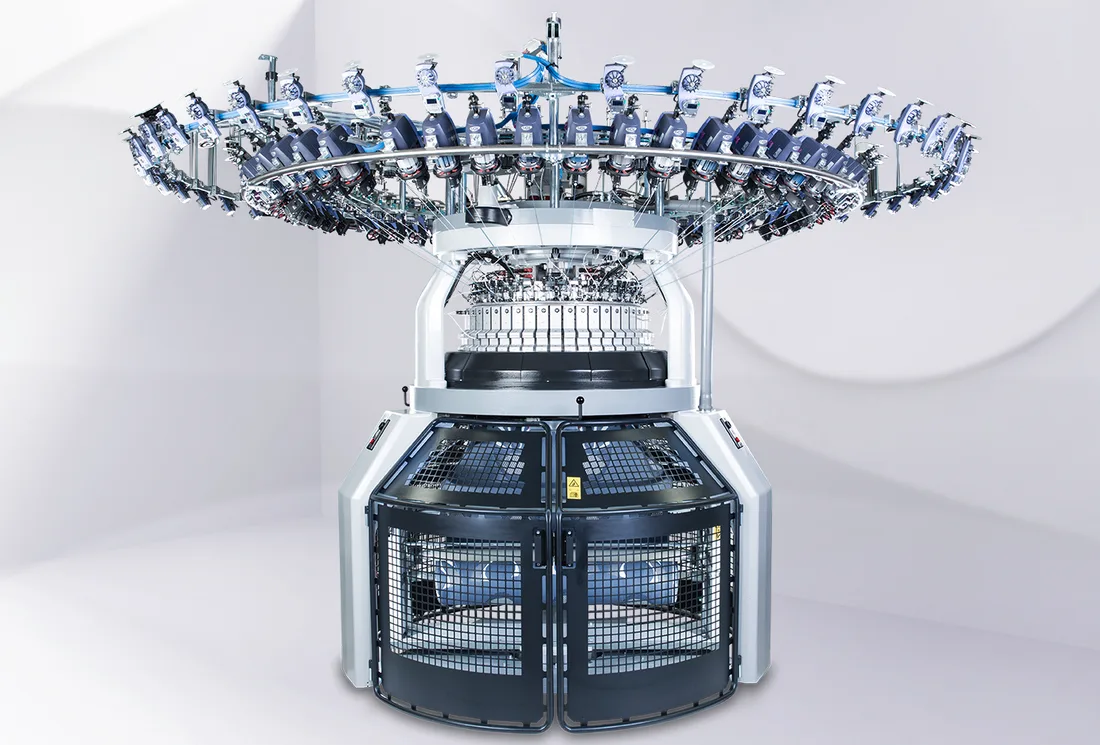
Mayer & Cie circular knitting machine render: yarn creel, knitting zone and cabinet
Mayer & Cie circular knitting machine render: yarn creel, knitting zone and cabinet · Source: Mayer & Cie website ↗ · © the manufacturer, quoted for reference · Resized proportionally and converted to WebP
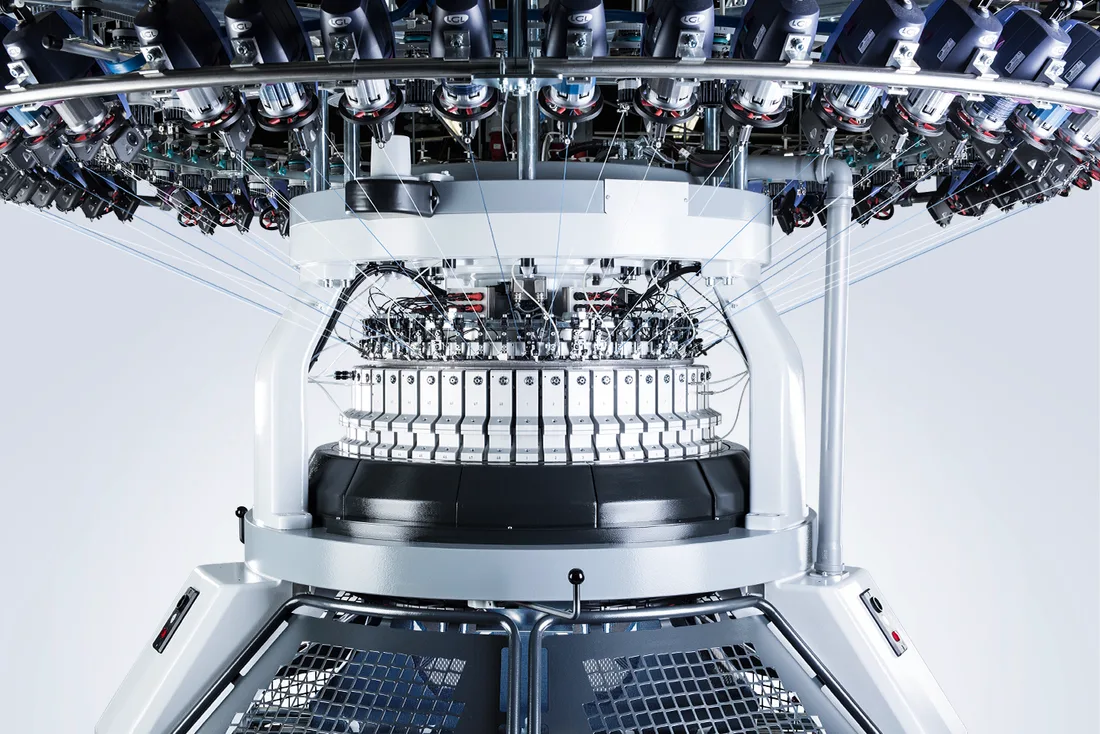
Same machine, upper part: yarns entering the needle cylinder
Same machine, upper part: yarns entering the needle cylinder · Source: Mayer & Cie website ↗ · © the manufacturer, quoted for reference · Resized proportionally and converted to WebP

What it does

Forms loops with needles and interloops them; flat and circular machines use different needle bed layouts to make panels or tubular fabric.

How it works

Taking weft knitting latch needles as an example, the needle rises to clear the old loop, catches new yarn as it descends, and the old loop closes the latch and slides off the hook so the new loop passes through it. On flat machines the cams travel with the carriage to drive the needles; on circular machines relative rotation of cylinder and cams drives them continuously.

Process sequence

  1. Prepare yarn and structure
  2. Feed yarn and raise needles to clear
  3. Lower needles to catch new yarn
  4. Close latches and knock over old loops
  5. Take down the fabric
  6. Repeat by needle selection

Key inputs

  1. Yarn elasticity, count and knots
  2. Gauge, structure and loop length
  3. Feed tension, cam match and take-down

Common problems

  1. Dropped stitches, missed loops or holes
  2. Damaged hooks or latches
  3. Uneven feed and take-down causing stripes or density changes

Limits of application

  1. This entry focuses on weft knitting flat and circular machines
  2. Warp knitting uses sets of warp yarns and guide bars and cannot reuse the same single-yarn feeding
  3. Some circular machines keep the cylinder still and rotate the cams

Functional modules

Needle bed or cylinder

Arrange needles flat or in a circle

Cams and needles

Turn relative motion into needle rise and fall

Yarn feeding

Supplies yarn to the knitting zone

Take-down and winding

Steady the fabric and draw it away

Manufacturer & technical sources

Continue with manufacturer product pages, operating principles and technical information for this equipment type.

ONLY ON MECHWIKI / AGGREGATED

Aggregated references: models, makers, patents & videos

References scattered across model articles, vendor sites and patent databases, gathered under this machine. Checked items are listed; the rest are offered as ready-to-open searches.

Patents: how others built it

Patents are useful for drawings and mechanism ideas. None has been vetted for this entry yet, so here are searches pre-filled with the machine name.

Videos: see it run

No licensed video is hosted for this machine yet; these searches are pre-filled with its name.

3D MODELS

3D models and download information

Explore structure and assembly with models. Download methods, file formats and terms are provided by the original article or mini program.

Find more in the model library →