
What changed
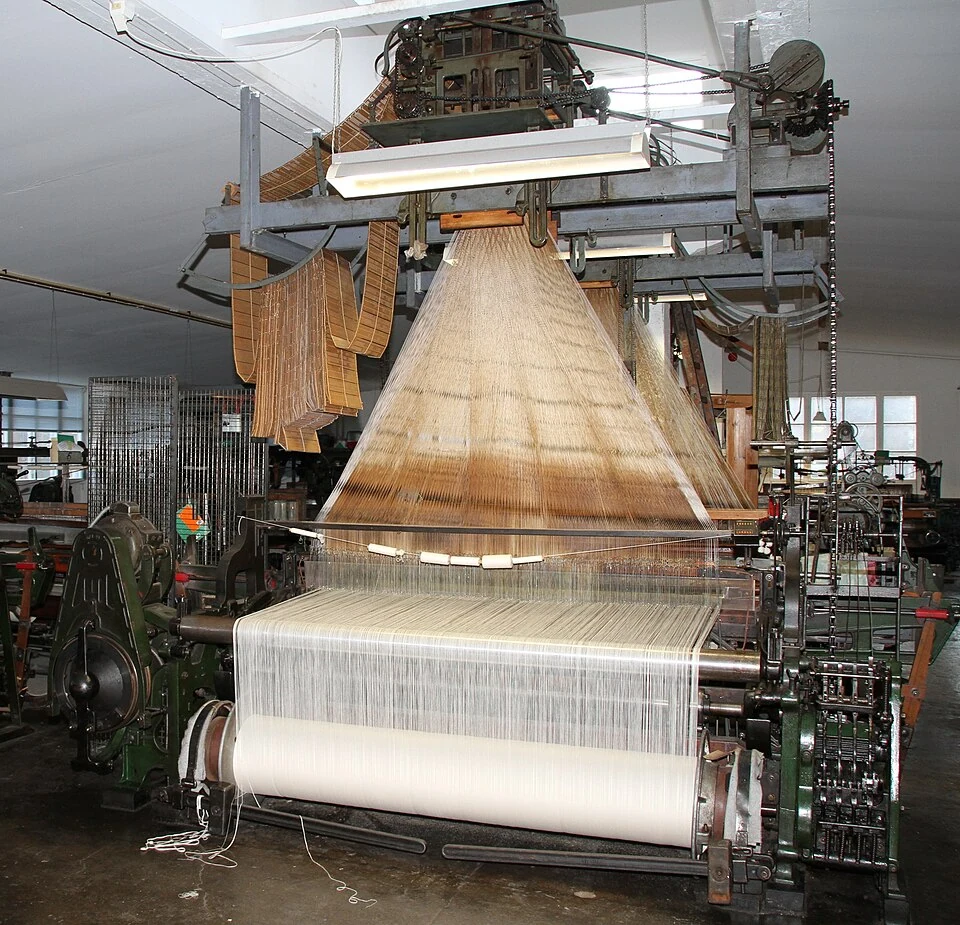
The Jacquard mechanism stored pattern selections on replaceable punched cards, reducing manual selection of warp threads one by one.
Core mechanism
Cards enter the needle and hook mechanism in order; holes and blanks change the action of matching hooks so selected warp threads rise to form the shed. After the weft passes through, the next pattern row repeats the cycle.
What to look for
- Match pattern rows to cards
- Trace hole positions to warp selection
- Separate the selection mechanism from the loom's power source
Legacy
Replaceable control media let the same machine repeat different patterns, inspiring later ideas in automatic control and computing
Reading limits
- Punched cards controlling the pattern does not mean every loom motion was electronically automated
- Early Jacquard mechanisms could be fitted to hand looms
Key elements
Punched card chain
Stores pattern rows in sequence
Needles, hooks and lifting
Turn card selection into raised warp threads
Loom body
Organizes weft insertion and cloth formation
Museum & technical references
Explore this technology through museum and technical references.