
What changed
Programmable industrial robot arms turned repetitive handling, processing and manipulation from dedicated mechanical linkages into systems with modifiable paths.
Core mechanism
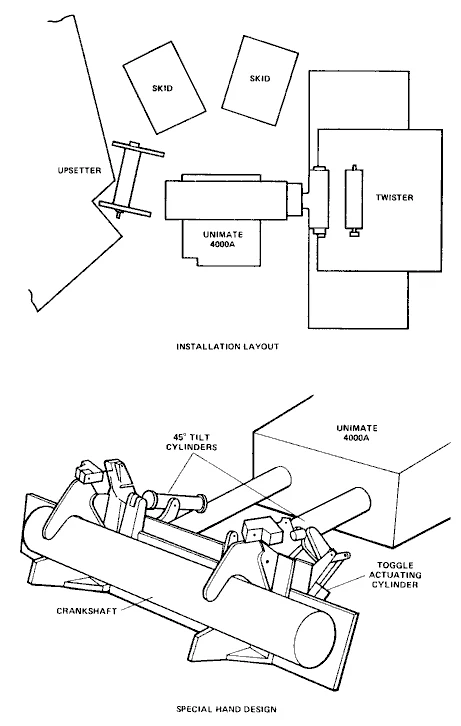
The controller coordinates several joint drives so the end effector follows the programmed path. Tooling and station together determine the use; the arm alone is not a complete welding, assembly or inspection machine.
What to look for
- Separate the robot arm from the end process
- See how paths relate to workpiece coordinates
- Compare fixed automation with programmable arms
Legacy
ABB's history records the 1974 IRB 6 microprocessor-controlled robot, showing the development of control and electric drive in industrial robots
Reading limits
- This example is not the origin of all robots
- Payload and reach cannot be inferred from the number of axes alone
Key elements
Articulated arm
Produces end effector motion in space
Control and drives
Coordinate the axes
Tooling and station
Perform the task and hand over parts
Museum & technical references
Explore this technology through museum and technical references.