
EQUIPMENT / PRINCIPLE / DESIGN

Hot forging press

Presses blanks in a specified hot working state for closed-die, open-die and other plastic forming.

Equipment principle & structureRequest design help ↗
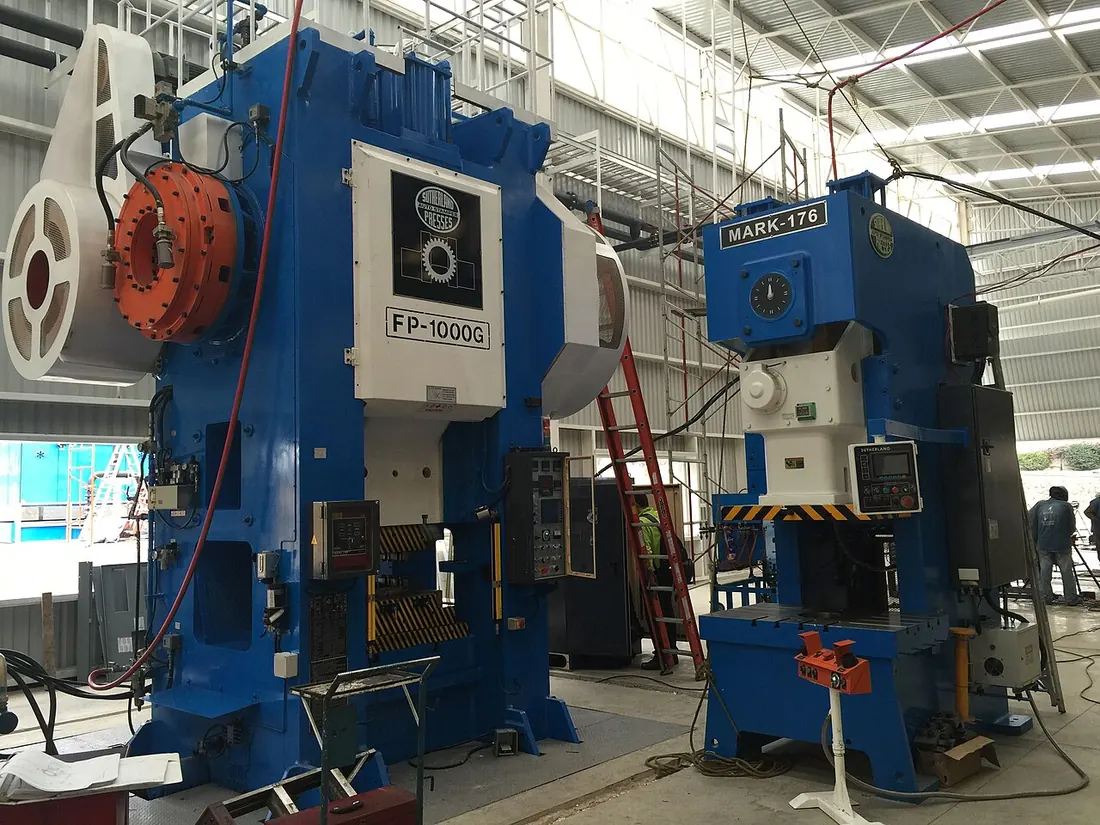
Hot forging press · Real machine photo
Hot forging press · Real machine photo · Source: Wikimedia Commons ↗ · by Sam D. Wilbur · CC BY-SA 4.0 · Resized and converted to WebP
Hot forging press · original schematic, not to scale; shows the working principle and modules
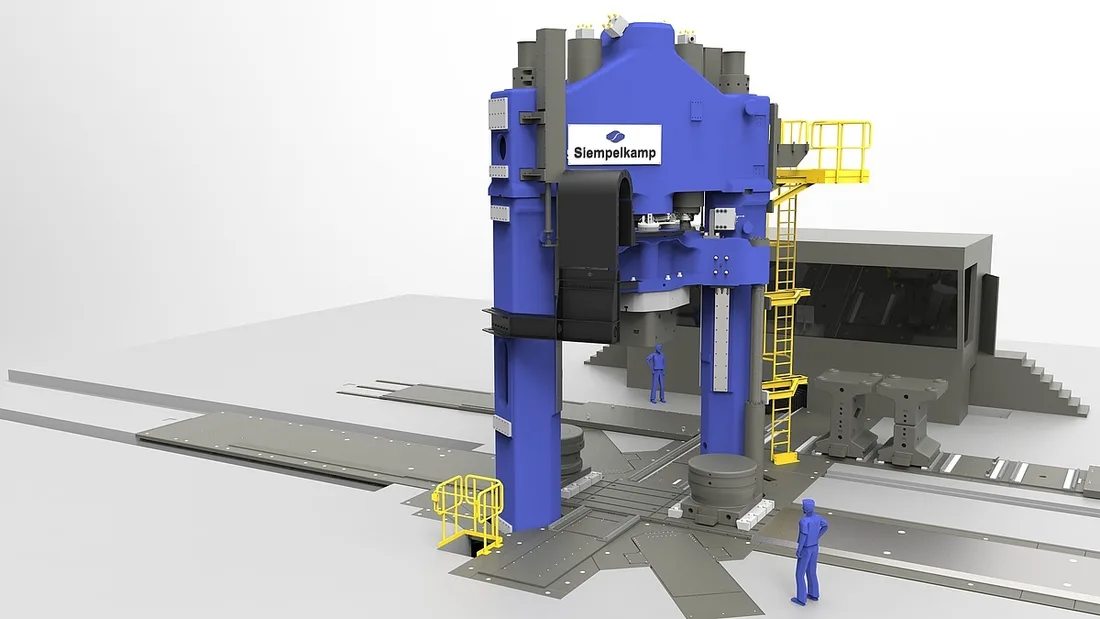
Siempelkamp open-die forging press and material handling line (rendering)
Siempelkamp open-die forging press and material handling line (rendering) · Source: Siempelkamp website ↗ · © the manufacturer, quoted for reference · Resized proportionally and converted to WebP

What it does

Presses blanks in a specified hot working state for closed-die, open-die and other plastic forming.

How it works

The heated blank flows under pressure between upper and lower dies; closed-die forging fills the cavity, while open-die forging forms progressively through repeated reductions and manipulation. Mechanical, screw and hydraulic presses differ in force, energy and contact time, and hot forging must also coordinate heating, transfer and die temperature.

Process sequence

  1. Prepare and heat blanks
  2. Confirm temperature and die condition
  3. Transfer into the dies
  4. Press per stage
  5. Eject and transfer
  6. Trim, cool and apply any post-treatment

Key inputs

  1. Material hot working window
  2. Blank and preform
  3. Press load, energy and speed
  4. Transfer time, scale and die cooling and lubrication

Common problems

  1. Blank cooling or temperature differences affecting fill
  2. Scale pressed into the surface
  3. Unstable transfer positioning
  4. Die thermal condition and overload shortening life

Limits of application

  1. Hot forging temperature varies with material; no single range applies
  2. Hot forging and press hardening are different processes
  3. Final properties also depend on post-treatment

Functional modules

Blank heating and temperature measurement

Bring blanks to a forgeable state

Press and forging dies

Make material flow under pressure

Transfer and locating

Keep the process sequence

Ejection and die spraying

Organize release and the next cycle

Manufacturer & technical sources

Continue with manufacturer product pages, operating principles and technical information for this equipment type.

ONLY ON MECHWIKI / AGGREGATED

Aggregated references: models, makers, patents & videos

References scattered across model articles, vendor sites and patent databases, gathered under this machine. Checked items are listed; the rest are offered as ready-to-open searches.

Equipment and core-unit manufacturers1

Manufacturer references for whole machines, subsystems and related processes; each item states its scope.

  • Schuler

    SpeedForge PK crank-type forging press · Machine example

    This is a mechanical crank forging press. Hydraulic open-die forging presses and forging hammers have separate selection requirements. Match the heating, material and tooling process to the hot-forging job.

    Manufacturer reference

Patents: how others built it

Patents are useful for drawings and mechanism ideas. None has been vetted for this entry yet, so here are searches pre-filled with the machine name.

Videos: see it run

No licensed video is hosted for this machine yet; these searches are pre-filled with its name.

3D MODELS

3D models and download information

Explore structure and assembly with models. Download methods, file formats and terms are provided by the original article or mini program.

Find more in the model library →