
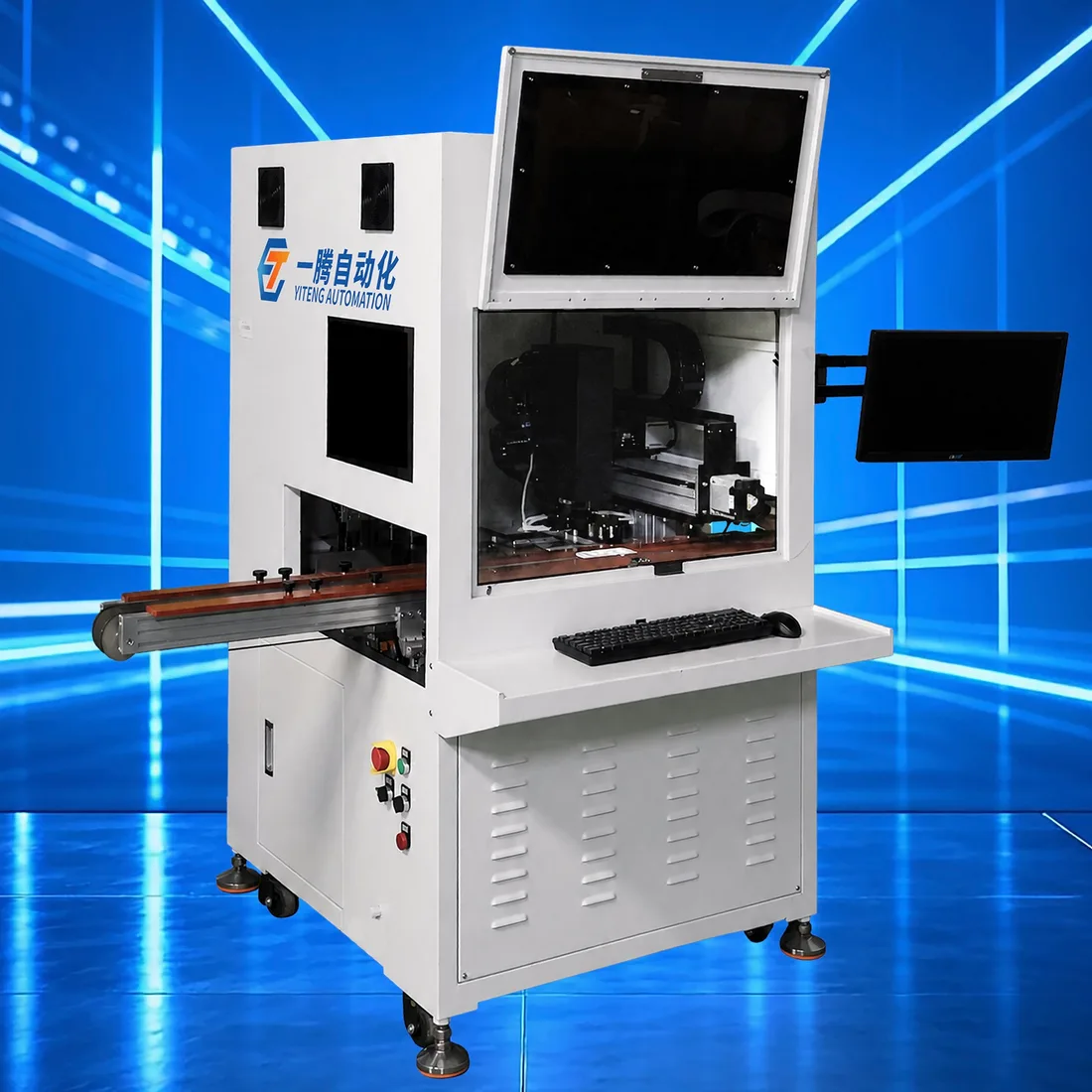

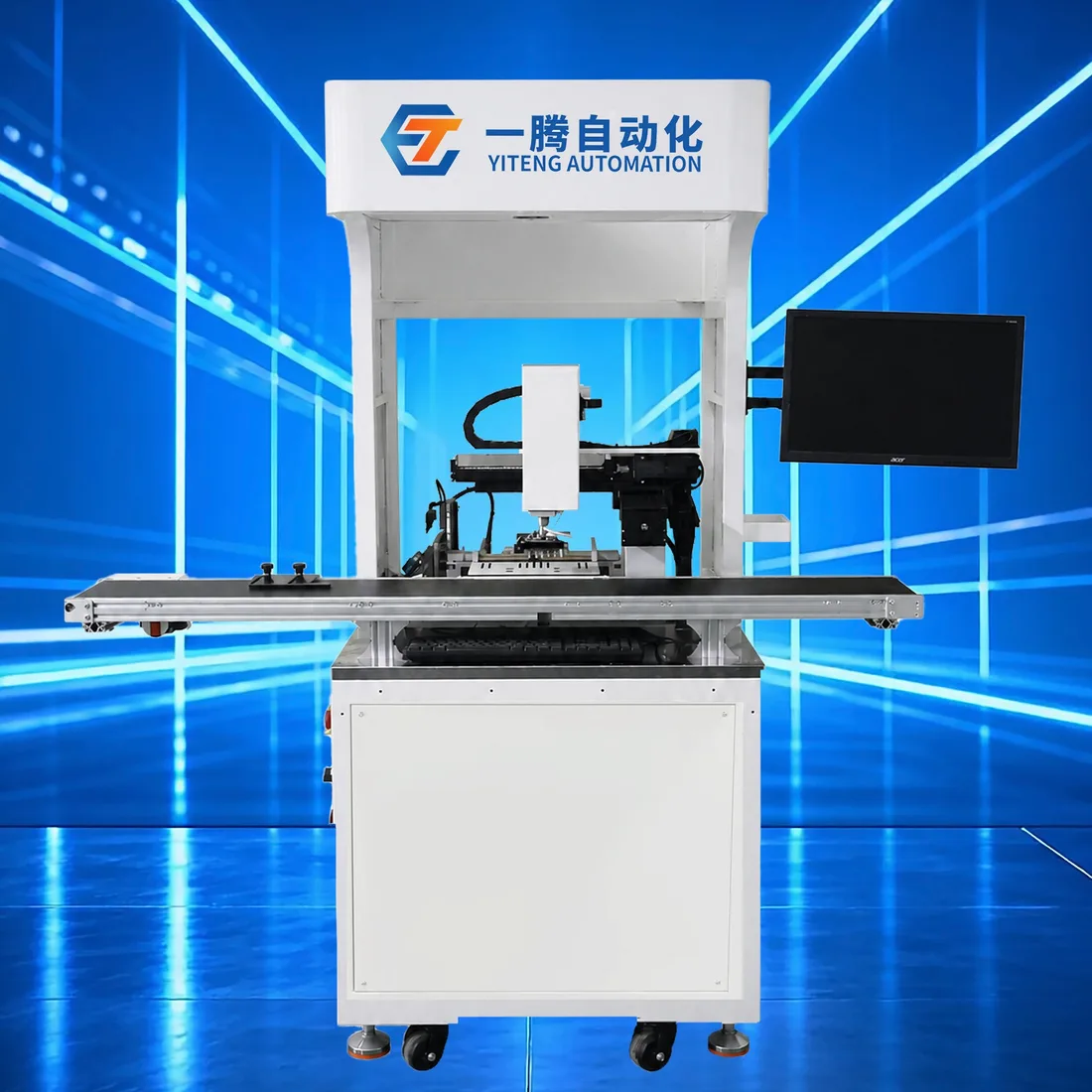
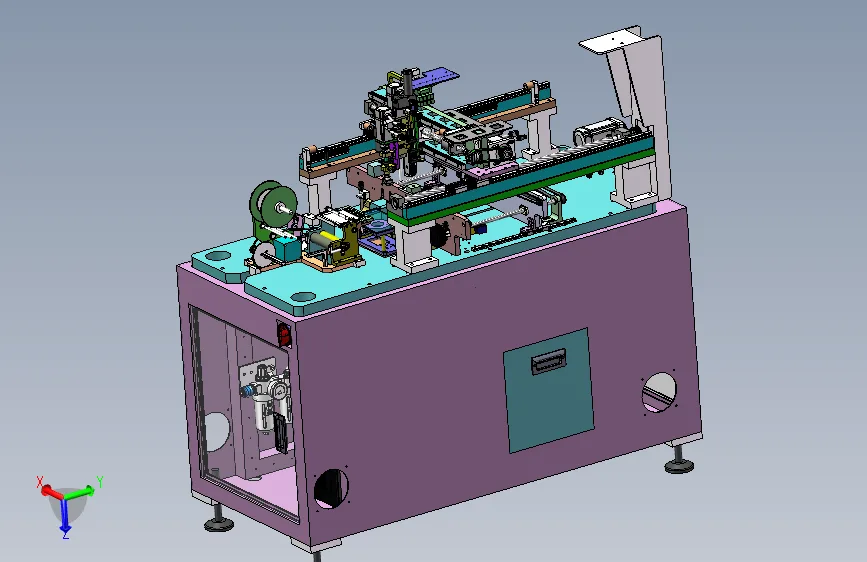
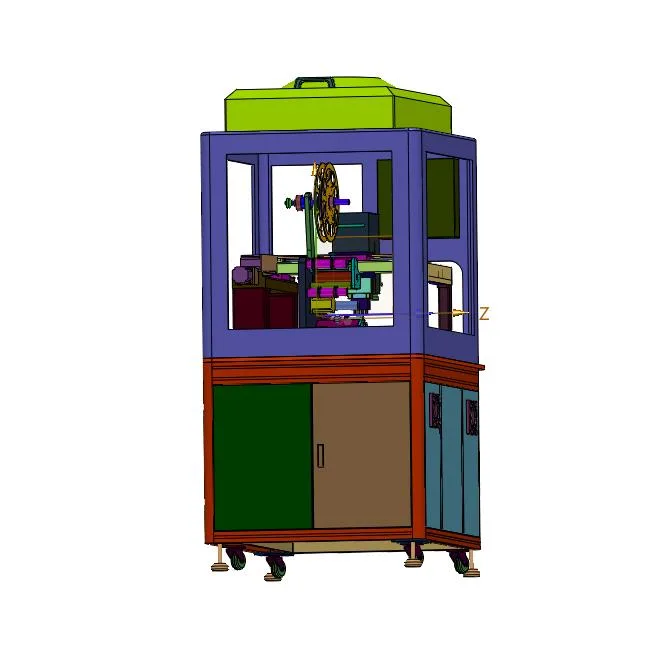
What it does
Aligns datum features of film and substrate by vision, then completes attachment with controlled contact.
How it works
Cameras recognize film and workpiece positions separately, the controller computes the offset, and the stage or laminating head compensates translation and angle; a vacuum head holds film attitude while contact is built up progressively. Final accuracy depends on calibration, film deformation and movement after release together.
Process sequence
- Supply film and substrate
- Image and locate each
- Calculate and compensate offset
- Transfer by suction
- Laminate and release under control
- Check final position
Key inputs
- Film size, release force and stretch
- Datum features, tolerances and camera calibration
- Vacuum support, stage stiffness and contact method
Common problems
- Film shifting after pick-up
- Lens glare causing mislocation
- Deformation on pick or place, bubbles and wrong compensation coordinates
Limits of application
- High precision in the name does not replace actual acceptance
- Vision repeatability, post-lamination position error and substrate tolerances should be verified separately
Functional modules
Film supply and peeling
Provides single pieces ready for suction
Vision alignment
Captures datums on both sides
Compensating motion
Adjusts relative pose
Lamination check
Rechecks position and bubbles after pressing
Manufacturer & technical sources
Continue with manufacturer product pages, operating principles and technical information for this equipment type.