
EQUIPMENT / PRINCIPLE / DESIGN

Heat stake station

Locally softens the tip of a thermoplastic boss and forms it into a head that mechanically retains the adjacent part.

Equipment principle & structureRequest design help ↗
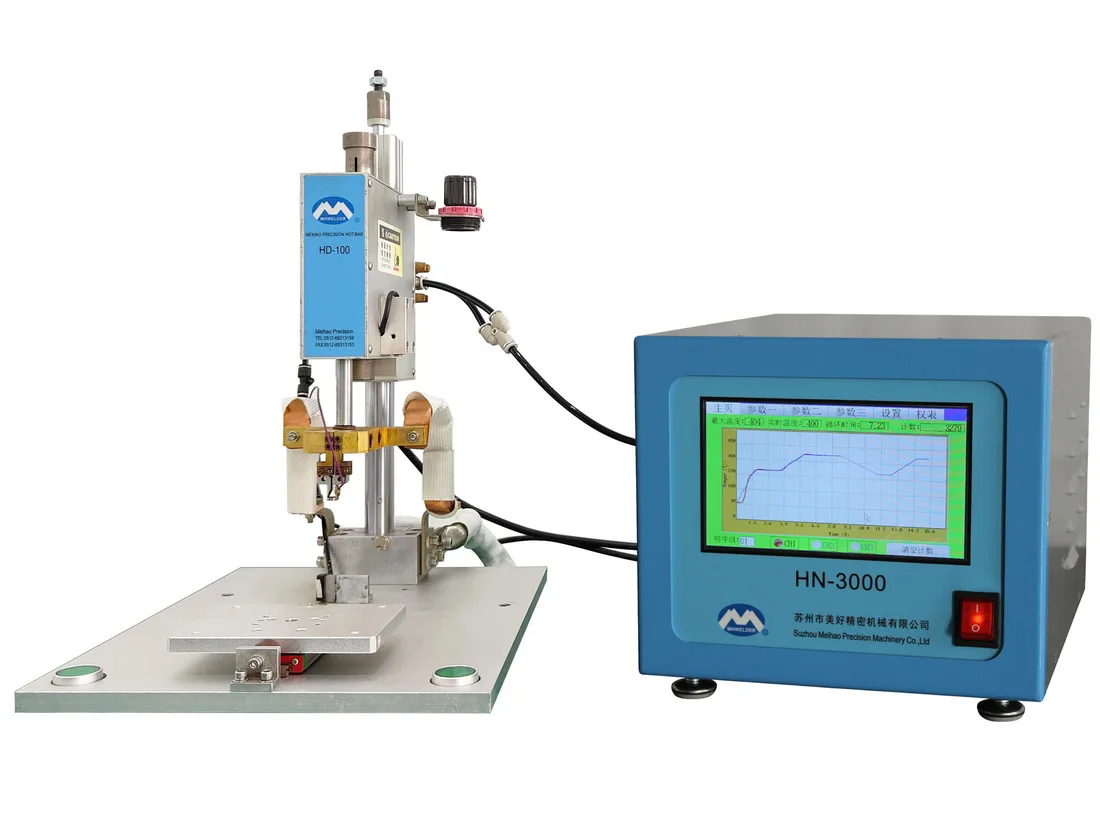
Meihao HD-100 pulse heat-staking machine: heated head, fixture table, controller
Meihao HD-100 pulse heat-staking machine: heated head, fixture table, controller · Source: Meihao Precision website ↗ · © the manufacturer, quoted for reference · Resized proportionally and converted to WebP
Heat stake station · original schematic, not to scale; shows the working principle and modules
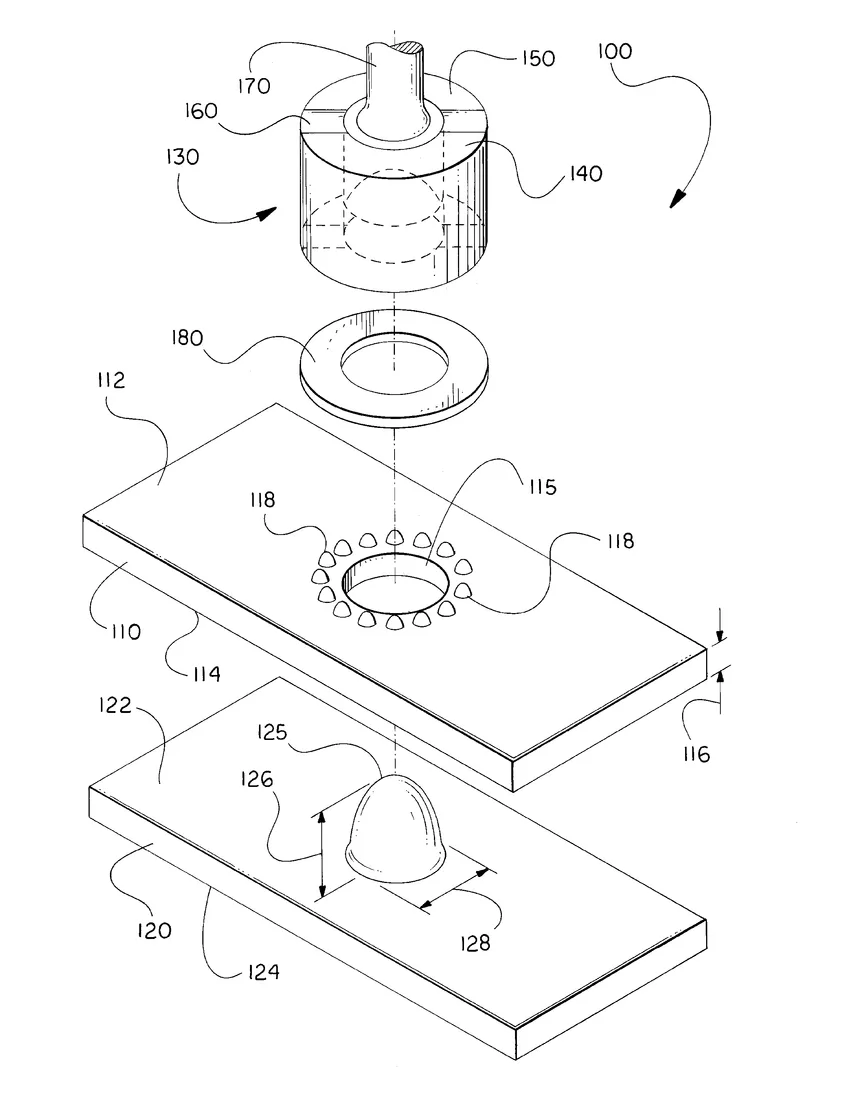
Heat staking (US20160250804A1): heated tool forms the boss through the part
Heat staking (US20160250804A1): heated tool forms the boss through the part · US20160250804A1 · Original patent drawing · Resized proportionally with the original mark retained
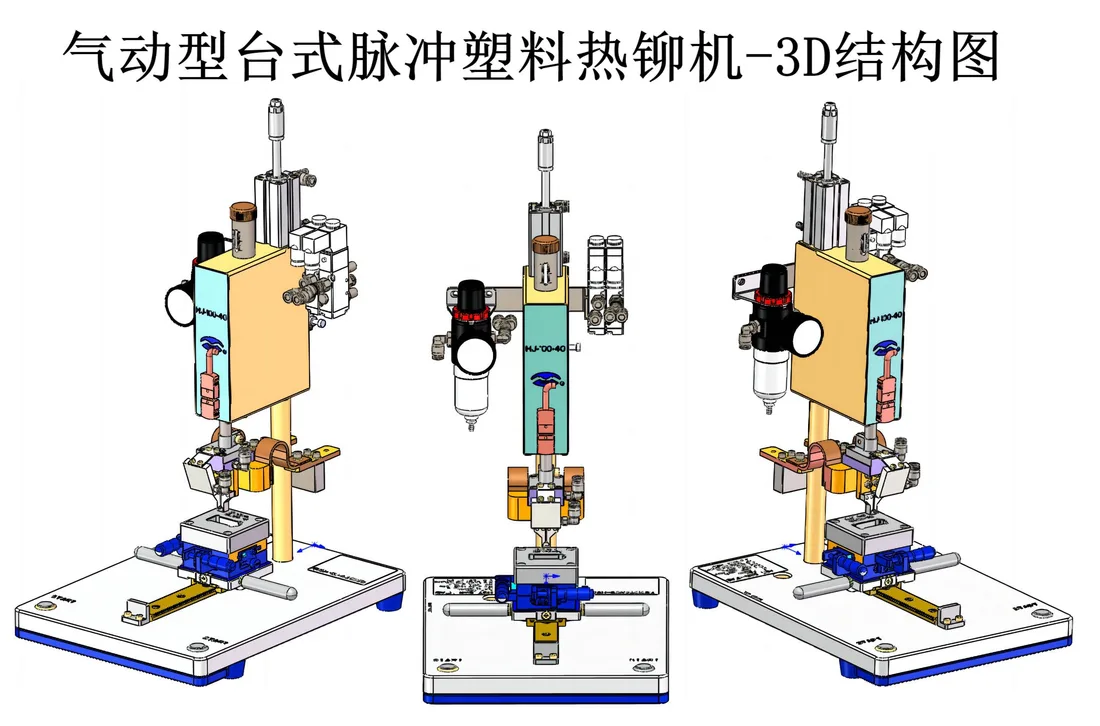
Same model, 3D three views: heated head, insulation, valves, slide and fixture
Same model, 3D three views: heated head, insulation, valves, slide and fixture · Source: Meihao Precision website ↗ · © the manufacturer, quoted for reference · Resized proportionally and converted to WebP
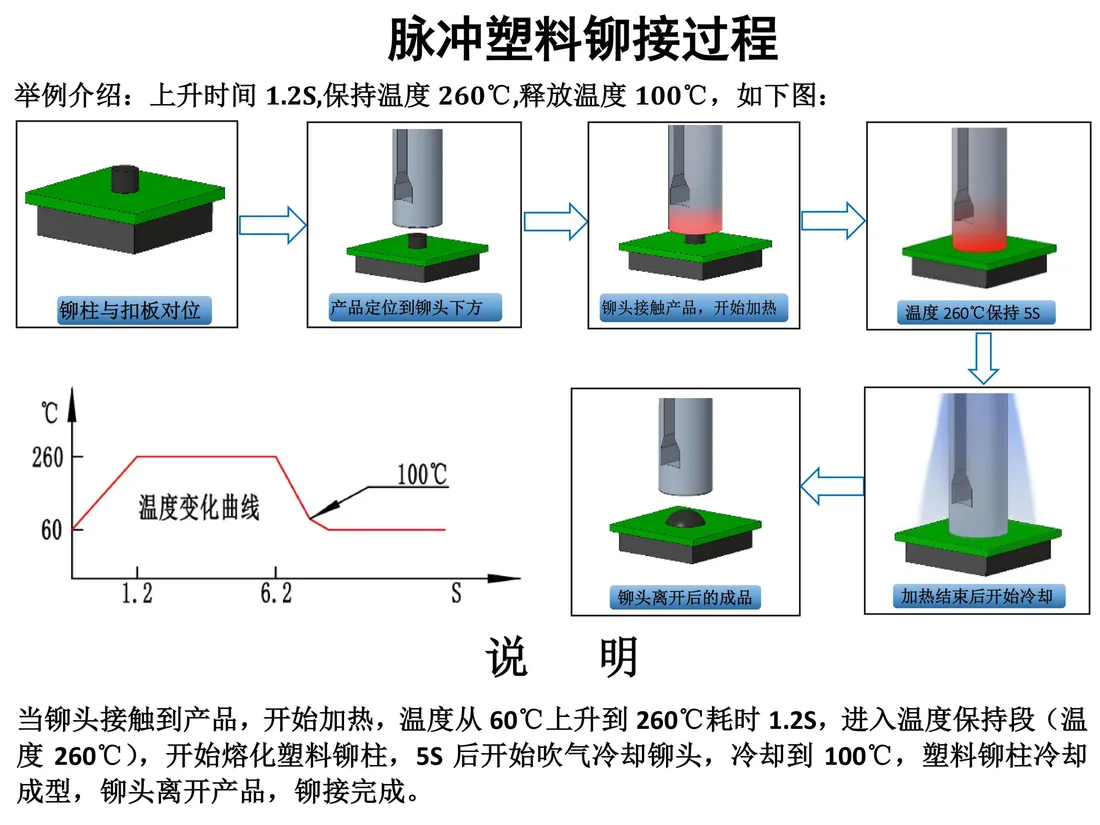
Pulse heat staking: heat, hold, air-cool and form the plastic boss (maker example)
Pulse heat staking: heat, hold, air-cool and form the plastic boss (maker example) · Source: Meihao Precision website ↗ · © the manufacturer, quoted for reference · Resized proportionally and converted to WebP

What it does

Locally softens the tip of a thermoplastic boss and forms it into a head that mechanically retains the adjacent part.

How it works

The heated forming tip contacts the plastic boss, which softens under controlled temperature, time and light pressure until it fills the forming cavity; once the head is stable the tool retracts. The parts are held by the formed head, and metal inserts need not melt.

Process sequence

  1. Load and locate parts
  2. Confirm boss protrusion
  3. Contact and form with the hot tip
  4. Hold or cool per the material
  5. Retract the tip
  6. Check the head and retention

Key inputs

  1. Resin type, boss diameter and protrusion
  2. Retained part thickness and loads
  3. Tip profile, heat contact time and retract temperature

Common problems

  1. Insufficient, cracked or sticking heads
  2. Boss root deformed under pressure
  3. Heat damage to adjacent parts and heads pulled up on retract

Limits of application

  1. Heat staking and ultrasonic staking put heat in differently
  2. Not for materials that cannot be thermoformed; cooling method and time must be confirmed for each resin

Functional modules

Part fixture

Supports the boss root and the retained part

Hot forming tip

Supplies heat and defines the head

Press guidance

Keeps axis and stroke

Cool and retract

Keeps the new head from being pulled

Manufacturer & technical sources

Continue with manufacturer product pages, operating principles and technical information for this equipment type.

ONLY ON MECHWIKI / AGGREGATED

Aggregated references: models, makers, patents & videos

References scattered across model articles, vendor sites and patent databases, gathered under this machine. Checked items are listed; the rest are offered as ready-to-open searches.

Patents: how others built it

Patents are useful for drawings and mechanism ideas. None has been vetted for this entry yet, so here are searches pre-filled with the machine name.

Videos: see it run

No licensed video is hosted for this machine yet; these searches are pre-filled with its name.

3D MODELS

3D models and download information

Explore structure and assembly with models. Download methods, file formats and terms are provided by the original article or mini program.

Find more in the model library →