
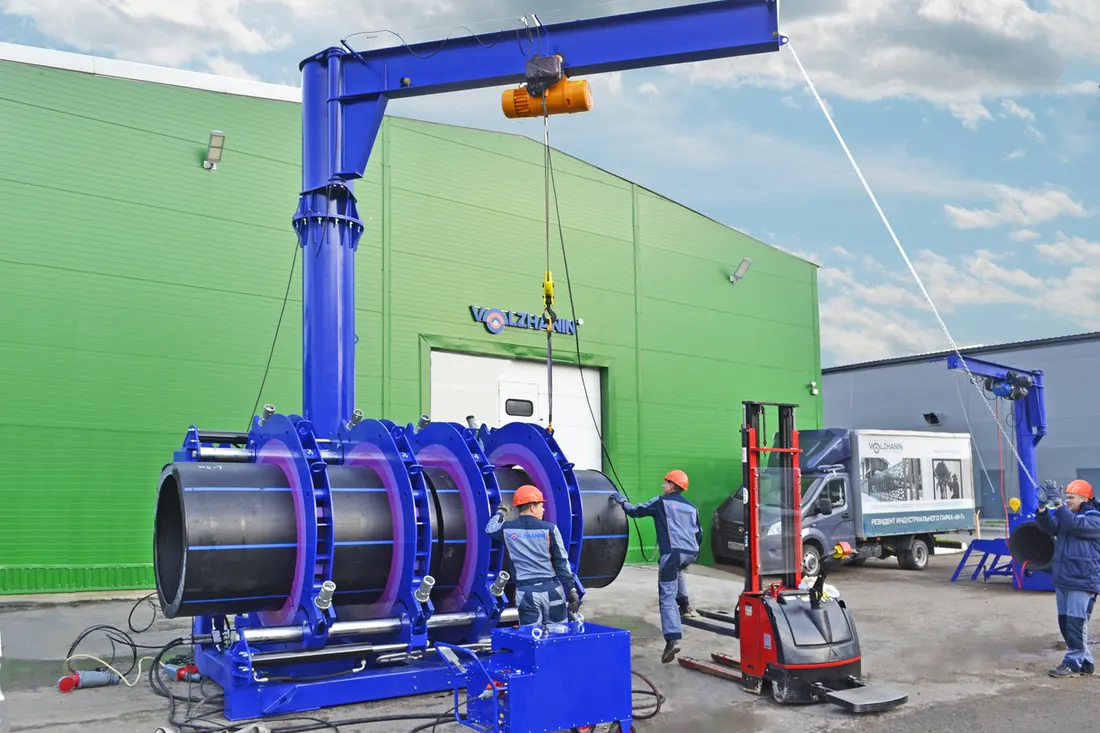

What it does
Melts the joining surfaces of thermoplastic parts on a hot plate, then presses them together and cools them to form a welded joint.
How it works
The fixtures on both sides bring the surfaces to be welded against the hot plate; once the required melt state is reached they back off, the plate withdraws, and the parts close quickly and are pressed together, staying in contact until the melt zone solidifies. Plate movement and joining must be coordinated in space and time.
Process sequence
- Locate the parts
- Heat surfaces against the hot plate
- Back off parts and withdraw the plate
- Press the joint together
- Hold and cool
- Open fixtures and unload
Key inputs
- Resin compatibility, joint shape and surface condition
- Hot plate contour, temperature and heating time
- Changeover time, joining displacement and flash space
Common problems
- Surfaces under- or overheated
- Material sticking or stringing when the plate withdraws
- Uneven joining, excess flash or dimensional deviation
Limits of application
- This entry covers hot plate welding of thermoplastic parts
- Heat sealing of packaging film and heat staking of plastics are different processes
Functional modules
Part fixtures
Support and locate both halves
Hot plate
Transfers heat to joint surfaces
Advance and retract mechanism
Handles heating contact, plate removal and joining
Process control
Manages temperature, time and joining position
Manufacturer & technical sources
Continue with manufacturer product pages, operating principles and technical information for this equipment type.