
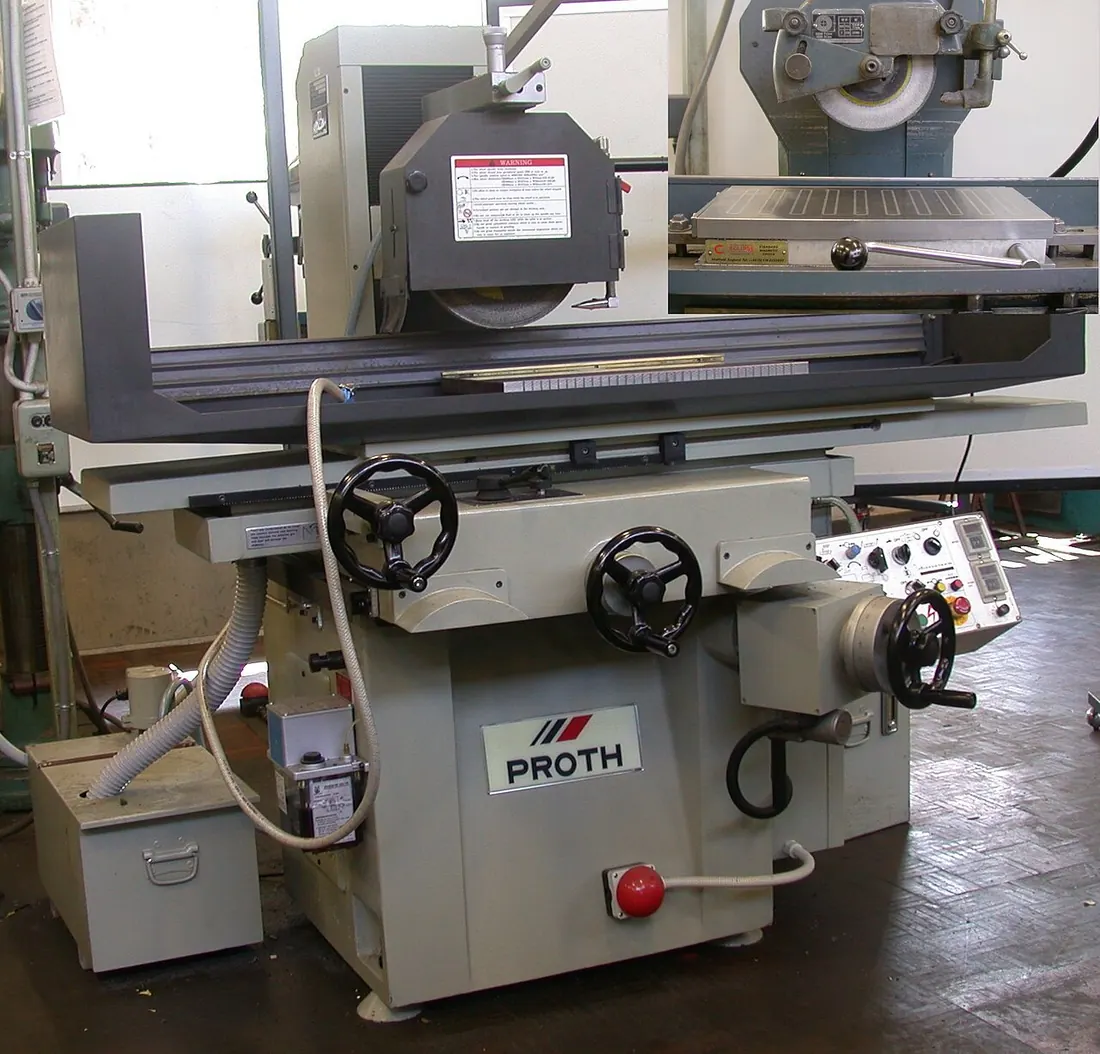

What it does
Finishes flat surfaces through relative motion of a rotating wheel and the table.
How it works
On a typical reciprocating table machine the work is fixed to the table, which carries it back and forth under the wheel, cross stepping covers the width, and vertical infeed controls stock removal. Other machines use rotary tables or formed wheels.
Process sequence
- Choose the reference face
- Fix and check the work
- Dress the wheel
- Rough and finish grind with full coverage
- Check thickness, flatness and surface
- Unload and clean
Key inputs
- Material and workholding method
- Part thickness and stiffness
- Surface size and allowance
- Wheel choice, dressing and coolant
Common problems
- Clamping distortion leaving parts out of flat after release
- Dull wheels causing heat and surface marks
- Swarf under the datum face affecting parallelism
Limits of application
- Magnetic chucking depends on the material; not every part can be held
- Flat grinding and complex profile grinding need different motions
Functional modules
Wheel and spindle
Produce the grinding motion
Table and workholding
Support and fix the work
Longitudinal, cross and vertical axes
Cover the surface and control depth
Dressing and coolant
Keep wheel and grinding zone in condition
Manufacturer & technical sources
Continue with manufacturer product pages, operating principles and technical information for this equipment type.