
EQUIPMENT / PRINCIPLE / DESIGN

Glue cure oven tunnel

Carries glued parts continuously through controlled heated zones, giving the adhesive a stable heat-curing history.

Equipment principle & structureRequest design help ↗
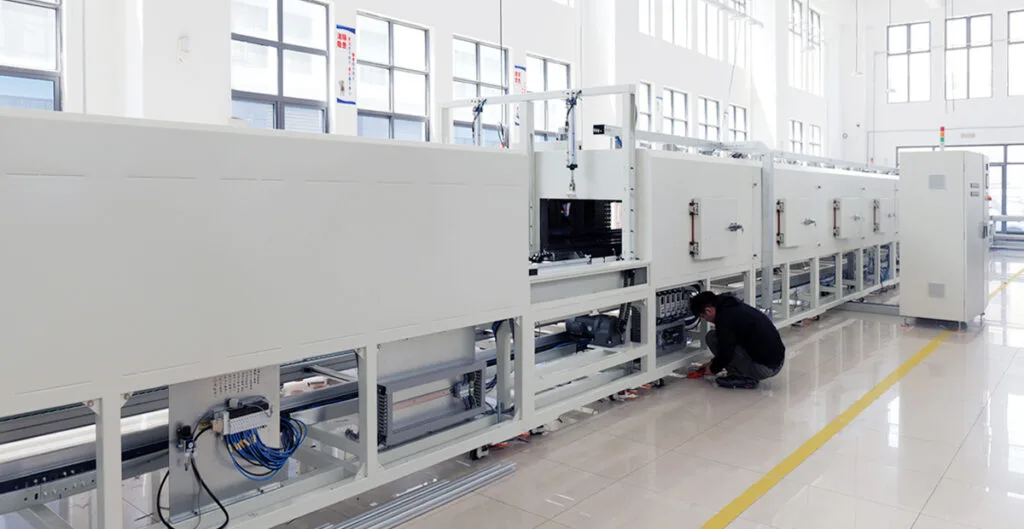
Sectional curing tunnel in a workshop, each section with access doors and windows
Sectional curing tunnel in a workshop, each section with access doors and windows · Source: Suzhou Huakong website ↗ · © the manufacturer, quoted for reference · Resized proportionally and converted to WebP
Glue cure oven tunnel · original schematic, not to scale; shows the working principle and modules
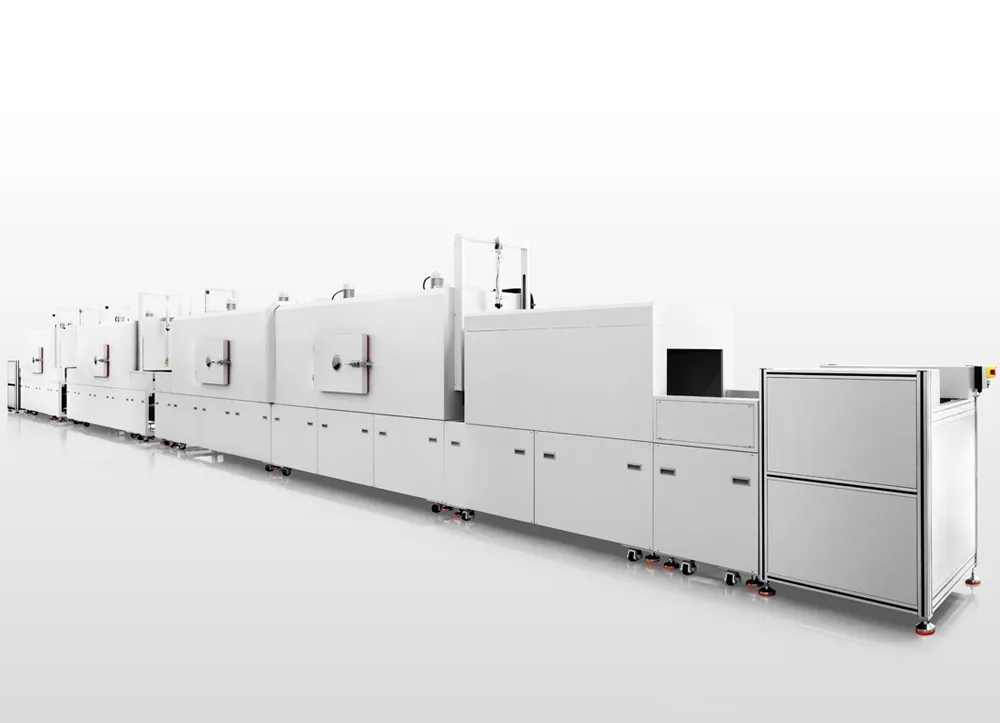
Full length of a tunnel-oven curing line, control cabinet at the right end
Full length of a tunnel-oven curing line, control cabinet at the right end · Source: Suzhou Huakong website ↗ · © the manufacturer, quoted for reference · Resized proportionally and converted to WebP
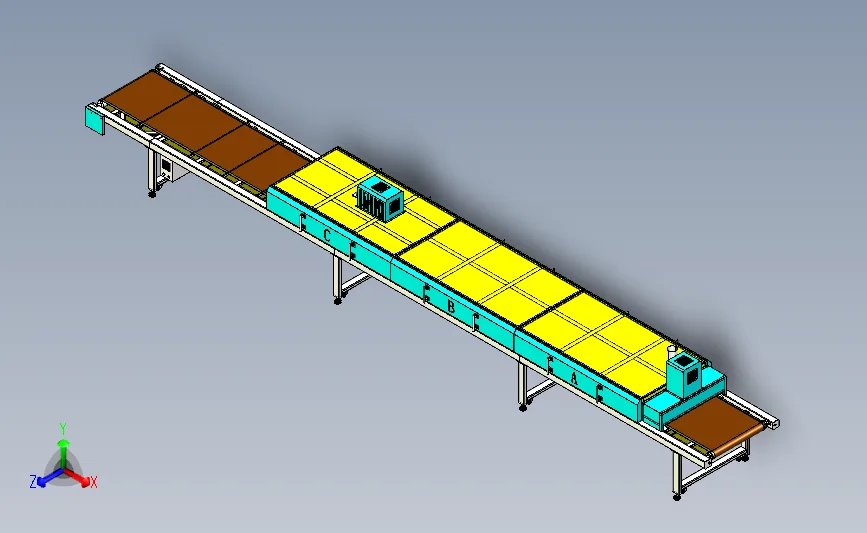
Glue curing tunnel oven, 3D model: segmented hoods along the conveyor
Glue curing tunnel oven, 3D model: segmented hoods along the conveyor · LazyStones 3D model · Public model library reference image · Resized proportionally and converted to WebP
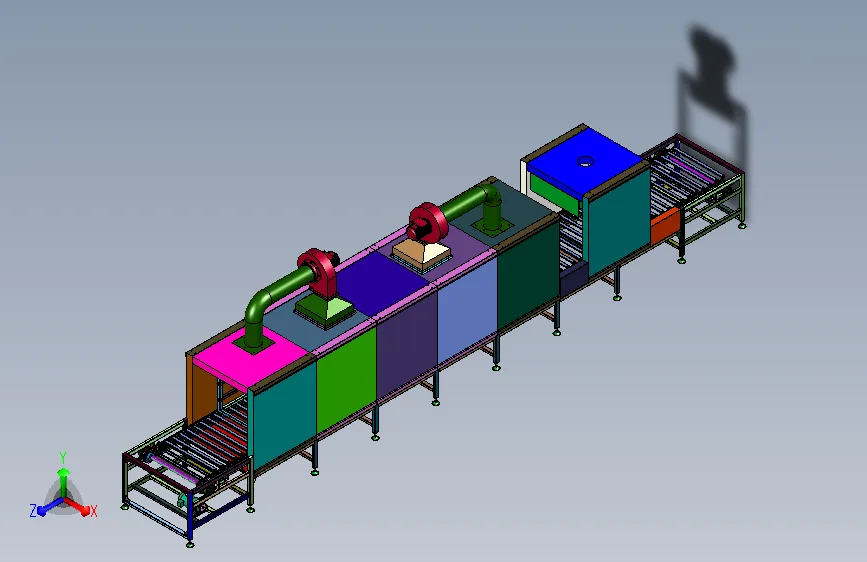
Constant-temperature curing tunnel, 3D model: segmented oven, mesh belt through
Constant-temperature curing tunnel, 3D model: segmented oven, mesh belt through · LazyStones 3D model · Public model library reference image · Resized proportionally and converted to WebP

What it does

Carries glued parts continuously through controlled heated zones, giving the adhesive a stable heat-curing history.

How it works

The conveyor moves parts through the heated section at a set speed, with optional independent zones, recirculating air, exhaust and a cooling zone. Dwell time follows from effective zone length and line speed, but actual bond-line temperature also depends on part mass, loading and heat transfer, and must be confirmed for the adhesive's process.

Process sequence

  1. Confirm adhesive and carriers
  2. Stabilize the oven
  3. Feed continuously at set speed
  4. Pass through heating and hold zones
  5. Enter the cooling section
  6. Check cure state and discharge

Key inputs

  1. Adhesive cure curve and volatiles
  2. Part mass, bond line and heat resistance
  3. Line speed, load spacing and zone uniformity

Common problems

  1. Part centres not reaching cure temperature
  2. Overheating during line stops or adhesive sagging
  3. Blocked airflow creating temperature differences

Limits of application

  1. Heat-cure tunnels do not suit every adhesive; UV or moisture cure may need other conditions
  2. Oven setpoints cannot replace measured bond-line temperature

Functional modules

Conveyor carriers

Hold part attitude and dwell time

Heated zones

Supply the specified heat

Recirculation and exhaust

Even out heat transfer and remove volatiles

Cooling and control

Lower exit temperature and record the process

Manufacturer & technical sources

Continue with manufacturer product pages, operating principles and technical information for this equipment type.

ONLY ON MECHWIKI / AGGREGATED

Aggregated references: models, makers, patents & videos

References scattered across model articles, vendor sites and patent databases, gathered under this machine. Checked items are listed; the rest are offered as ready-to-open searches.

Patents: how others built it

Patents are useful for drawings and mechanism ideas. None has been vetted for this entry yet, so here are searches pre-filled with the machine name.

Videos: see it run

No licensed video is hosted for this machine yet; these searches are pre-filled with its name.

3D MODELS

3D models and download information

Explore structure and assembly with models. Download methods, file formats and terms are provided by the original article or mini program.

Find more in the model library →