
What it does
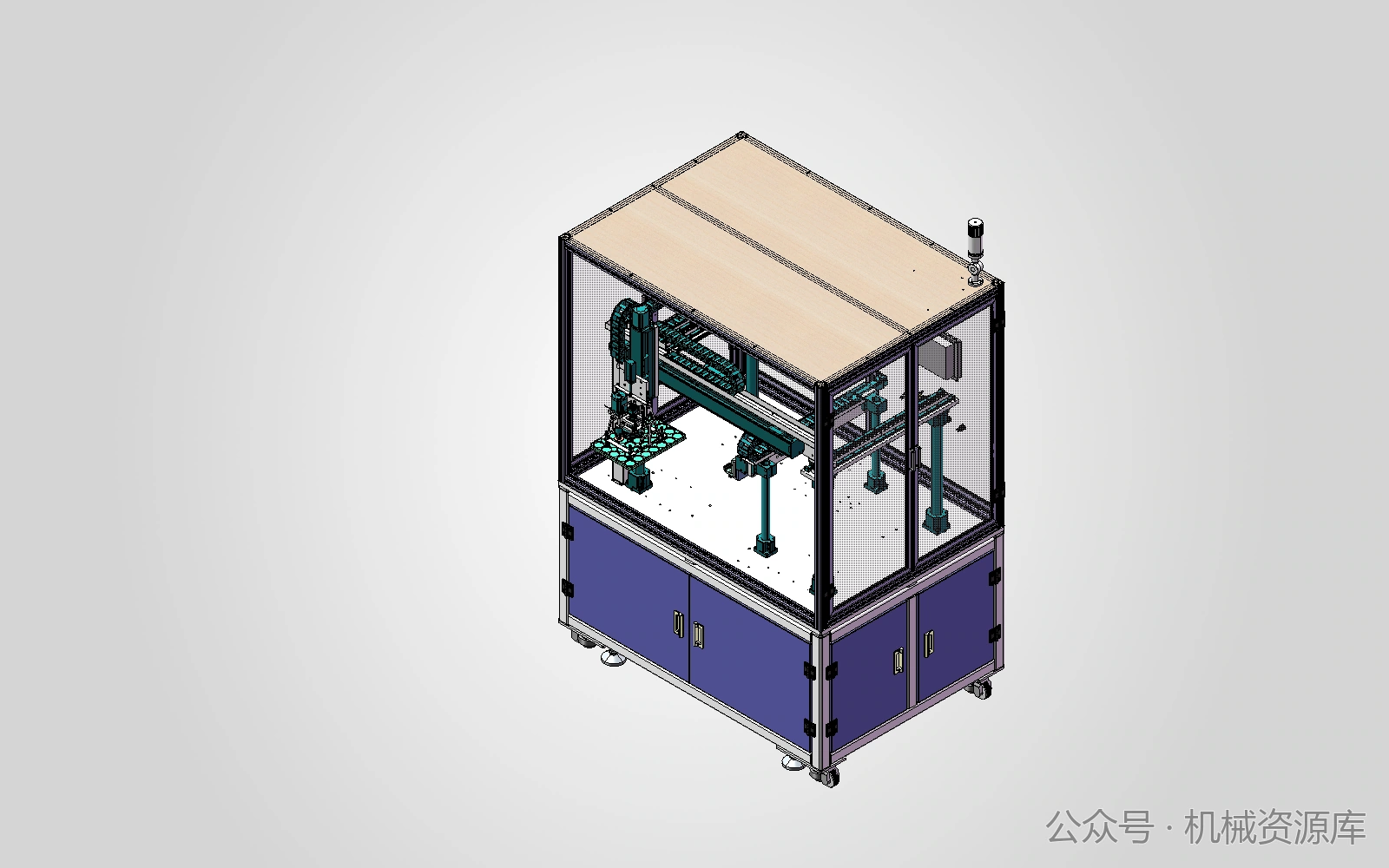
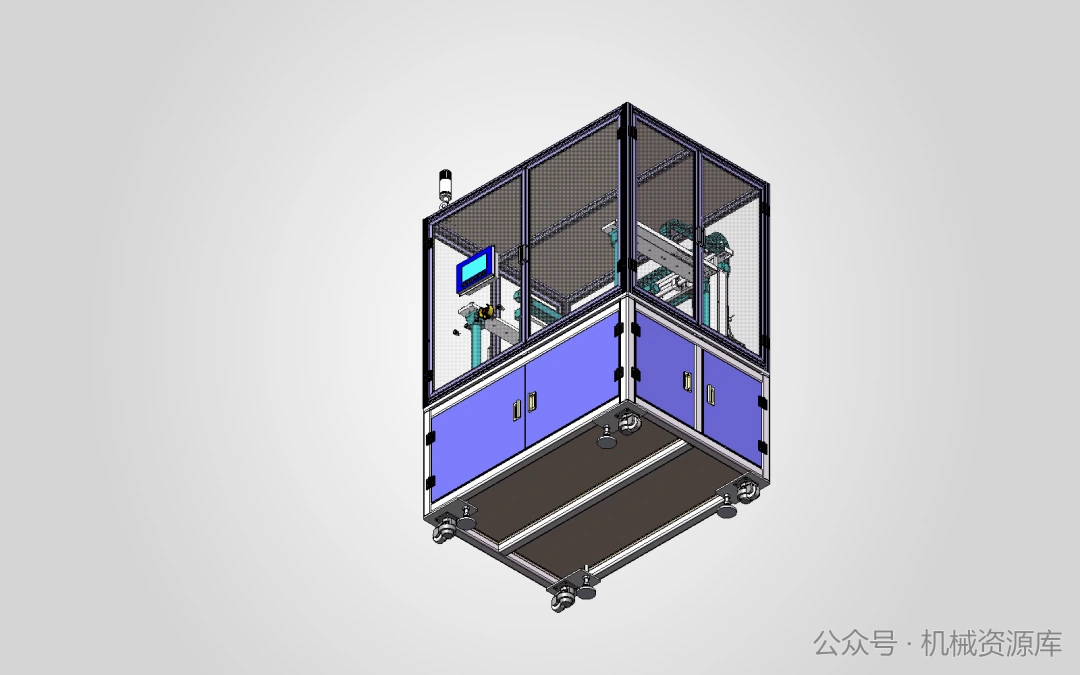
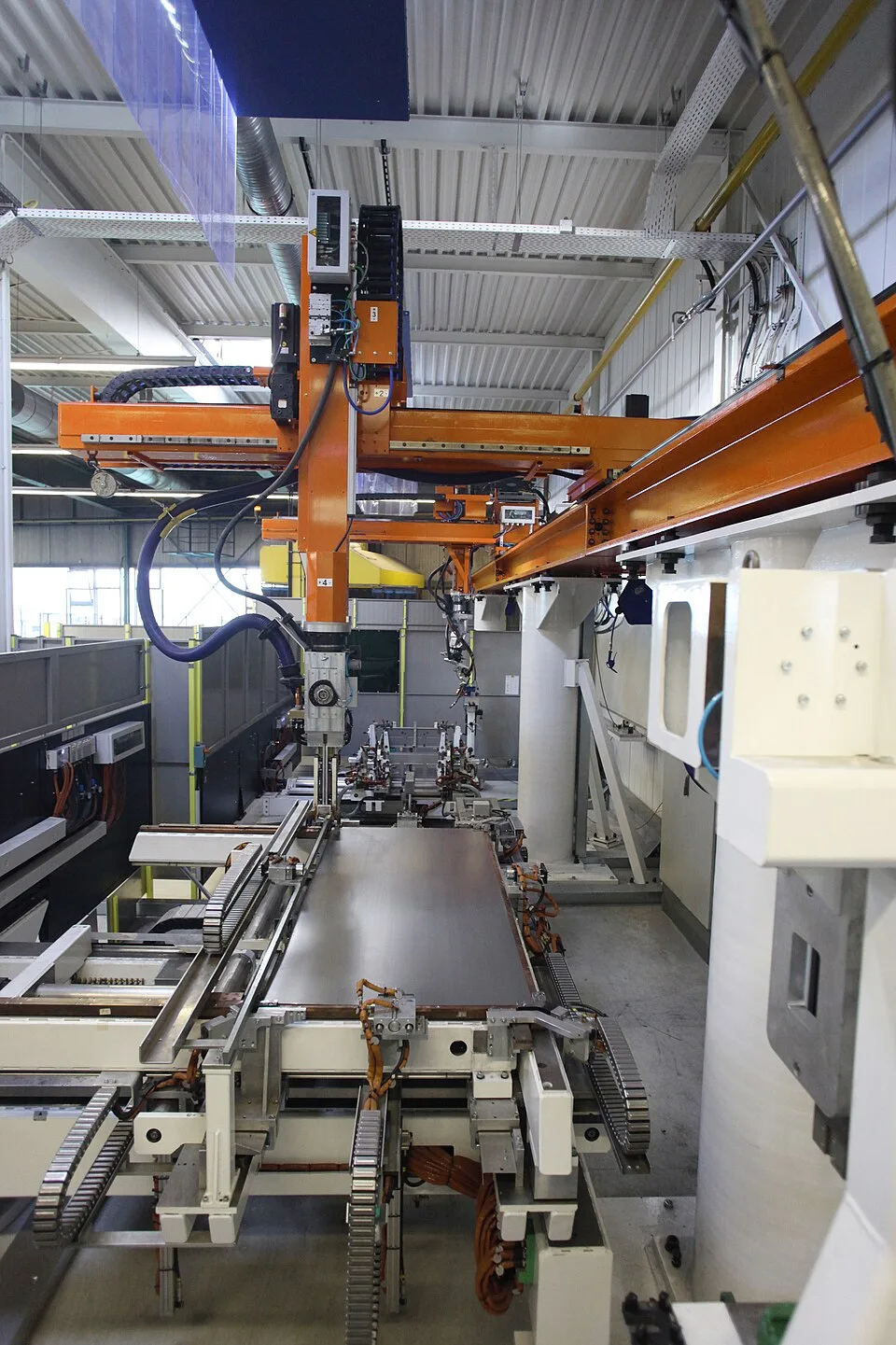
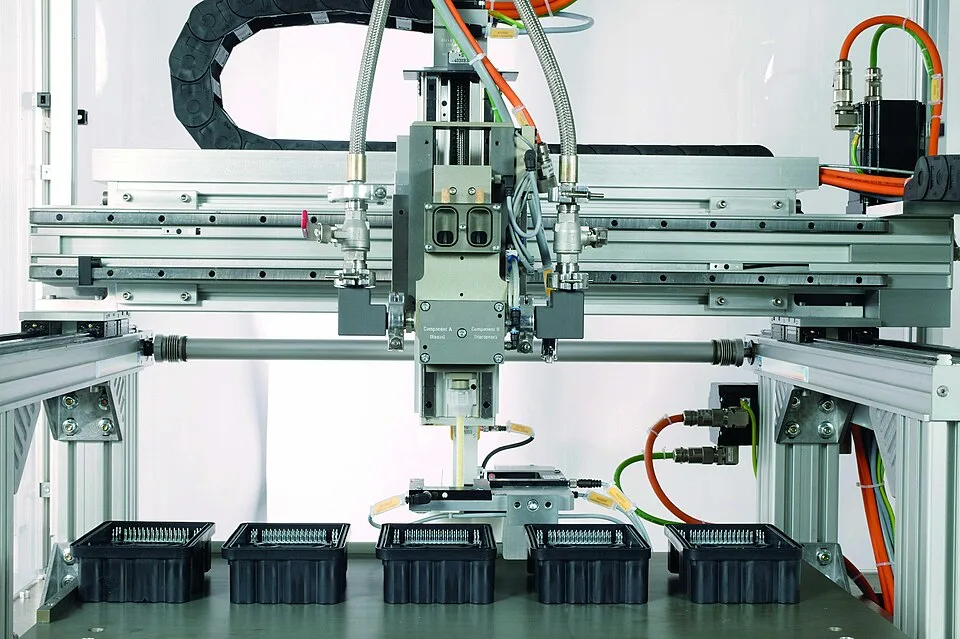
Carries assembly actuators on a gantry frame spanning the part, giving larger parts open working space and a reaction force path.
How it works
Taking compression assembly of a layered stack as an example, parts are first stacked against locating edges on a movable stand, the stand enters the gantry press area, and a hydraulic cylinder presses through a platen; once pressure or stroke reaches the requirement it holds, fastening is completed per the process, and the stand exits. Frame stiffness and platen parallelism affect how evenly load is applied.
Process sequence
- Load parts to datums
- Move the stand into the press area
- Centre and support
- Press and monitor
- Fasten and hold per the process
- Release, exit and inspect
Key inputs
- Part size, stack height and load faces
- Force, displacement and hold required for assembly
- Frame deflection, platen parallelism and handling interface
Common problems
- Off-centre pressing overloading areas
- Layers sliding
- Inconsistent fixture datums or springback after release
Limits of application
- A gantry is a structural layout, not a fixed assembly process
- Pressing, tightening, welding and other heads need their own actuators and load conditions
Functional modules
Load-bearing gantry
Closes the assembly load path
Locating stand
Holds stacking datums
Pressing actuator
Applies specified force and displacement
Measurement and control
Manages pressure, stroke and hold
Manufacturer & technical sources
Continue with manufacturer product pages, operating principles and technical information for this equipment type.