
EQUIPMENT / PRINCIPLE / DESIGN

Friction stir welding machine

Heats, stirs and forges the joint with a rotating tool, forming a solid-state weld.

Equipment principle & structureRequest design help ↗
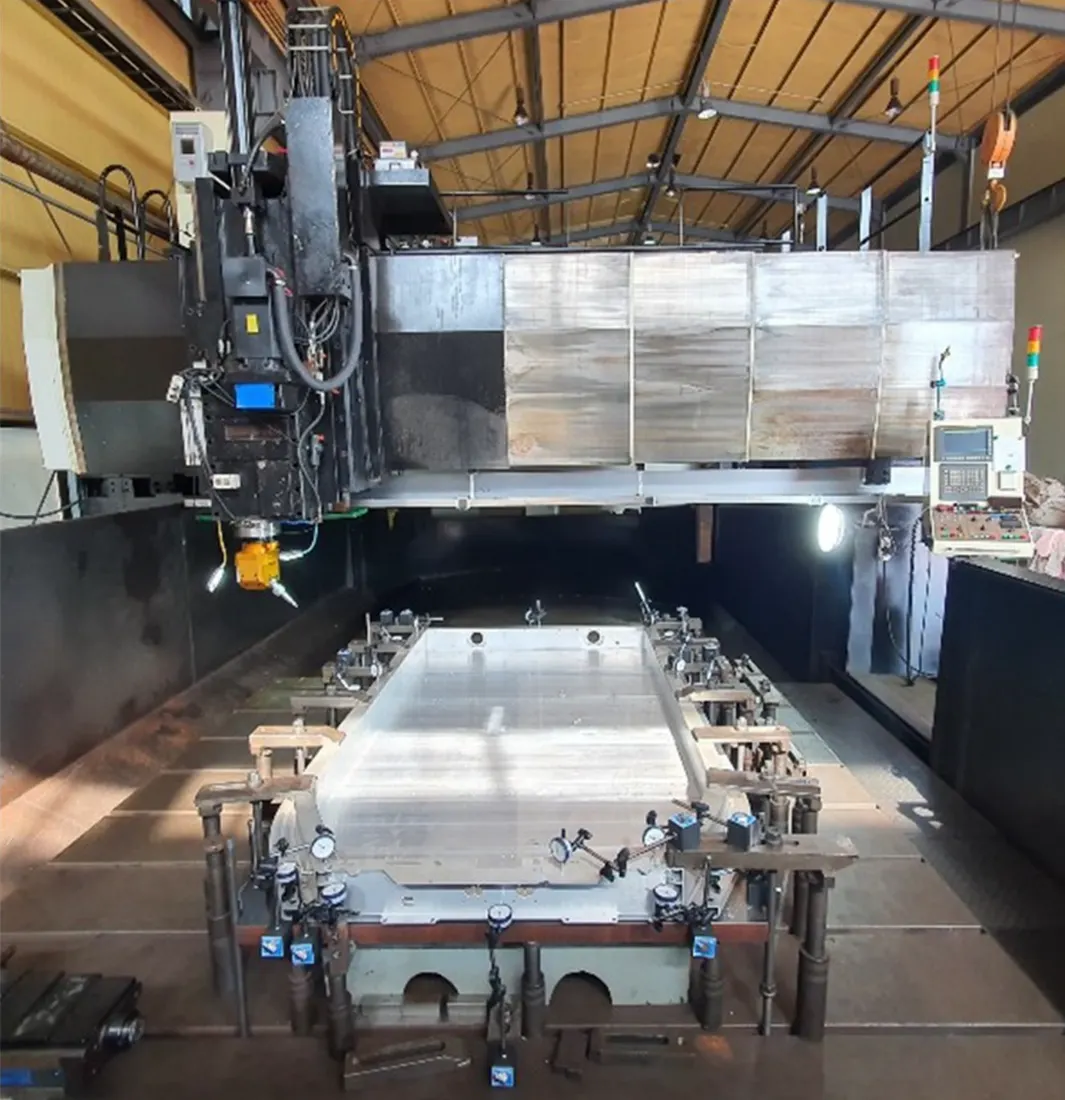
Friction stir welding machine · Real machine photo
Friction stir welding machine · Real machine photo · Source: Wikimedia Commons ↗ · by Hwanjin Kim,1 Kwangjin Lee,2Jaewoong Kim,3 Changyeon Lee,4 Yoonchul Jung5 and Sungwook Kang,6* 1 Department of Mechanical Engineering, Gyeongsang National Unive · CC BY 4.0 · Resized and converted to WebP
Friction stir welding machine · original schematic, not to scale; shows the working principle and modules
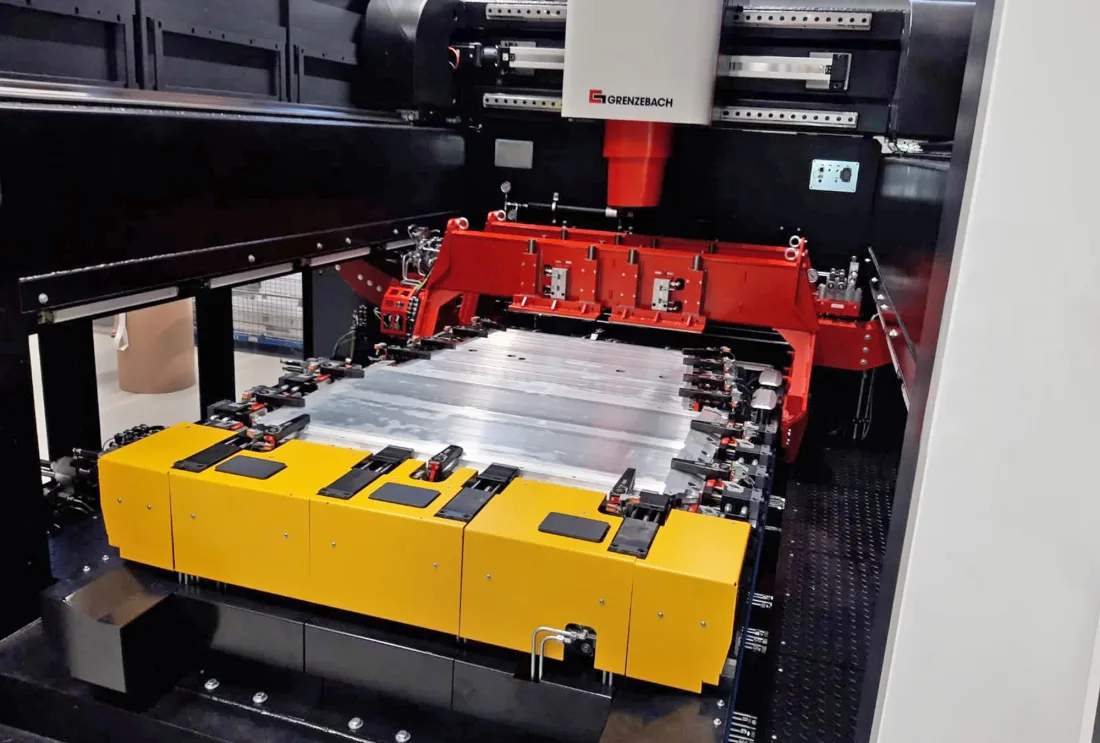
Grenzebach friction stir welding case with fixtures holding a wide metal plate
Grenzebach friction stir welding case with fixtures holding a wide metal plate · Source: Grenzebach website ↗ · © the manufacturer, quoted for reference · Resized proportionally and converted to WebP

What it does

Heats, stirs and forges the joint with a rotating tool, forming a solid-state weld.

How it works

The tool pin and shoulder plunge into the joint and rotate under axial force, softening nearby metal; as the tool travels along the joint it carries plasticized material from front to back and consolidates it. Backing and side clamping take the axial force and keep the joint from opening.

Process sequence

  1. Prepare the joint and clamp to the backing
  2. Position the rotating tool
  3. Plunge to build the plasticized zone
  4. Travel along the joint
  5. Finish with the exit procedure
  6. Inspect the weld

Key inputs

  1. Material and tool match
  2. Plate thickness and pin geometry
  3. Backing and side clamps
  4. Plunge, travel and exit space

Common problems

  1. Weak clamping letting the joint open
  2. Tool wear changing material flow
  3. Plunge or travel mismatch causing internal defects
  4. Exit hole needing to be planned

Limits of application

  1. This page covers friction stir welding
  2. It differs from rotary friction welding where two parts rotate against each other
  3. A solid-state joint still needs quality verification

Functional modules

Spindle and tool

Generate heat and material flow

Axial force and travel axes

Keep plunge and move along the seam

Backing and clamps

Support and prevent separation

Process monitoring

Watches forces, motion and thermal state

Manufacturer & technical sources

Continue with manufacturer product pages, operating principles and technical information for this equipment type.

ONLY ON MECHWIKI / AGGREGATED

Aggregated references: models, makers, patents & videos

References scattered across model articles, vendor sites and patent databases, gathered under this machine. Checked items are listed; the rest are offered as ready-to-open searches.

Patents: how others built it

Patents are useful for drawings and mechanism ideas. None has been vetted for this entry yet, so here are searches pre-filled with the machine name.

Videos: see it run

No licensed video is hosted for this machine yet; these searches are pre-filled with its name.

3D MODELS

3D models and download information

Explore structure and assembly with models. Download methods, file formats and terms are provided by the original article or mini program.

Find more in the model library →