
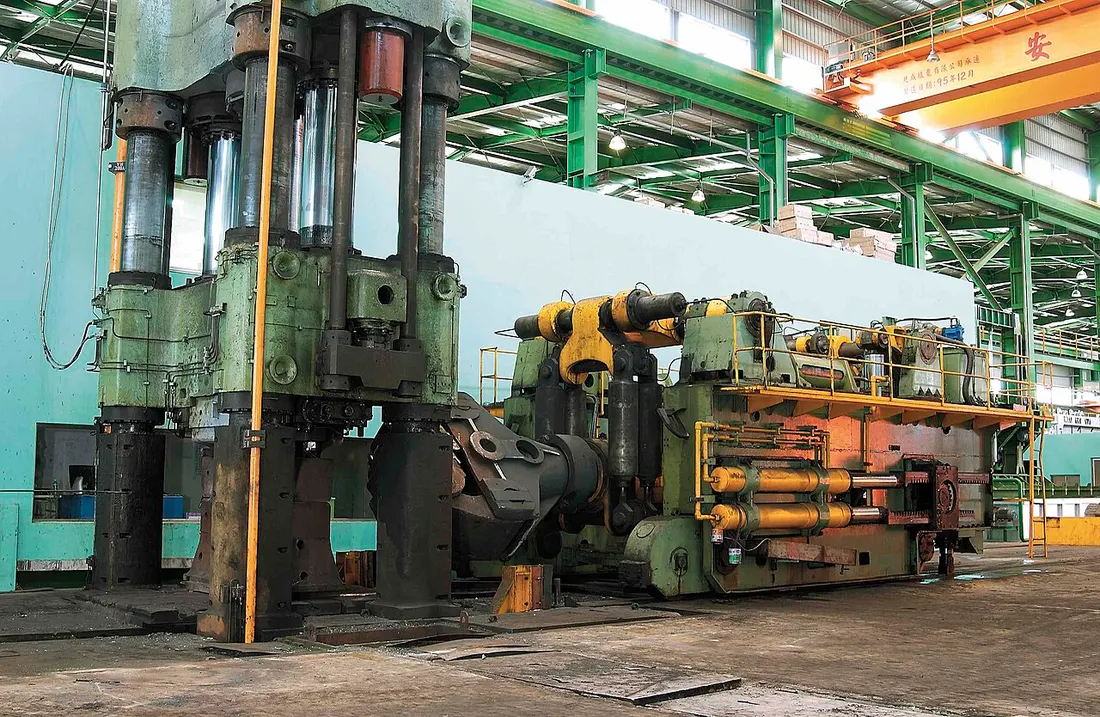

What it does
Presses metal between dies to upset, draw out, extrude or die-forge blanks in bulk forming.
How it works
The main drive moves the slide and upper die toward the lower die, redistributing material under pressure. Open-die forging shapes the section through repeated reductions and manipulation, while closed-die forging constrains the outline with the die cavity; mechanical, hydraulic and screw drives each have different motion and energy limits.
Process sequence
- Confirm blank and process state
- Place in the die
- Press per stage
- Return and eject or manipulate
- Continue required reductions
- Remove and inspect
Key inputs
- Forging material and geometry
- Cold, warm or hot working state
- Force, stroke, energy and contact time
- Dies, off-centre loads and transfer
Common problems
- Poor material flow causing laps or underfill
- Stage loads exceeding machine capability
- Off-centre loading of dies and guides
- Ejection or transfer affecting positioning
Limits of application
- Forging press is an equipment family, not a single drive type
- Hammer impact energy cannot be converted directly to a press of the same tonnage
- Forgings of the same shape still need material and stages confirmed
Functional modules
Main drive
Provides force and motion suited to the process
Frame, slide and guides
Take reactions and keep die alignment
Dies and ejection
Organize material flow and release
Blank transfer
Locates between stages
Manufacturer & technical sources
Continue with manufacturer product pages, operating principles and technical information for this equipment type.