
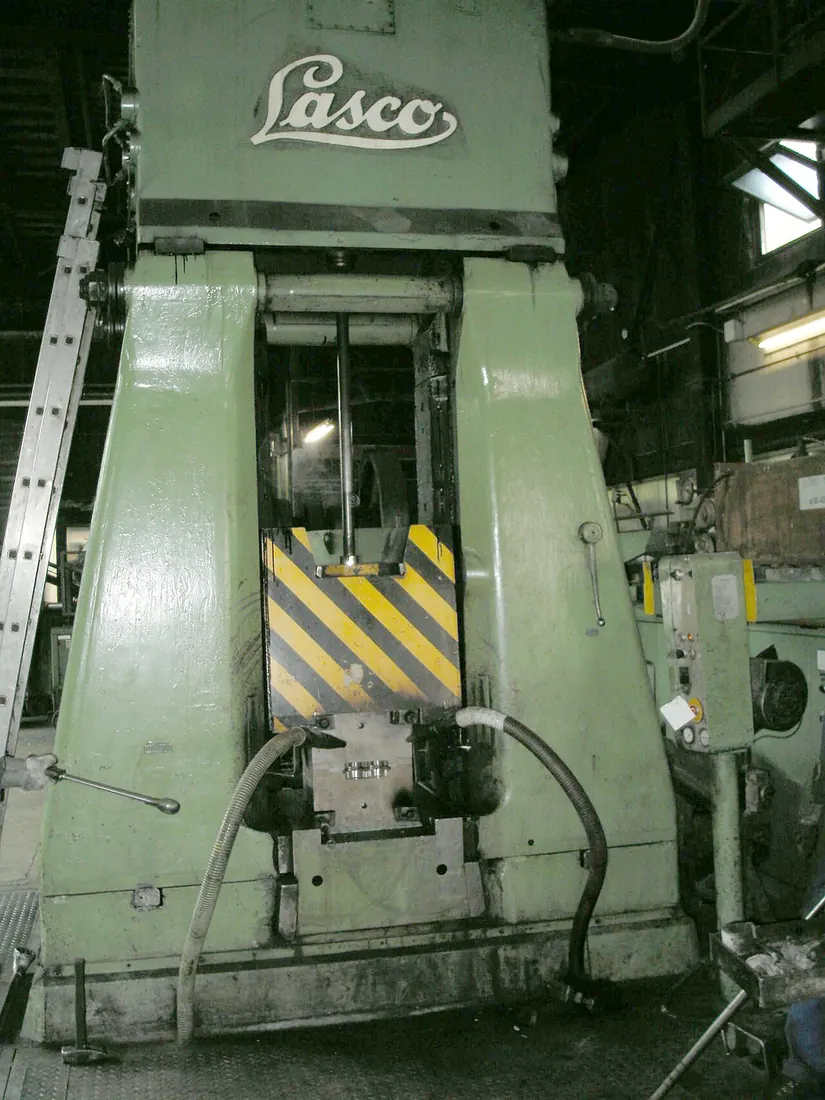

What it does
Deforms metal blanks between forging dies by fast impacts from a controlled ram.
How it works
The ram is accelerated and strikes the work with kinetic energy, and several successive blows can form the part step by step. Hydraulic double-acting hammers use hydraulic pressure to accelerate and lift the ram; counterblow hammers move upper and lower rams toward each other, so their lower ram design is not common to all hammers.
Process sequence
- Prepare blanks and dies
- Place and confirm gripping
- Raise and accelerate the ram under control
- Strike once or several times per the process
- Lift the ram and transfer or eject
- Remove and inspect
Key inputs
- Material temperature and blank
- Blow energy and number of blows
- Ram, dies and gripping
- Vibration, foundation and automatic transfer
Common problems
- Wrong energy or blow count causing underfill
- Unstable blank positioning
- Ram guide or die wear
- Impact vibration affecting the cell
Limits of application
- Hammers form by impact and cannot be compared directly with static hydraulic tonnage
- Steam or air, hydraulic and counterblow hammers are built differently
- This page gives no blow count or energy recipes
Functional modules
Ram and guides
Organize impact motion
Drive and control valves
Manage lifting and blow energy
Dies, frame and foundation
Transmit forming and impact loads
Gripping, transfer and ejection
Organize repeated blows on the part
Manufacturer & technical sources
Continue with manufacturer product pages, operating principles and technical information for this equipment type.