
EQUIPMENT / PRINCIPLE / DESIGN

Flanging machine

Bends sheet edges up locally to form flanges for joining or stiffening; flanging round dished heads is one form.

Equipment principle & structureRequest design help ↗
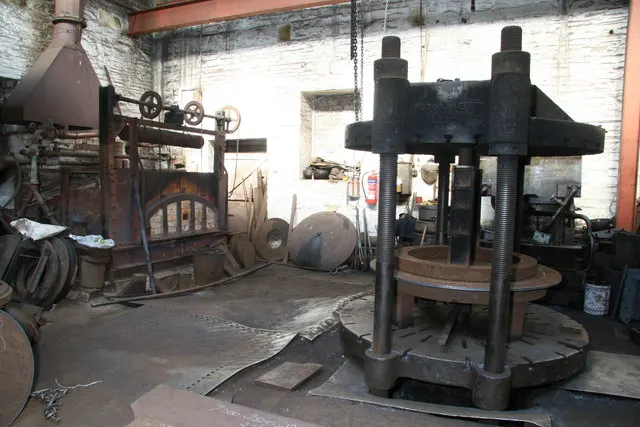
Flanging machine · Similar machine example
Flanging machine · Similar machine example · Source: Wikimedia Commons ↗ · by Chris Allen · CC BY-SA 2.0 · Resized and converted to WebP
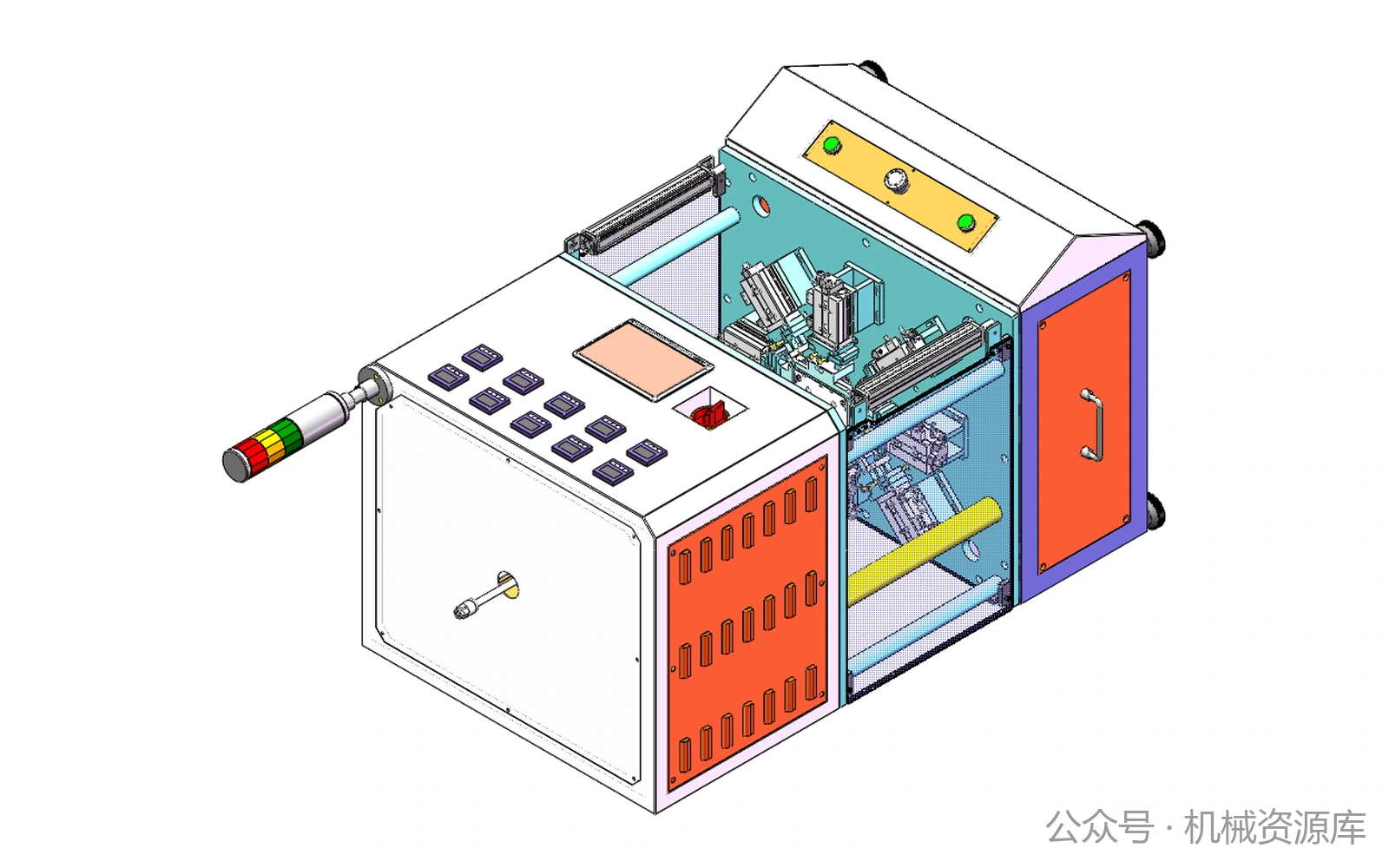
Flanging machine · original schematic, not to scale; shows the working principle and modules
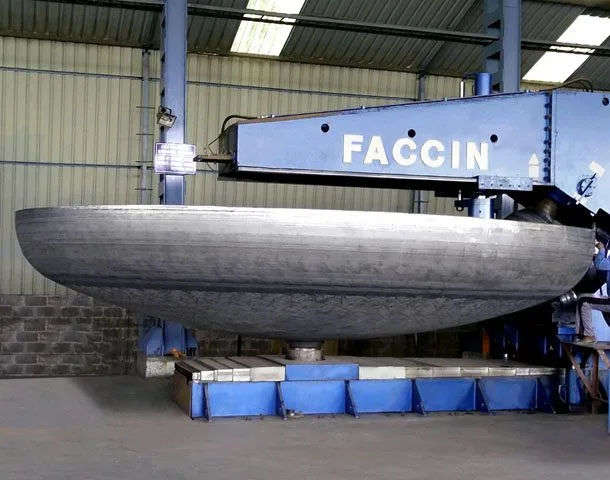
Large dished head held under the arm of a Faccin BF flanging machine
Large dished head held under the arm of a Faccin BF flanging machine · Source: Faccin website ↗ · © the manufacturer, quoted for reference · Resized proportionally and converted to WebP
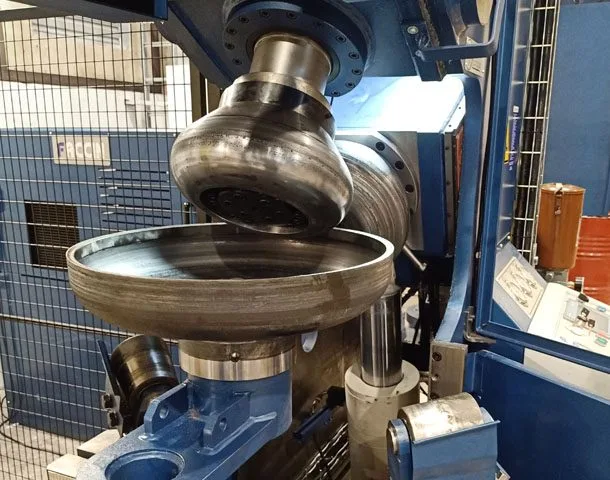
Faccin BF flanging roller at the rim of a small dished head
Faccin BF flanging roller at the rim of a small dished head · Source: Faccin website ↗ · © the manufacturer, quoted for reference · Resized proportionally and converted to WebP

What it does

Bends sheet edges up locally to form flanges for joining or stiffening; flanging round dished heads is one form.

How it works

Taking rotary dished-head flanging as an example, the driven forming roll turns the workpiece while the flanging roll presses the edge progressively against the forming roll with the target knuckle radius, and support rolls adjust to the edge position. The workpiece passes the local forming zone many times around its circumference, gradually producing the flange and transition profile.

Process sequence

  1. Check preform and edge allowance
  2. Fit rolls for the target profile
  3. Support and locate the workpiece
  4. Rotate and flange progressively
  5. Adjust support to finish the circumference
  6. Check edge and transition shape

Key inputs

  1. Material thickness and forming condition
  2. Target radius and flange height
  3. Workpiece diameter and support method
  4. Roll profile, feed and surface protection

Common problems

  1. Flanging too fast causing local wrinkles or thinning
  2. Poor support causing wobble
  3. Wrong roll profile or allowance affecting the contour
  4. Edge defects growing into cracks

Limits of application

  1. This page uses rotary flanging of flat or dished heads as the example
  2. Die hole flanging and stretch or shrink flanging of curved edges use different tools
  3. Flanging by itself does not hem two sheets together

Functional modules

Forming roll and drive

Provide contour support and rotation

Flanging roll and feed

Bend the edge up step by step

Support rolls and workpiece support

Hold the flange zone in place

Hydraulic control and frame

Coordinate feed and take reactions

Manufacturer & technical sources

Continue with manufacturer product pages, operating principles and technical information for this equipment type.
ONLY ON MECHWIKI / AGGREGATED

Aggregated references: models, makers, patents & videos

References scattered across model articles, vendor sites and patent databases, gathered under this machine. Checked items are listed; the rest are offered as ready-to-open searches.

Patents: how others built it

Patents are useful for drawings and mechanism ideas. None has been vetted for this entry yet, so here are searches pre-filled with the machine name.

Videos: see it run

No licensed video is hosted for this machine yet; these searches are pre-filled with its name.

3D MODELS

3D models and download information

Explore structure and assembly with models. Download methods, file formats and terms are provided by the original article or mini program.

Find more in the model library →