
What changed
Fieldbuses connect controllers and field devices by digital communication, reducing large amounts of point-to-point signal wiring.
Core mechanism
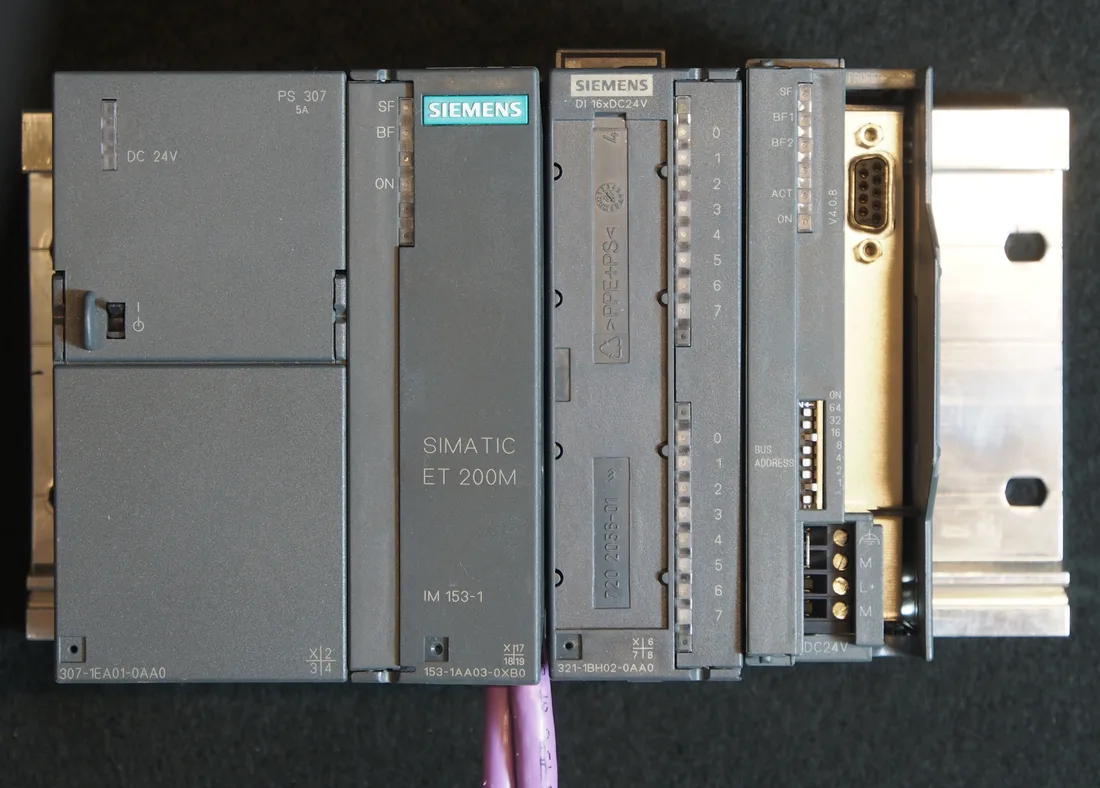
The controller exchanges process data and status with distributed I/O, sensors or actuators according to the protocol; a common physical connection still needs addresses, device configuration, data meaning and diagnostics to agree.
What to look for
- Compare point-to-point hardwiring with bus connection
- Trace a signal into device data
- Check how addresses, configuration and diagnostics relate
Legacy
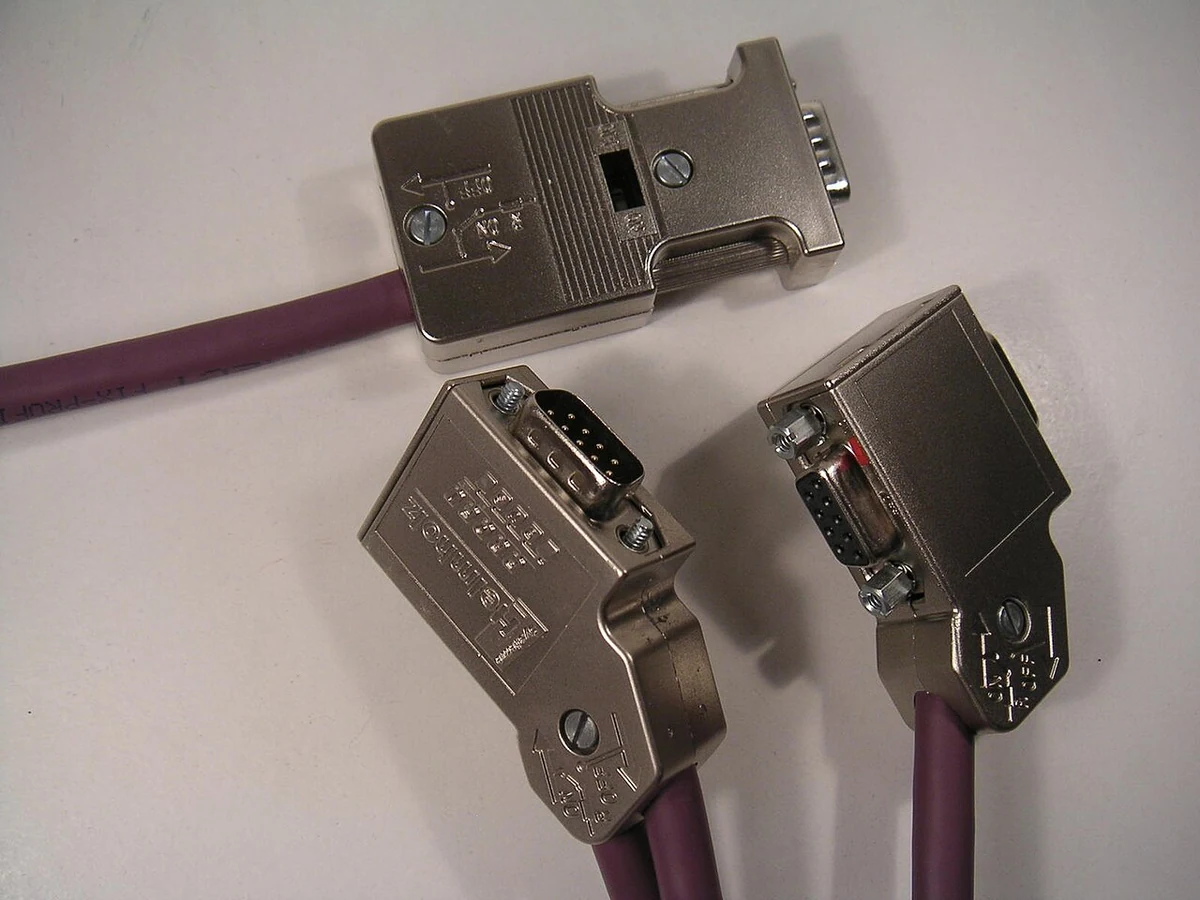
PROFIBUS is one specific fieldbus system; industrial Ethernet later extended data and engineering integration
Reading limits
- Different bus protocols do not interoperate just because the connectors match
- PROFIBUS and PROFINET are not the same protocol
Key elements
Bus interface and medium
Carry communication
Field devices and I/O
Connect real signals
Protocol and engineering configuration
Define cyclic data, parameters and diagnostics
Museum & technical references
Explore this technology through museum and technical references.