
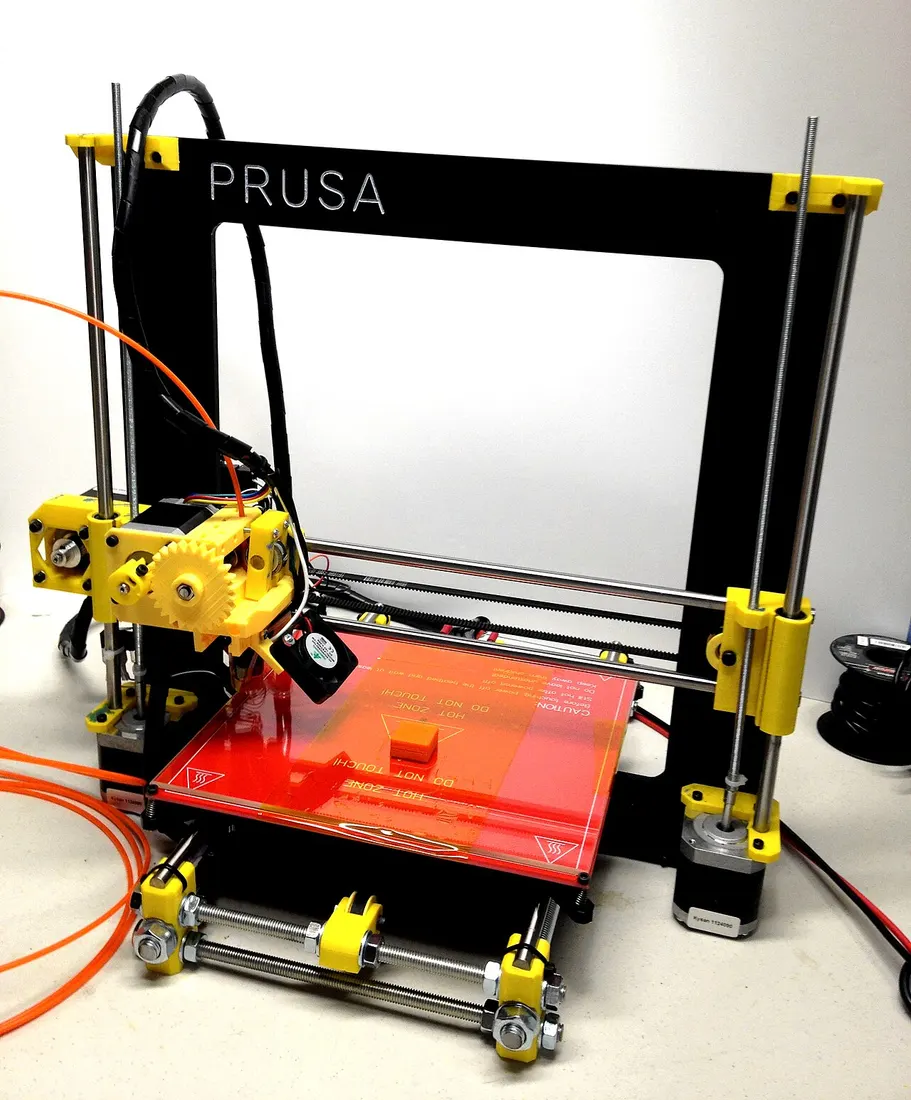

What it does
Heats and extrudes thermoplastic filament along paths layer by layer to make models, tooling and parts.
How it works
The feeder pushes filament into the heated nozzle, which deposits a continuous bead along the sliced paths while platform or head changes height between layers. Overhangs use supports as needed, removed after the build; build orientation and layer bonding affect part behaviour.
Process sequence
- Check the model and slice
- Prepare material and platform
- Heat and lay the first layer
- Build layer by layer with needed supports
- Cool and remove
- Remove supports and inspect
Key inputs
- Thermoplastic material and moisture state
- Build orientation and supports
- Build volume and chamber temperature control
- Load direction and dimensional requirements
Common problems
- Feed or nozzle faults causing under-extrusion
- Poor first-layer adhesion
- Uneven cooling causing warp
- Layer bonding and support contact affecting use
Limits of application
- FDM parts are not equivalent to isotropic injection mouldings
- Whether high-performance materials can be used depends on the machine's temperature control, nozzle and validated material combinations
Functional modules
Filament and drive wheels
Feed model or support material continuously
Heated nozzle
Softens and extrudes material
Motion and platform
Produce paths and layer height
Temperature control and support handling
Stabilize the build and release parts
Manufacturer & technical sources
Continue with manufacturer product pages, operating principles and technical information for this equipment type.