
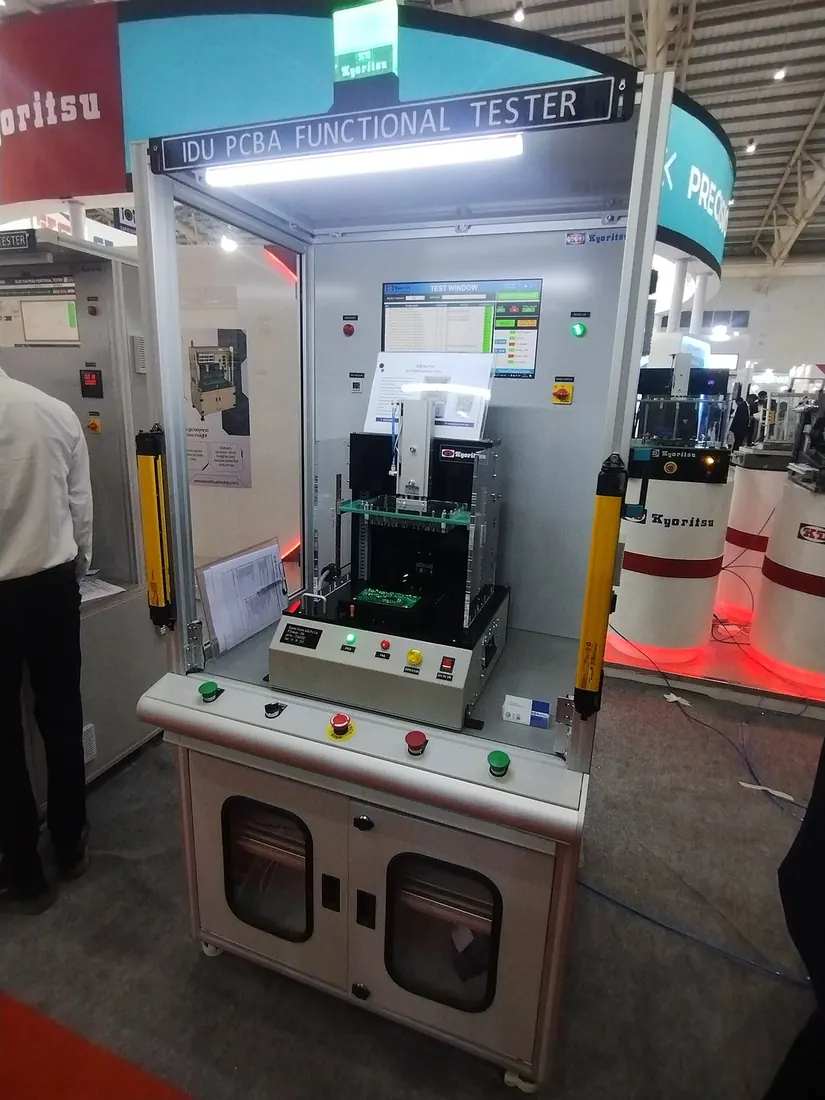

What it does
Checks outputs, communication and operating state of a circuit assembly under power and specified stimuli to judge whether it meets functional requirements.
How it works
A test fixture or connectors link the assembly to power supplies, signal sources, measuring instruments and any loads needed. The test sequence switches connections, applies inputs and reads outputs, then compares them with specified limits or response sequences; each product needs its own channels and functional coverage.
Process sequence
- Locate and connect the assembly
- Check connections and initial state
- Power and stimulate in sequence
- Capture outputs and communication responses
- Compare with functional requirements
- Power down, release and record
Key inputs
- Functional specification, interfaces and operating modes
- Supply limits, loads and measuring ranges
- Timing, accuracy, fixture compensation and retest rules
Common problems
- Contacts and cables affecting signals
- Unsuitable power-up timing or loads
- Insufficient coverage, or mismatched limits or program versions
Limits of application
- FCT verifies overall behaviour in selected modes
- A functional pass alone does not show that every internal joint and component is free of defects
Functional modules
Power and stimulus
Apply specified voltage, current and inputs
Fixture interface
Connects assembly ports or test points
Switching and acquisition
Route signals and measure responses
Test control
Runs sequence, judgment and records
Manufacturer & technical sources
Continue with manufacturer product pages, operating principles and technical information for this equipment type.