
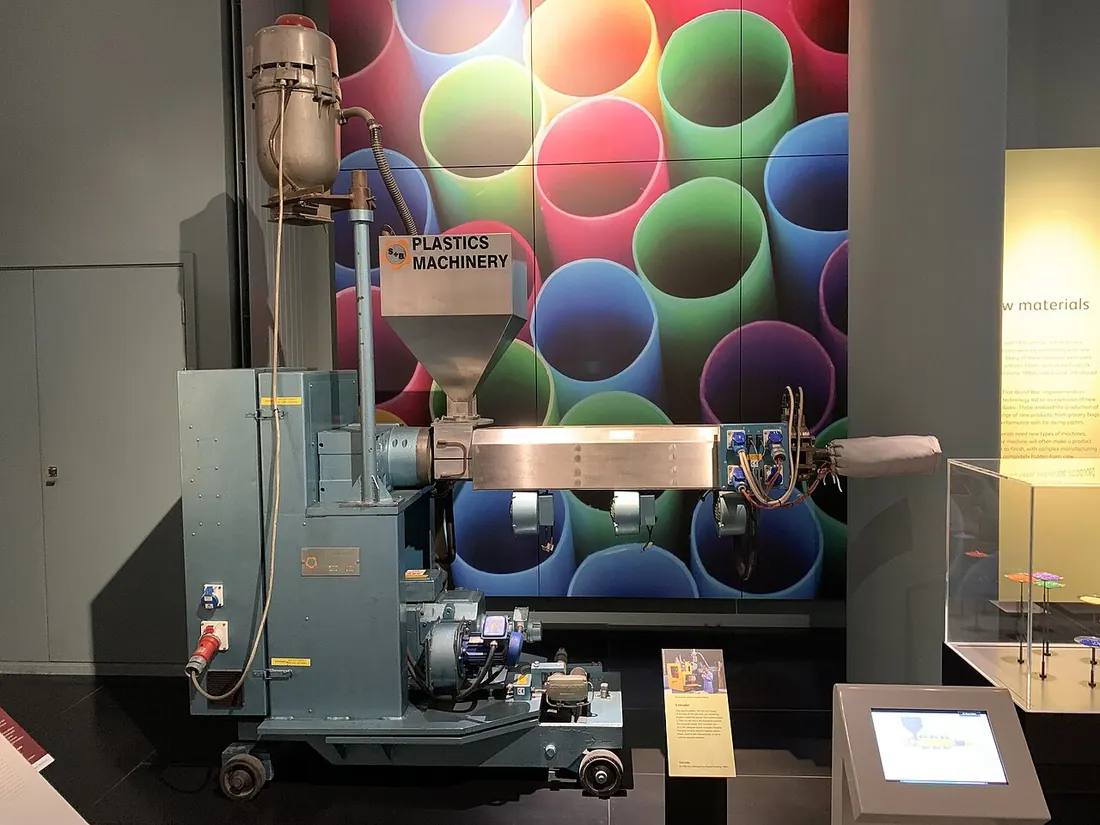

What it does
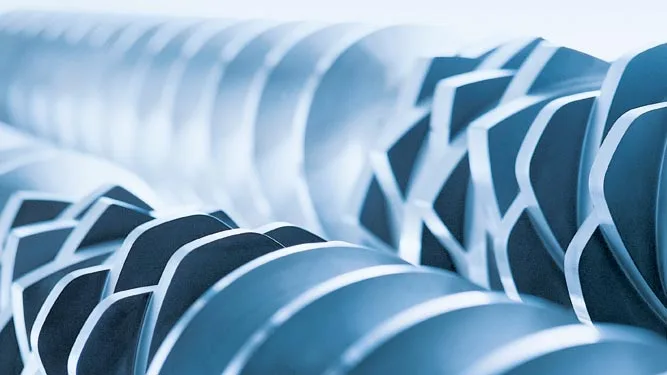
Conveys and plasticizes raw material with a rotating screw and pushes the melt continuously through a die.
How it works
Material enters the barrel from the hopper, the screw and temperature control convey, heat and mix it, and the melt takes its cross-section in the die. At the exit it also needs cooling, setting and haul-off, with vacuum sizing where needed, before cutting to length or winding.
Process sequence
- Prepare material and die
- Feed and plasticize under control
- Pass melt through the die
- Size and cool
- Haul off
- Cut or wind and inspect
Key inputs
- Resin and additives
- Screw and die match
- Temperature, pressure and throughput
- Cooling, haul-off and dimensional requirements
Common problems
- Feed and melt fluctuation changing dimensions
- Unsuitable temperature causing poor melting or degradation
- Haul-off not matched to extrusion
- Setting and cooling causing shrinkage and warp
Limits of application
- The extruder is the core of continuous forming; a full line also needs downstream equipment
- Twin-screw and single-screw machines and different materials cannot be swapped by screw count alone
Functional modules
Hopper and feeding
Supply material steadily
Screw, barrel and drive
Convey, plasticize and build flow
Die
Forms the target cross-section
Cooling and haul-off
Set the shape and match output speed
Manufacturer & technical sources
Continue with manufacturer product pages, operating principles and technical information for this equipment type.