

What it does
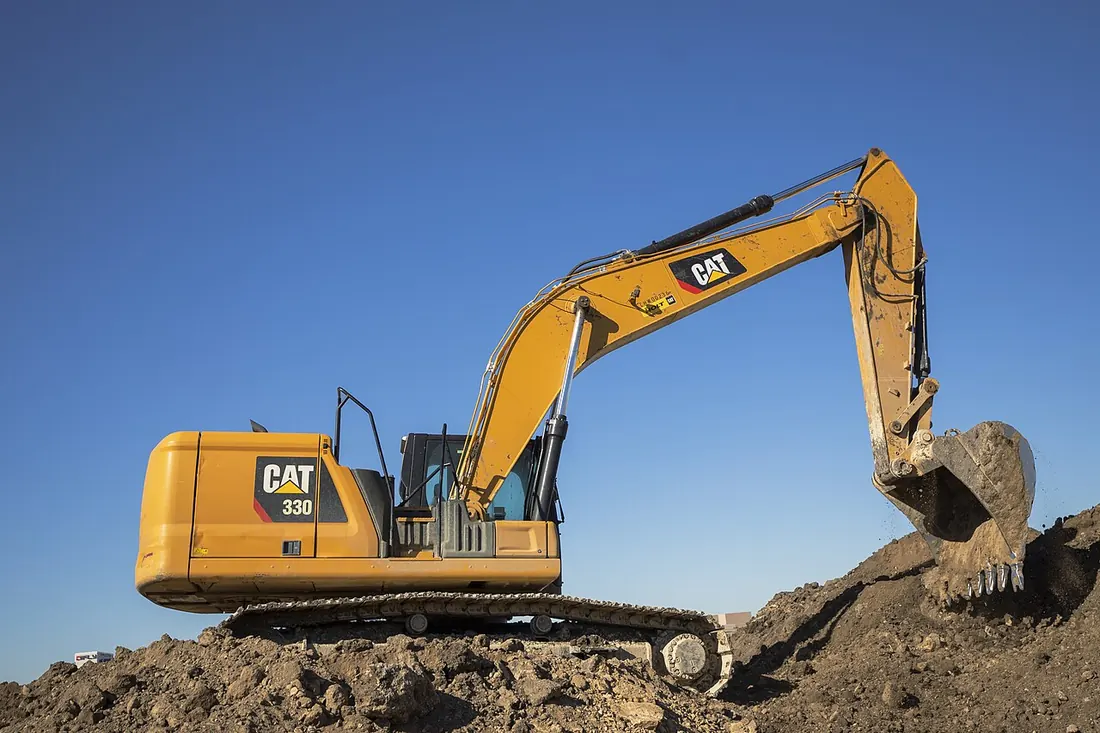
Digs material with boom, stick and attachment, then slews to dump it; suitable attachments can be fitted for other earthmoving tasks.
How it works
Taking a hydraulic excavator as an example, pumps feed the valve block, cylinders coordinate boom, stick and bucket to form the digging path, and the swing drive turns the upper structure relative to the undercarriage. The undercarriage, wheeled or crawler, handles travel and ground support.
Process sequence
- Confirm ground and working range
- Position the undercarriage
- Coordinate boom and bucket to cut and fill
- Lift and slew
- Dump
- Return to the next dig point
Key inputs
- Material, digging depth and reach
- Bucket or attachment, ground bearing and machine stability
- Swing clearance, dump position and hydraulic match
Common problems
- Attachment not suited to the material
- Poor boom and bucket coordination or hydraulic overheating
- Swing collisions, undercarriage instability or pin wear
Limits of application
- Backhoe, face shovel and other attachments move differently
- Digging capacity cannot be used as lifting capacity; lifting needs the matching configuration and load chart
Functional modules
Attachment and front linkage
Produce digging and dumping motion
Hydraulic power
Supplies and distributes flow and pressure
Slewing upper structure
Changes direction between dig and dump points
Undercarriage
Supports the machine and moves its work position
Manufacturer & technical sources
Continue with manufacturer product pages, operating principles and technical information for this equipment type.