
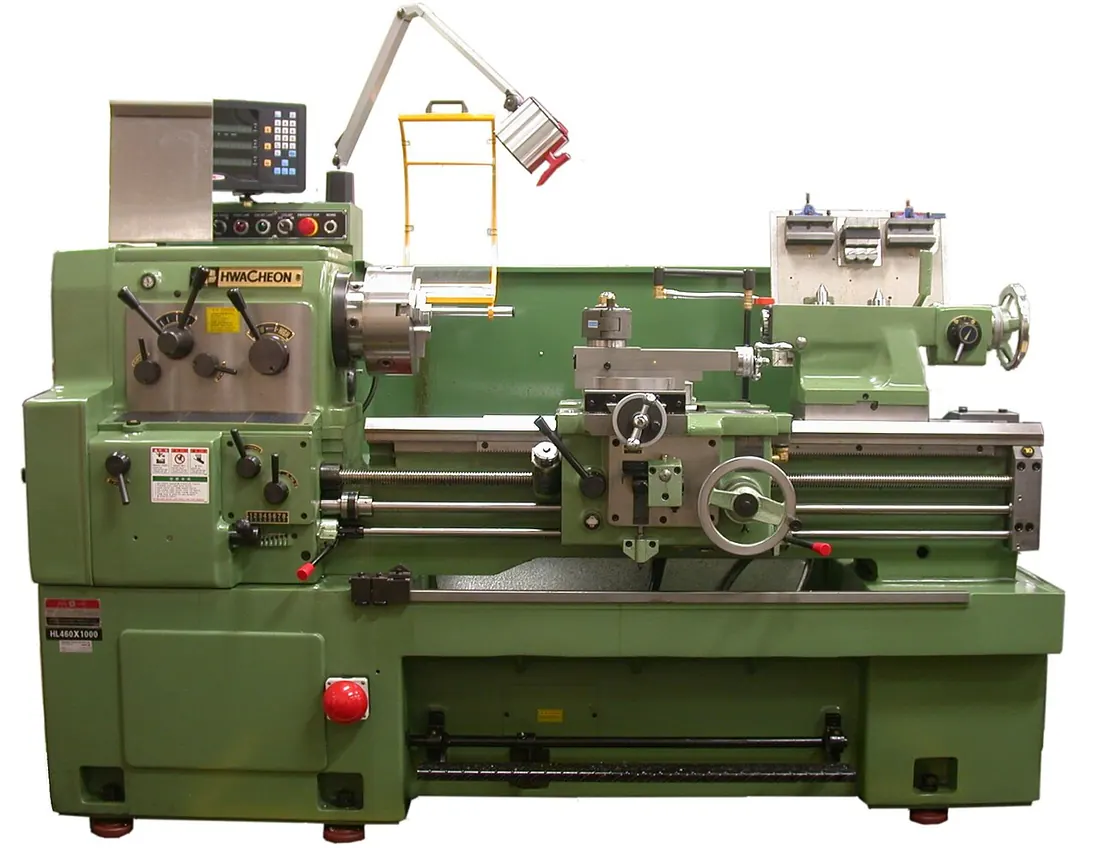

What it does
Turns outside diameters, faces, bores and threads with rotating work and fed tools, suited to turning that needs manual adjustment.
How it works
The spindle holds and rotates the work while the carriage and cross slide move the tool for axial and radial cuts. The tailstock supports long work or holds hole-making tools, and the leadscrew with half nut organizes thread feed.
Process sequence
- Choose work datums and support
- Fixture and set the tool
- Arrange cuts and feeds for each surface
- Stop, measure and adjust
- Final check and unload
Key inputs
- Material and stock allowance
- Diameter, length and support
- Tool shape, extension and centre height
- Required surface and thread data
Common problems
- Overhanging long work deflecting or chattering
- Tool wear and height affecting size and finish
- Eccentric clamping leaving uneven wall thickness
Limits of application
- Suits one-off, small-batch and repair work on rotational parts
- Handwheel readings are not actual machining accuracy
- This overview does not replace the specific machine manual
Functional modules
Spindle and chuck
Turn and hold the work
Carriage and cross slide
Control tool position
Tailstock and support
Support long work or mount axial tools
Feed and leadscrew
Organize normal feed and thread motion
Manufacturer & technical sources
Continue with manufacturer product pages, operating principles and technical information for this equipment type.