
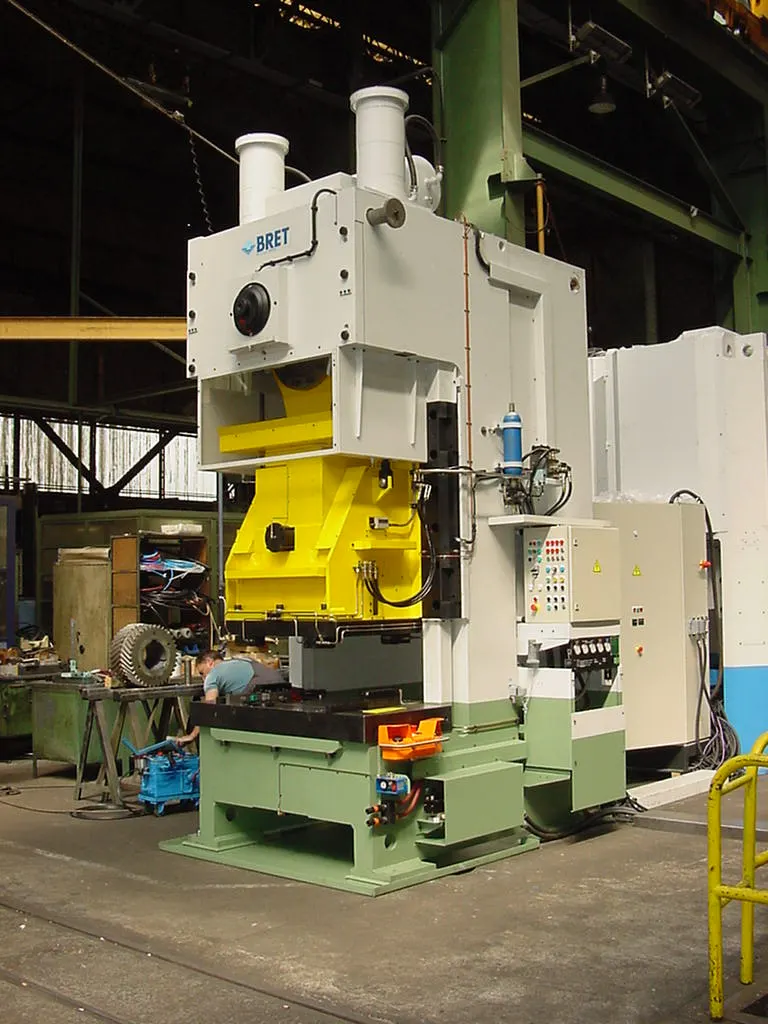

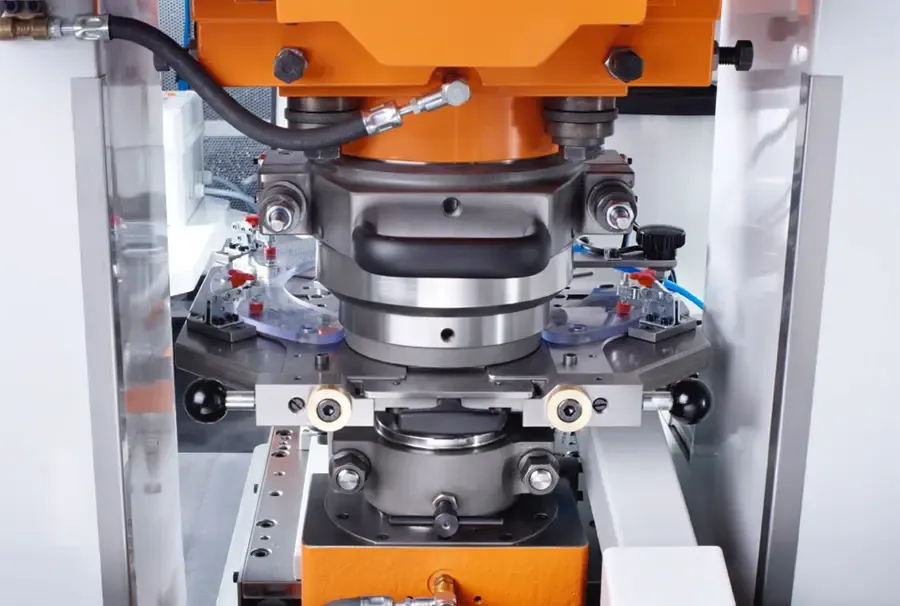
What it does
Presses textures, raised or recessed shapes into metal surfaces or sheet with forming dies.
How it works
A guided slide brings the die into contact with the material, and pressure causes local plastic deformation that reproduces the pattern. Sheet embossing pays particular attention to depth, parallelism and load distribution; local character stamping and large-panel embossing use different tools and feeding.
Process sequence
- Prepare pattern die and material
- Locate and support
- Bring the slide down
- Emboss to stroke or pressure
- Unload and return
- Remove and check texture and distortion
Key inputs
- Material, thickness and surface
- Pattern depth and area
- Frame parallelism and off-centre loads
- Locating, springback and appearance requirements
Common problems
- Uneven load giving variable depth
- Unstable locating misplacing the pattern
- Lubrication or die damage leaving scratches
- Excess depth causing thinning or cracking
Limits of application
- Metal embossing is not printing or colouring
- This page mainly covers flat die embossing; roll embossing is a continuous roller design
- Material and pattern changes require reassessing load and formability
Functional modules
Drive and slide
Provide forming force and stroke
Embossing die
Defines pattern and depth
Locating and support
Hold material position
Force and displacement control
Manage depth and consistency
Manufacturer & technical sources
Continue with manufacturer product pages, operating principles and technical information for this equipment type.