
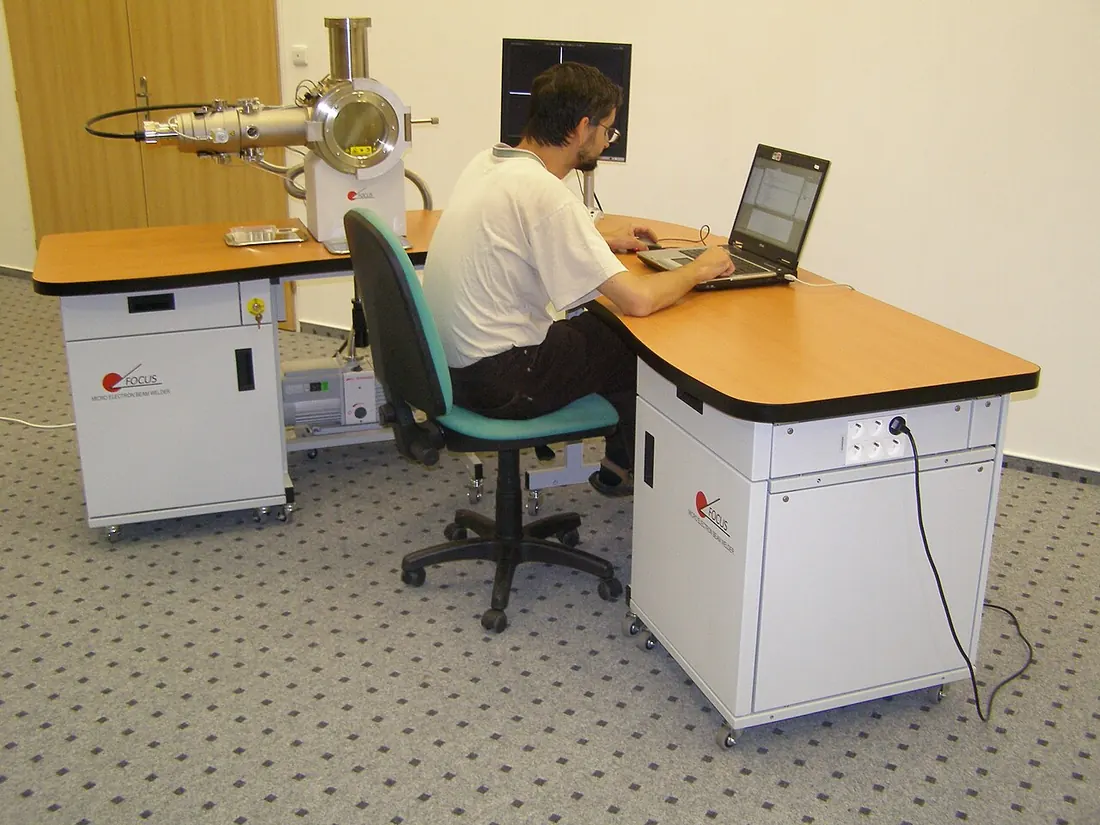

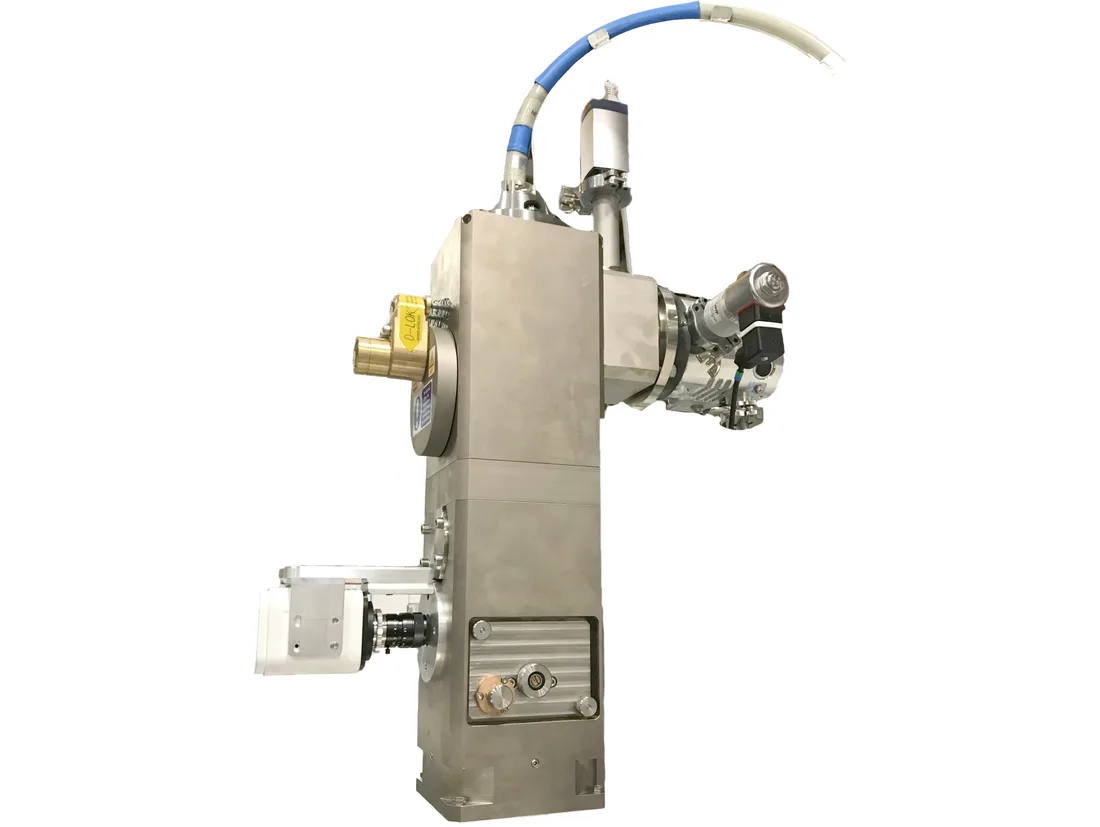
What it does
Joins parts by melting the joint with the energy of a focused beam of fast electrons, usually in a vacuum chamber.
How it works
The gun produces electrons that an electric field accelerates and a magnetic field focuses onto the work, where kinetic energy becomes local heat. Chamber machines use vacuum to reduce scattering of the beam by gas, and a CNC table or fixture moves the work relative to the beam.
Process sequence
- Fixture and check the joint
- Close the chamber and pump down
- Confirm beam and position
- Weld along the joint under control
- Cool and vent per program
- Remove and inspect
Key inputs
- Material and joint fit-up
- Chamber envelope and fixtures
- Beam access to the joint
- Vacuum cycle and inspection requirements
Common problems
- Vacuum or beam condition affecting stability
- Joint offset causing missed welds
- Fixture restraint causing distortion
- Deep welds needing internal inspection
Limits of application
- This page uses vacuum chamber electron beam welding as the example
- Non-vacuum or reduced-pressure processes need separate assessment
- Laser welding optics cannot directly replace an electron beam system
Functional modules
Electron gun and high voltage
Produce accelerated electrons
Focusing and deflection
Control beam spot and position
Vacuum chamber and pumping
Provide the beam's working environment
CNC table
Organizes the weld path
Manufacturer & technical sources
Continue with manufacturer product pages, operating principles and technical information for this equipment type.