
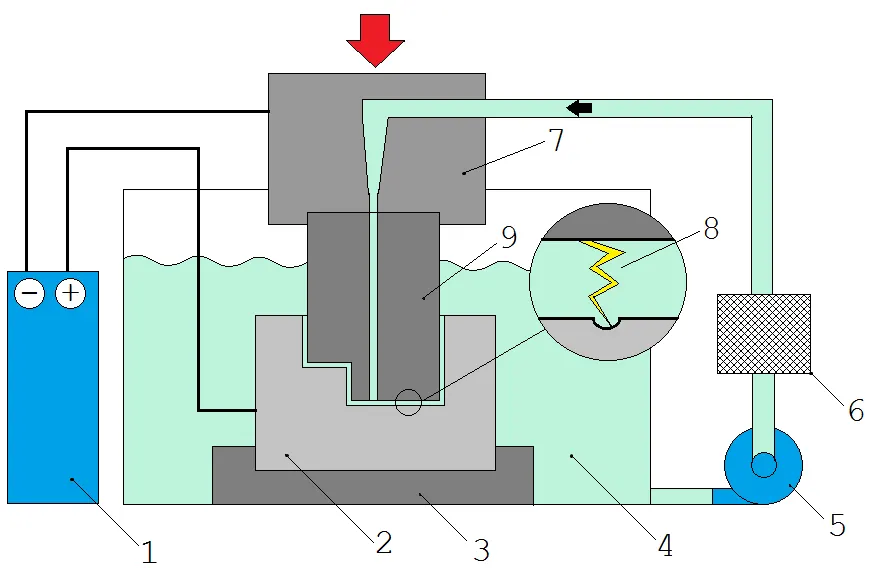

What it does
Machines cavities and hard-to-cut shapes in conductive work with a shaped electrode and controlled sparks.
How it works
A spark gap is kept between electrode and work, pulsed discharges melt or vaporize local material, and the dielectric carries away the debris. Feed, retraction, flushing and any orbiting together maintain the gap, and electrode shape and motion determine the final cavity.
Process sequence
- Prepare electrode and conductive work
- Set position and dielectric conditions
- Discharge and feed in stages
- Retract or flush
- Finish and inspect
- Clean and unload
Key inputs
- Material conductivity
- Cavity shape and electrode wear
- Allowance and surface requirements
- Dielectric and flushing access
Common problems
- Debris build-up making discharges unstable
- Electrode wear changing the profile
- Unsuitable energy settings leaving a harmful surface layer
Limits of application
- Suits conductive materials; hardness does not decide whether it can be sparked
- Discharge is a thermal process and cannot be called free of heat effects
Functional modules
Shaped electrode and holder
Provide the machined shape
Pulse generator
Produces controlled discharges
Gap and feed control
Adjusts electrode approach and retraction
Dielectric circulation
Insulates and removes heat and debris
Manufacturer & technical sources
Continue with manufacturer product pages, operating principles and technical information for this equipment type.