
What it does
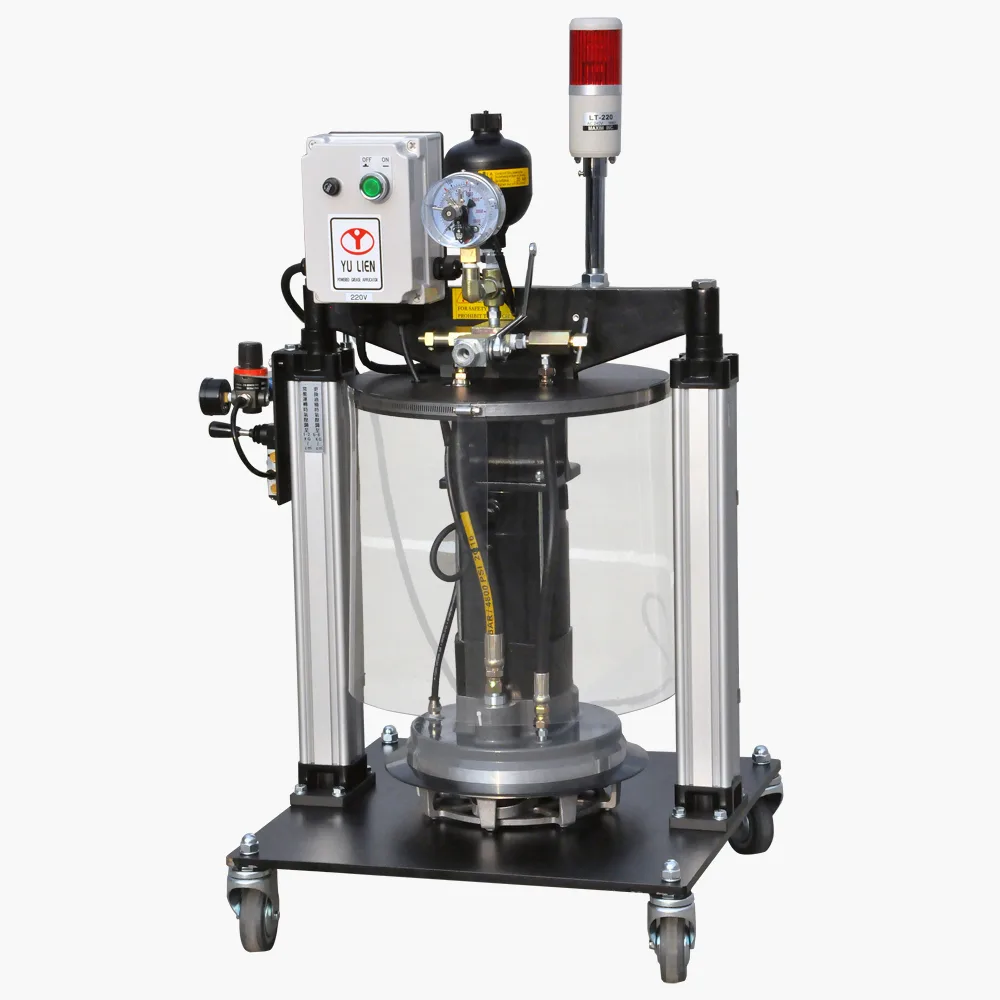
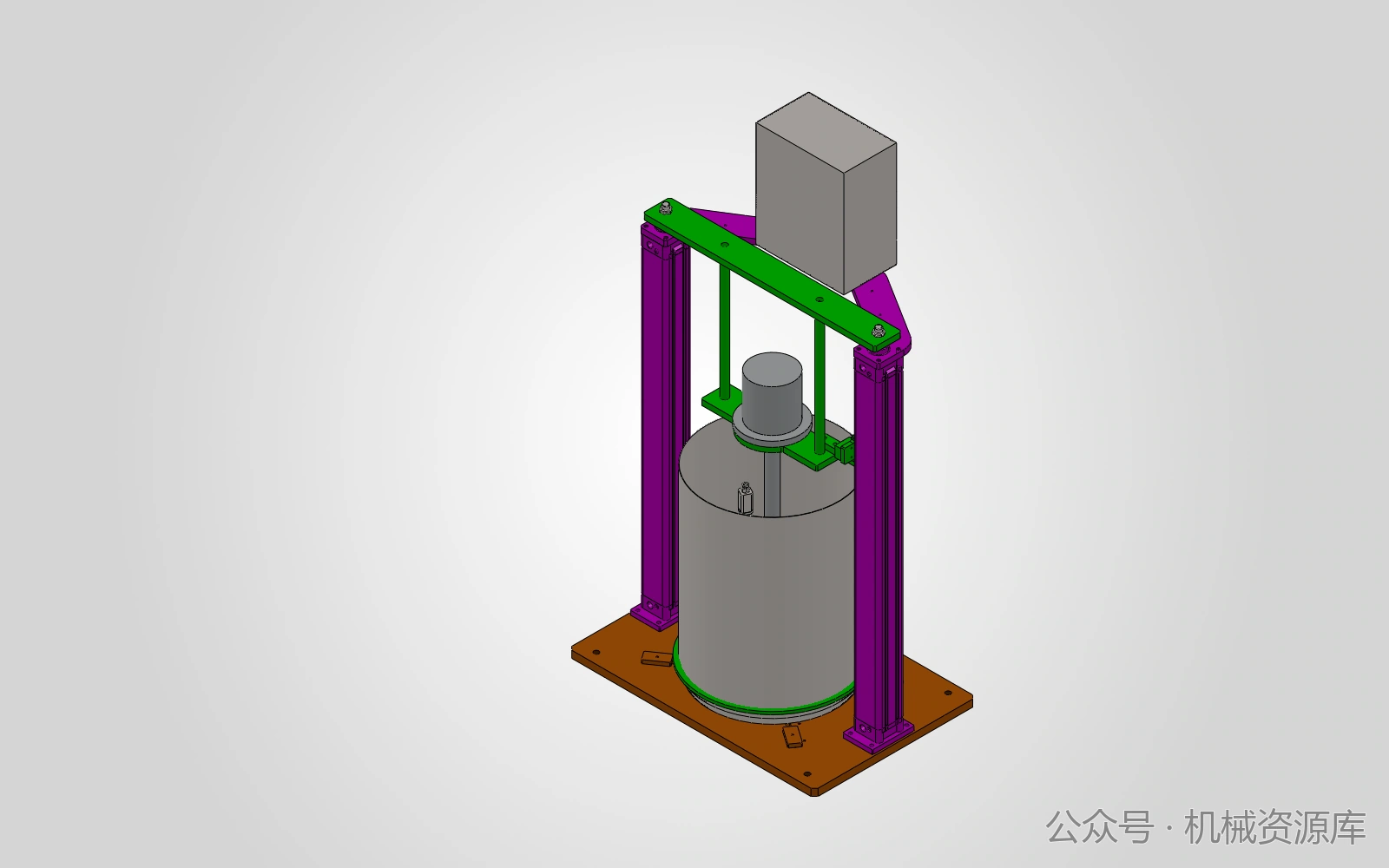
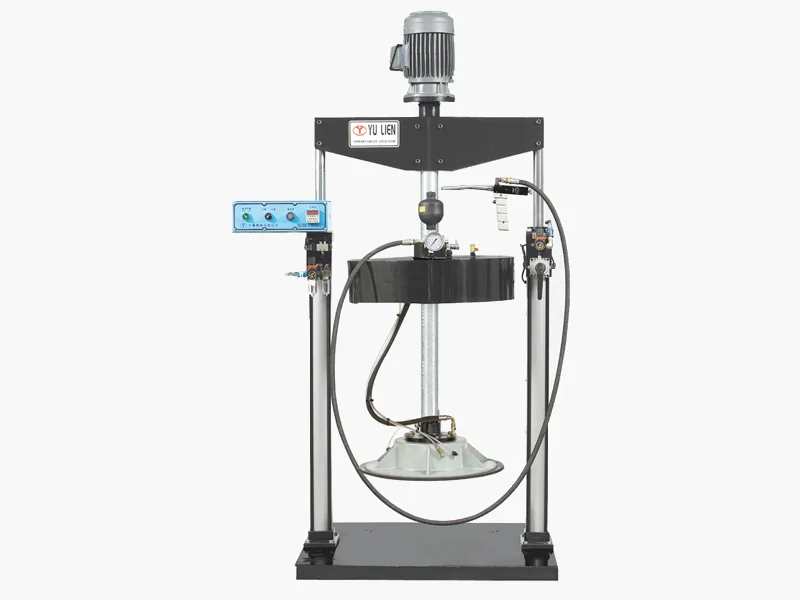
Supplies grease from a drum to downstream equipment, with a lifting support and follower plate that help draw material and change drums.
How it works
Taking a pneumatic dual-post drum pump as an example, the lift beam lowers pump and plate into the drum, the plate helps feed the pump inlet, and the pump sends grease into the lines. Raising pump and plate allows drum change. Supply pressure and the amount per shot are two separate control problems.
Process sequence
- Fix a matching drum
- Lower pump and plate and vent per configuration
- Confirm pump inlet feeding
- Deliver grease downstream
- Stop and relieve pressure as the equipment requires
- Raise pump and plate and change the drum
Key inputs
- Grease properties and drum shape
- Plate seal, pump output and line back pressure
- Drum change space, lift guidance and pinch protection
Common problems
- Air ingress or starved inlet making pumping unstable
- Plate not matching the drum wall
- Residual pressure not released or pinch risk in the lift zone
Limits of application
- This unit handles supply; downstream metering valves, grease heads and part fixtures are configured separately.
- Lift drive, pump type and drum fit vary by model; dispensing accuracy cannot be judged from the dual-post form.
Functional modules
Drum and stops
Fix the drum so pump and plate line up with its opening.
Dual-post lift
Supports and guides pump and plate up and down, giving space to change drums.
Pump assembly
Moves grease from the drum to the outlet.
Follower plate
Descends with the grease level, helping feed the pump inlet and keeping out some contamination.
Control and pressure relief
Manage supply start and stop, lifting and residual pressure before drum change.
Manufacturer & technical sources
Continue with manufacturer product pages, operating principles and technical information for this equipment type.