
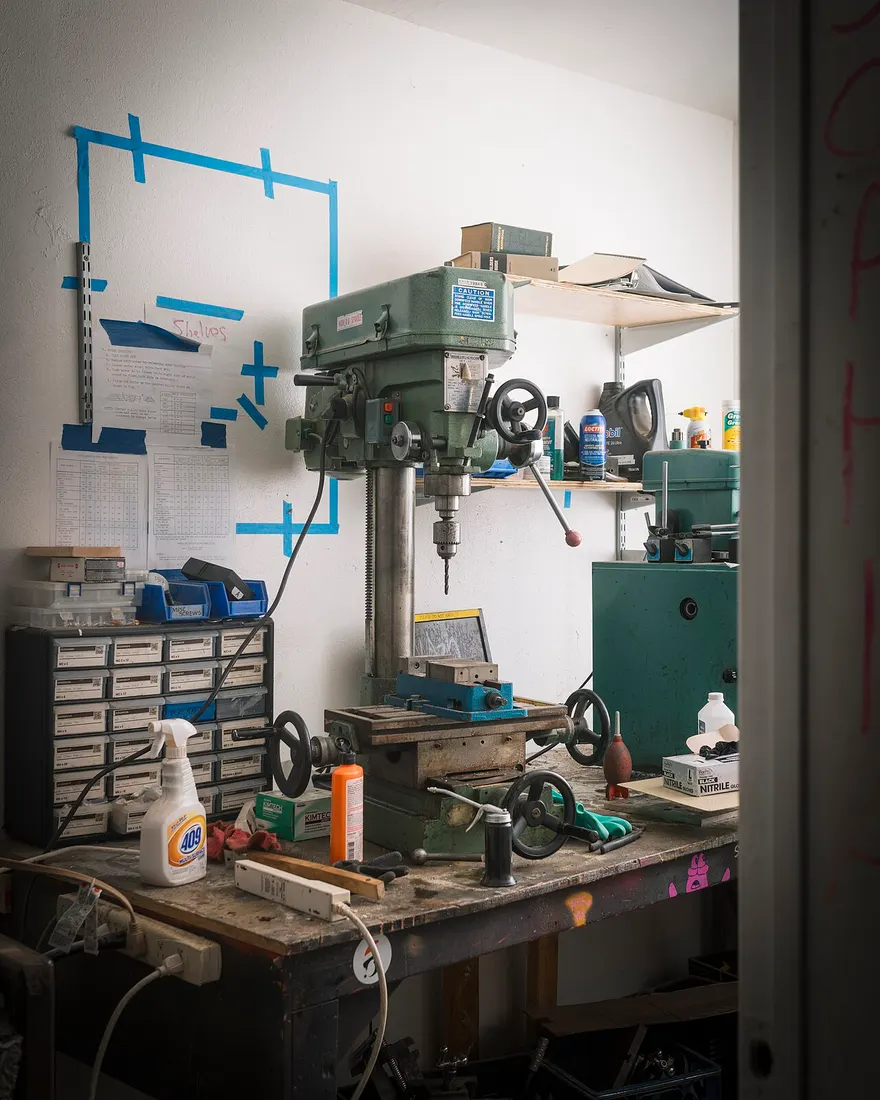

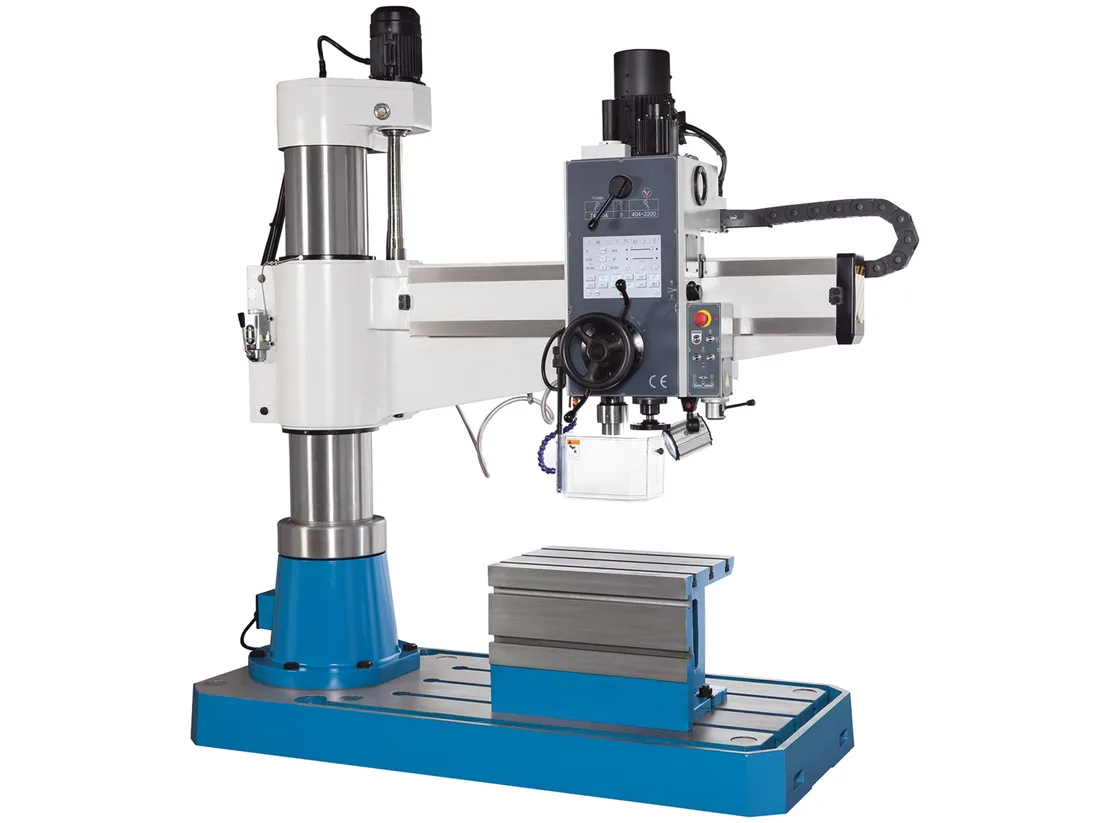
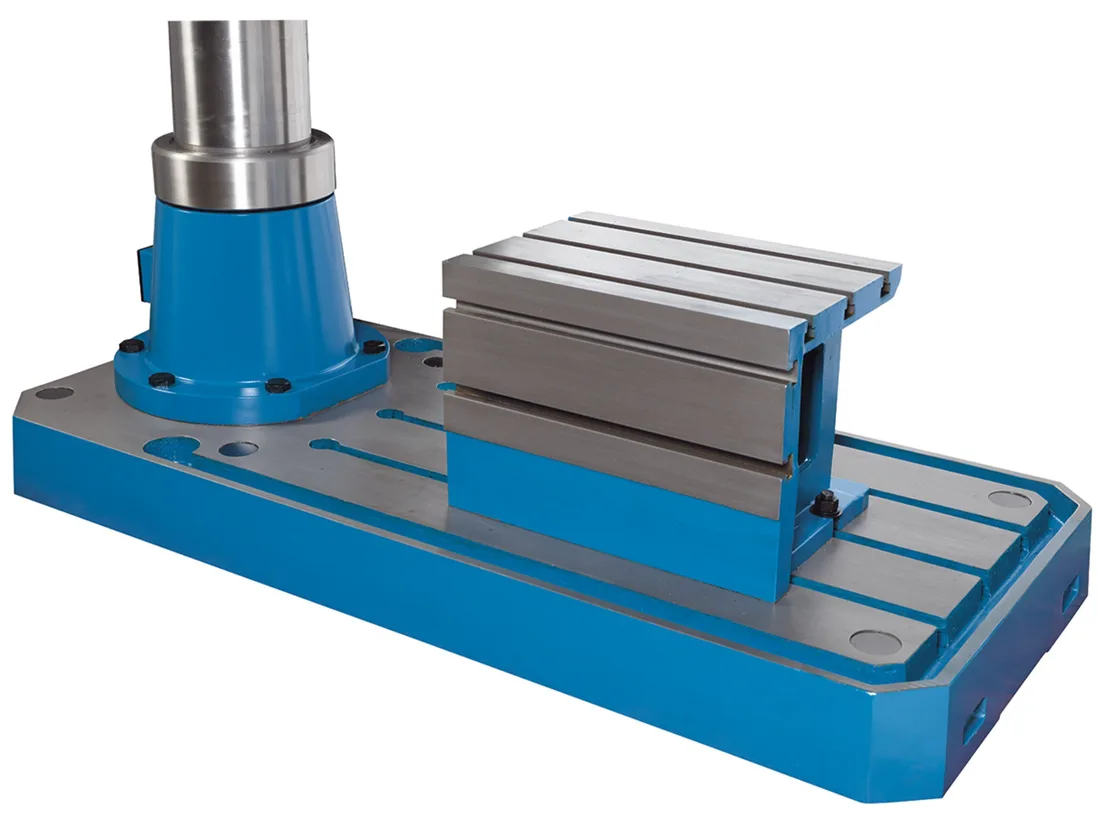
What it does
Makes holes with a rotating drill and axial feed, and can ream, counterbore or tap with suitable tools and models.
How it works
The work is held in a fixture, the spindle turns the drill, and the quill or relative feed moves the tool along the hole axis into the material. Table position locates holes and supports the work; the drilling torque must not be resisted by hand alone.
Process sequence
- Set hole position and datum
- Fix the work and load the tool
- Set suitable depth
- Drill and clear chips
- Retract
- Check holes and unload
Key inputs
- Hole diameter, depth and through or blind
- Material and tools
- Hole position datums
- Clamping, chip removal and feed method
Common problems
- Drill wander or entry guidance affecting hole position
- Chip packing in deep holes raising load
- Exit burrs and work spinning damaging surfaces
Limits of application
- An ordinary drilling machine is not a dedicated deep-hole machine
- Milling is possible only on approved models with suitable tool interfaces
Functional modules
Head and drill
Produce rotary cutting
Quill and feed
Control axial tool entry
Column and table
Support and adjust work position
Fixtures and coolant
Restrain the work and handle heat and chips
Manufacturer & technical sources
Continue with manufacturer product pages, operating principles and technical information for this equipment type.