
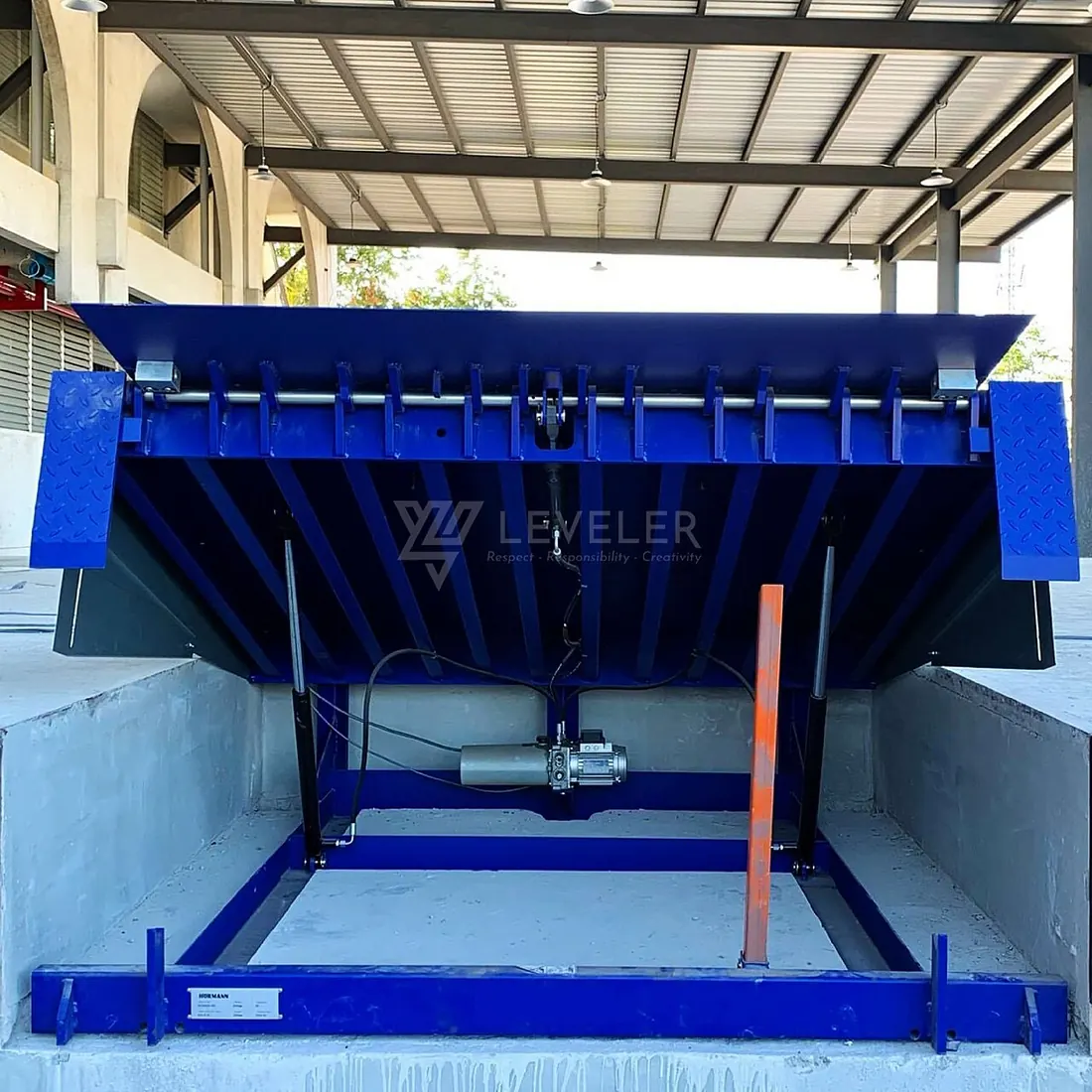

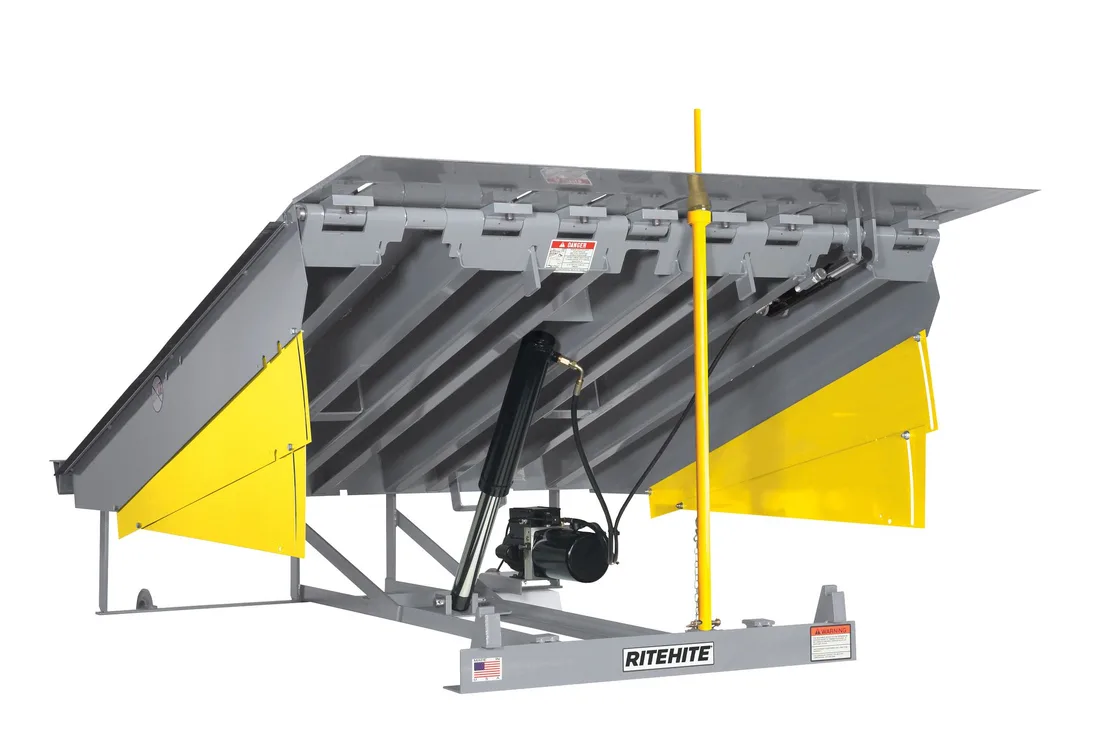
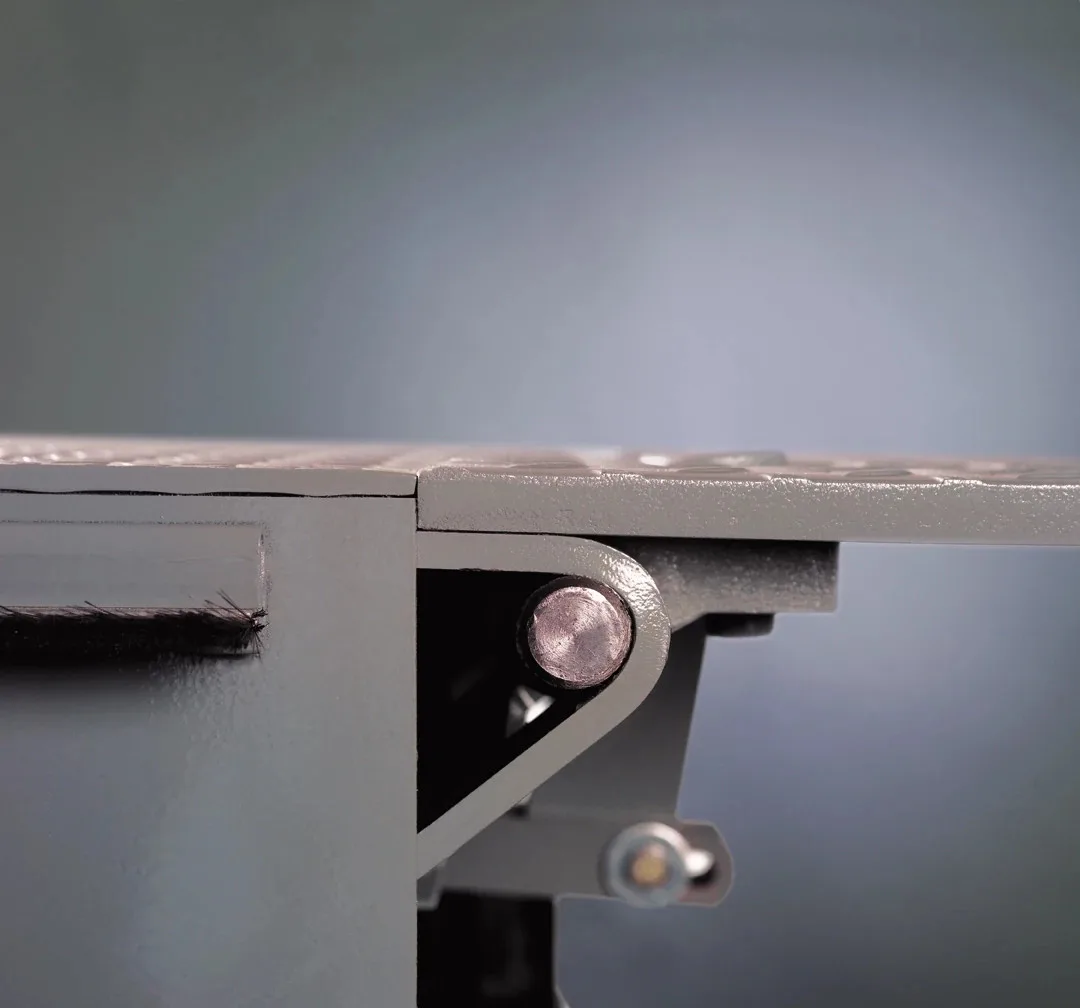
What it does
Bridges the gap and height difference between a fixed dock and a trailer floor, forming a path for loading vehicles.
How it works
The deck pivots on its rear hinge, and the front lip extends to rest on the trailer floor, forming a continuous transition. Mechanical levelers raise and lower with springs and holding mechanisms, hydraulic ones with hydraulic drive; in use they must follow trailer height changes, and vehicle restraint and lip support are closely tied to permission to drive across.
Process sequence
- Position and restrain the vehicle
- Check trailer and leveler range
- Raise the deck and extend the lip
- Lower so the lip rests fully
- Load and unload under permission
- Store and restore the dock afterwards
Key inputs
- Trailer height and gap range
- Total weight and wheel loads of loading vehicles
- Deck slope and travel conditions
- Lip support and bay restraint
Common problems
- Lip not fully resting
- Trailer movement changing support
- Debris at hinges blocking motion
- Wheel loads not suited to leveler capacity
Limits of application
- Fixed levelers and mobile ramps are built differently
- Selection cannot be based on goods weight alone; forklift weight and impact must be included
- Operation and maintenance conditions of mechanical and hydraulic types must be confirmed separately
Functional modules
Deck and rear hinge
Adjust the bridge slope
Lip and front hinge
Span the end gap
Raising and holding mechanism
Extend and store the leveler
Bay and vehicle restraint interface
Maintain support conditions
Manufacturer & technical sources
Continue with manufacturer product pages, operating principles and technical information for this equipment type.